Jeonju Christian Heritage: A Church, a Hospital and a School
How seven Southern Presbyterian missionaries built Jeonju's first church, hospital and modern school from 1892, what survives, and how to see it.
The schools, hospitals and churches that Western missionaries built in Korea from the 1880s on, and how to visit the ones that still stand.
Korea went from a closed Confucian kingdom to one of the world’s most connected countries in about a century. Schools and hospitals run by foreign missionaries were one of the places where that change started, and many of the buildings, graves and bells they left are still standing, often in neighborhoods most visitors never reach.
This section visits those places. We start from what the sites and the records show: who came, what they built, what Koreans did with it, and what you can see today. Missionary work in Korea was also tangled up with colonial politics, and the schools did not all agree with each other. The guides say so where it matters.
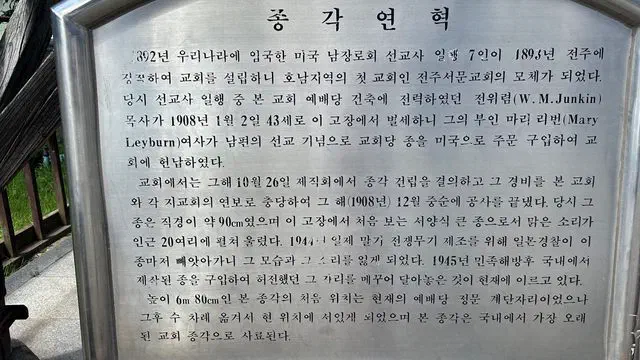
Jeonju: the Southern Presbyterian mission is the first guide. A bell that carried about eight kilometers, a hospital that patients named, and a school that closed rather than bow at a shrine all sit within a short walk of each other, uphill from Hanok Village.
A note on what is covered. The guides are written for visitors of any belief or none, and they describe the history rather than argue for it. Where a church is still an active congregation, treat it as one.
How seven Southern Presbyterian missionaries built Jeonju's first church, hospital and modern school from 1892, what survives, and how to see it.