Korea's Coast in Stone: Three Rock Formations, Three Coasts
Last verified: 2026-09-18. Rules and prices change — always confirm on the official site before you travel.
This page contains affiliate links. If you book through them we may earn a commission at no extra cost to you. It never changes what we recommend.
Korea’s coast trails cover distance — this page covers three places worth stopping. Our Seohaerang and Namparang guides are built around walking long stretches of coastline; these three sites are destinations in their own right, one on each of Korea’s three coasts, and each shaped by the sea in a completely different way.
West: Chaeseokgang, layers like stacked books
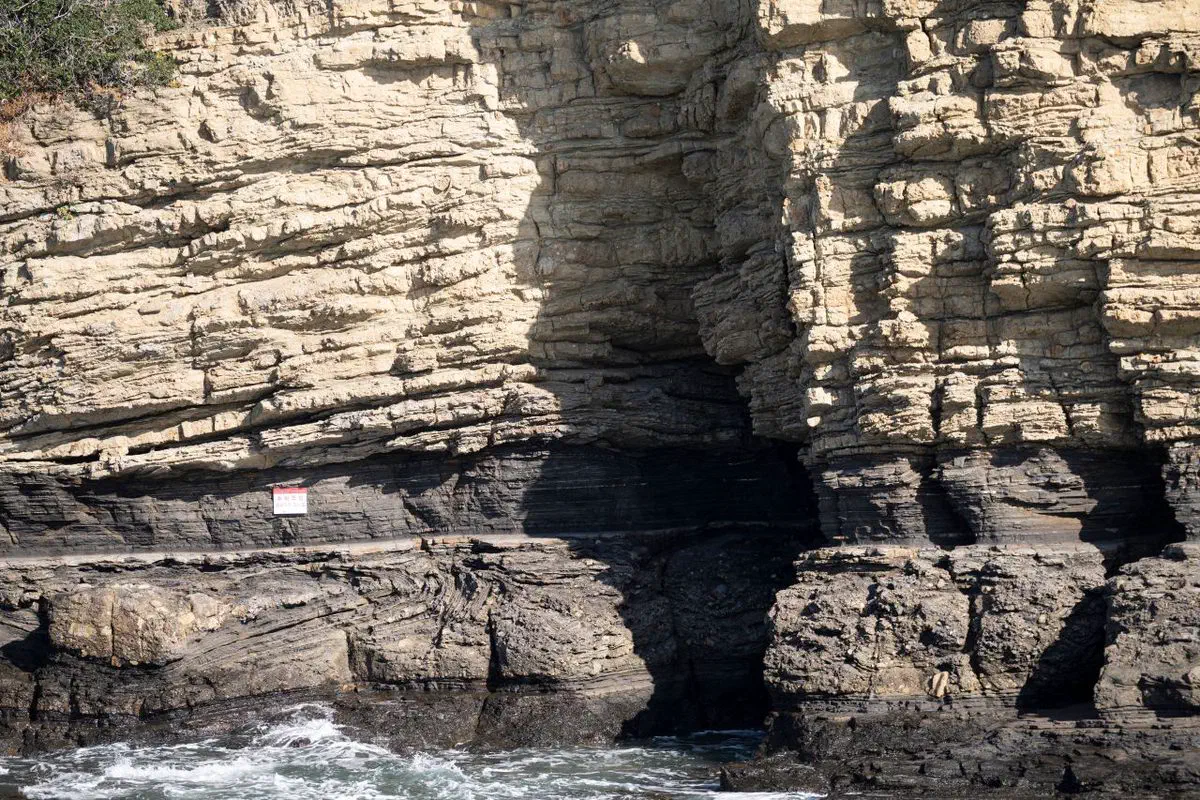
Chaeseokgang, in Buan’s Byeonsanbando National Park, is a cliff of sedimentary rock laid down roughly 70 million years ago, exposed and carved by tidal erosion into visible horizontal layers — Korean tourism copy describes it as looking like tens of thousands of books stacked on top of each other, and the comparison holds up in person. It’s a National Scenic Site, and since May 2023 it has sat inside the Jeonbuk West Coast UNESCO Global Geopark, the strongest heritage credential of any site on this page.
Timing matters here more than at the other two: the layered rock and its sea caves are genuinely visible only at low tide, so check tide tables before making the trip out. Buses run directly from Buan Bus Terminal to Gyeokpo, about 23 departures a day; the cliffs are an 800-meter walk from Gyeokpo Beach.
South: Taejongdae, a single pillar on the cliff edge
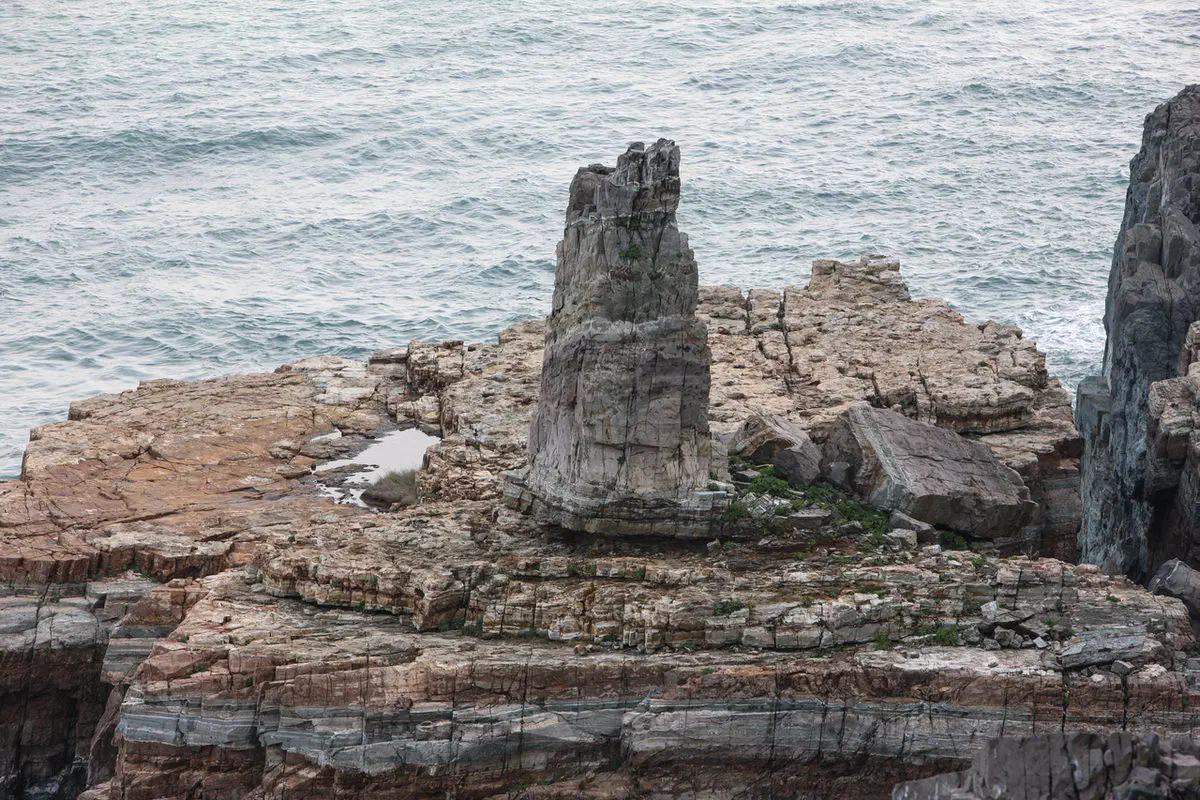
Taejongdae, on the southern tip of Busan’s Yeongdo Island, is a different kind of formation entirely — cliffs of rock compressed under an ancient lakebed in the Cretaceous, later exposed and shaped into sea caves and standalone stone pillars, with dinosaur tracks preserved in parts of the rock face. It’s the easiest of the three to reach without a car: city buses run directly from central Busan (Nampo or Busan Station areas) to the park entrance, and once inside, the Danubi Train (₩3,000) loops the whole park so walking the full distance is optional.
Taejongdae sits inside Busan National Geopark, which applied for full UNESCO Global Geopark status in 2021 and underwent a preliminary evaluation in 2022 — as of this writing, still a candidate rather than a confirmed UNESCO site, worth stating accurately rather than assuming the upgrade already happened.
East: Chuam, sea stacks below a headland temple
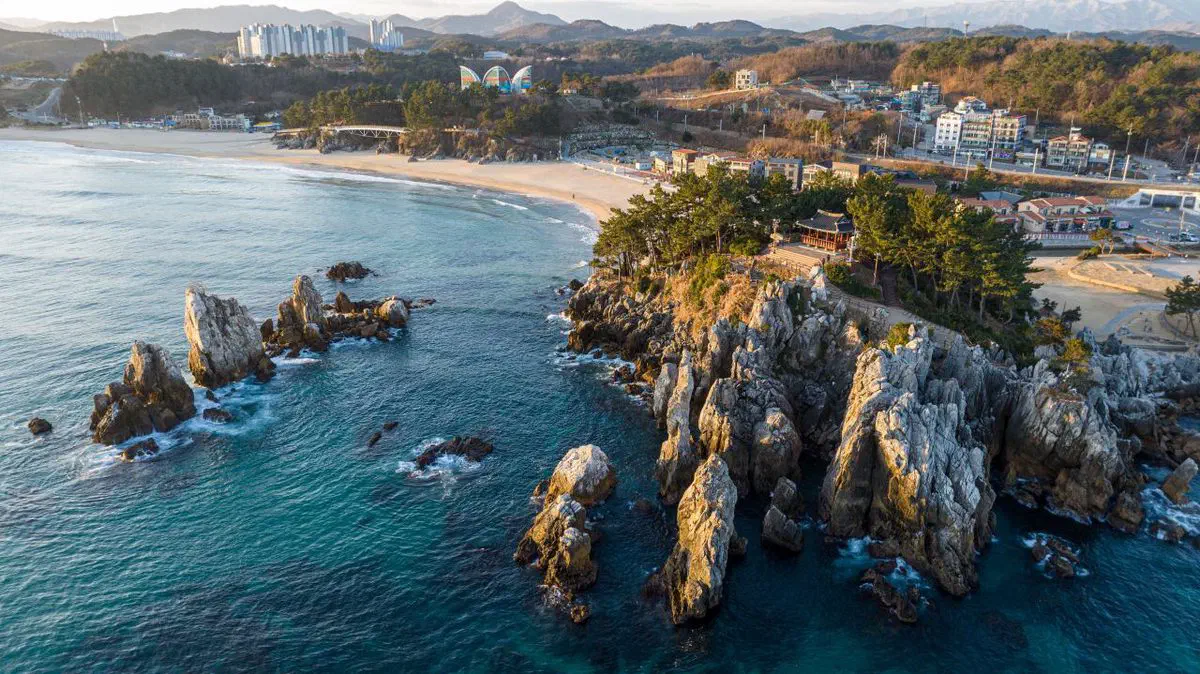
Chuam, just outside Donghae in Gangwon-do, is built on Cambrian-era limestone worn by the sea into a cluster of sea stacks — the tallest, nicknamed Chotdaebawi (“Candlestick Rock”), is the site’s signature shape, with smaller formations nearby nicknamed for a turtle, a couple, and a set of brothers. Korea’s Cultural Heritage Administration proposed Chuam for National Scenic Site protection in February 2018; unlike Chaeseokgang and Taejongdae, we could not confirm the final designation number, so we’re not stating one here.
Chuam has a life beyond geology: it’s one of the east coast’s most popular spots for watching the year’s first sunrise on 1 January, drawing large crowds annually. There’s no direct train to the site — a bus or car from Donghae, Gangneung or Samcheok is the practical route — but admission is free and the site is open around the clock.
- Chaeseokgang (west)
- Buan · UNESCO Global Geopark since 2023 · best at low tide · bus from Buan Bus Terminal
- Taejongdae (south)
- Busan · candidate UNESCO Geopark · easiest access, city bus + Danubi Train inside
- Chuam (east)
- Donghae · proposed National Scenic Site (2018) · known for New Year’s sunrise · bus or car
A Korean eSIM is worth having for any of these — bus schedules and tide tables are easier to check live than to plan around in advance, especially at Chaeseokgang where timing the tide correctly is the difference between seeing the formation and seeing water.
Which of Korea's coastal rock sites is easiest to visit without a car?
Why does timing matter at Chaeseokgang?
Is Chuam's rock formation an official UNESCO site?
Is Taejongdae a confirmed UNESCO Global Geopark?
Checked 18 September 2026. Chaeseokgang’s designation, geology and UNESCO Global Geopark status from Korea Heritage Service’s Heritage Search database and UNESCO, May 2023. Taejongdae’s designation and geopark candidacy from Korea Heritage Service and Busan National Geopark’s official site. Chuam’s geology and 2018 Scenic Site proposal from a Cultural Heritage Administration press notice (No. 2018-37), 5 February 2018; the final designation number could not be confirmed and is not stated here. New Year’s sunrise crowd context from Korea JoongAng Daily, 1 January 2026. Transit routes and fares from VisitKorea and Busan Geopark’s own pages; confirm current bus schedules before traveling, as regional routes change.