Muuido and the West Coast Beaches
Last verified: 2026-09-05. Rules and prices change — always confirm on the official site before you travel.
This page contains affiliate links. If you book through them we may earn a commission at no extra cost to you. It never changes what we recommend.
Most of Korea’s famous beaches sit on the east or south coast, a KTX ride away. Muuido, an island off Incheon, is the exception that needs neither a train nor a ferry anymore — and it comes with the one thing east-coast beaches don’t: a tidal flat wide enough to walk out onto.
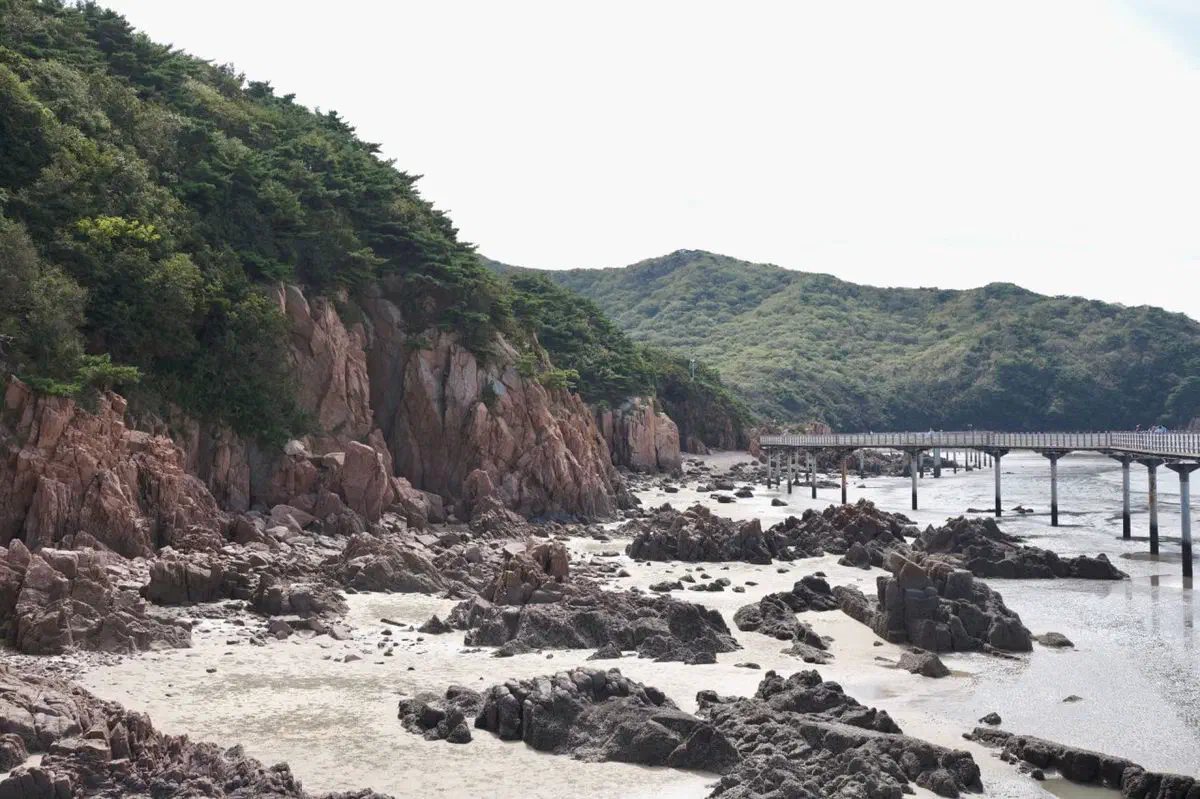
The one you can reach without a car
Muuido stopped being an island in the way that matters for visitors once the Muui Bridge (무의대교) opened — no ferry, just a bus over a causeway. From Incheon, city buses 중구6-1 or 무의1 run to Hanagae Beach (하나개해수욕장) directly. It won’t be the fastest trip from central Seoul, but it is a genuine no-car option, which puts it in a short list on this coast.
Hanagae Beach pairs sand with a rocky headland and a wooden boardwalk bridge out over the tidal flat — at low tide the exposed ground stretches out toward the West Sea; a few hours later the same spot is underwater. That rhythm is the point of a west-coast beach in a way it simply isn’t on Korea’s other coasts.
If you do have a car: Taean
Taean holds the densest cluster of west-coast beaches in the country, and it’s also where eleven courses of the Seohaerang Trail concentrate — our trail guide covers that side of it. Two features worth building a stop around:
- Sinduri Dunes (신두리 해안사구) — Korea’s largest coastal sand dune system, a protected ecological reserve rather than a beach you swim at. The dunes shift with the wind and are worth seeing precisely because nowhere else on this coast looks like it.
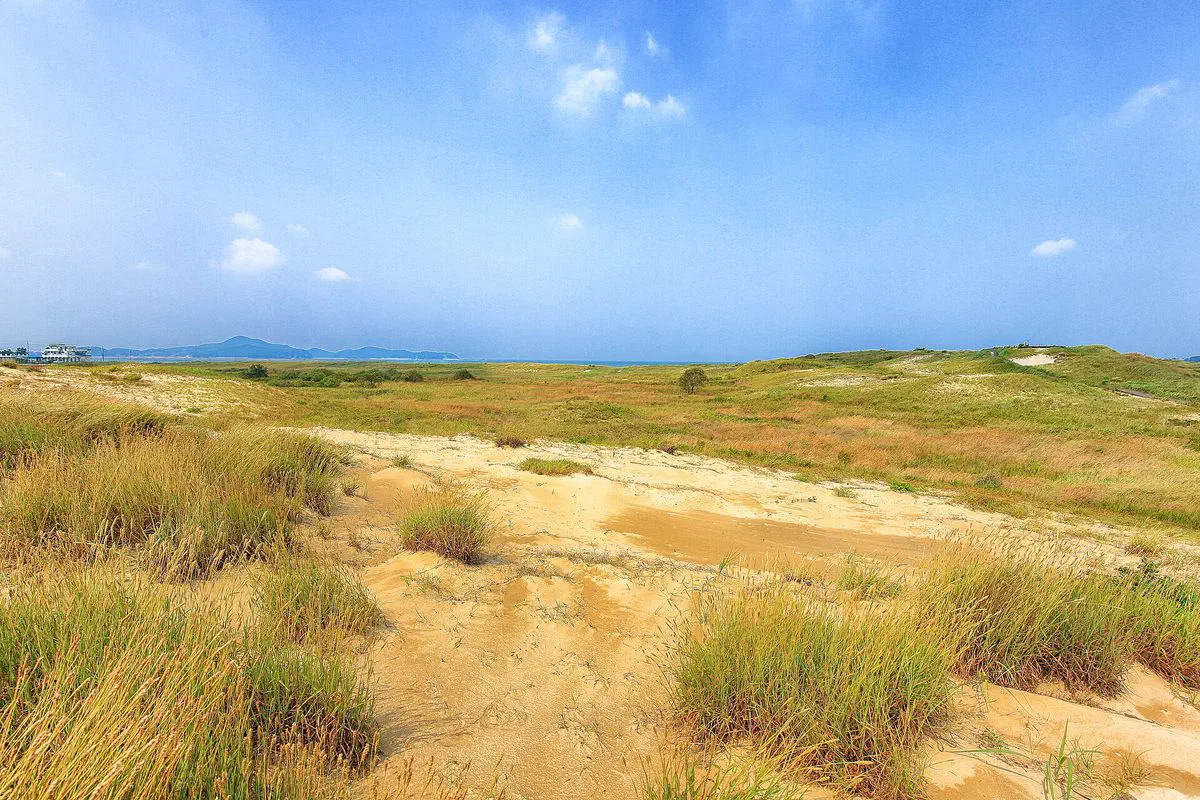
- Mallipo and Kkotji beaches — the area’s best-known swimming beaches, reachable by intercity bus from Seoul’s southern terminals though services thin out and stop early, which makes a car the practical choice if Taean is more than a single afternoon of your trip.
Why this coast, and not Busan or Gangneung
- East coast (Gangneung)
- Deep water close to shore, minimal tidal change — swim-first beaches
- South coast (Busan)
- City beach, full infrastructure, crowds to match
- West coast (Muuido, Taean)
- Wide tidal range, mudflats, sunset over open water — the beach changes shape twice a day
None of that makes the west coast “better” — it makes it a different kind of beach day, one built around checking a tide table rather than just a weather forecast. Our tidal-flat safety guide covers how to actually plan around that if you want to get onto the flat itself rather than just photograph it.
Getting there
A Korean eSIM makes the Incheon city bus routes to Muuido far less stressful to navigate in real time — our map app guide covers which app to have running. For Taean, our intercity bus guide covers booking a seat if you’re going without a rental car despite the recommendation above.
Both Taean and Muuido run mostly on their own small pension and motel stock rather than chain hotels — book directly with a place near the sand itself rather than expecting Seoul-style booking-platform depth out here.
Quick answers
Can I get to Muuido without a car?
What's special about west-coast beaches compared to Busan or Gangneung?
What are the Sinduri Dunes?
Is Taean easy to reach without a car?
Checked 5 September 2026. Muui Bridge’s replacement of the Muuido ferry, and the 중구6-1 / 무의1 bus routes to Hanagae Beach, from current Incheon transit guidance and the beach management office’s own contact listing. Taean’s eleven-course concentration of the Seohaerang Trail from Korea Tourism Organization regional trail write-ups. Sinduri Dunes' status as Korea’s largest coastal dune system from Korean environmental and heritage reporting on the reserve. Mallipo’s limited intercity bus service and early last-bus times from current Taean transit guidance. Bus routes, schedules and tidal conditions change — confirm before you travel.