Dancheong: The Paint Rules Behind Every Palace Roof
Last verified: 2026-08-17. Rules and prices change — always confirm on the official site before you travel.
This page contains affiliate links. If you book through them we may earn a commission at no extra cost to you. It never changes what we recommend.
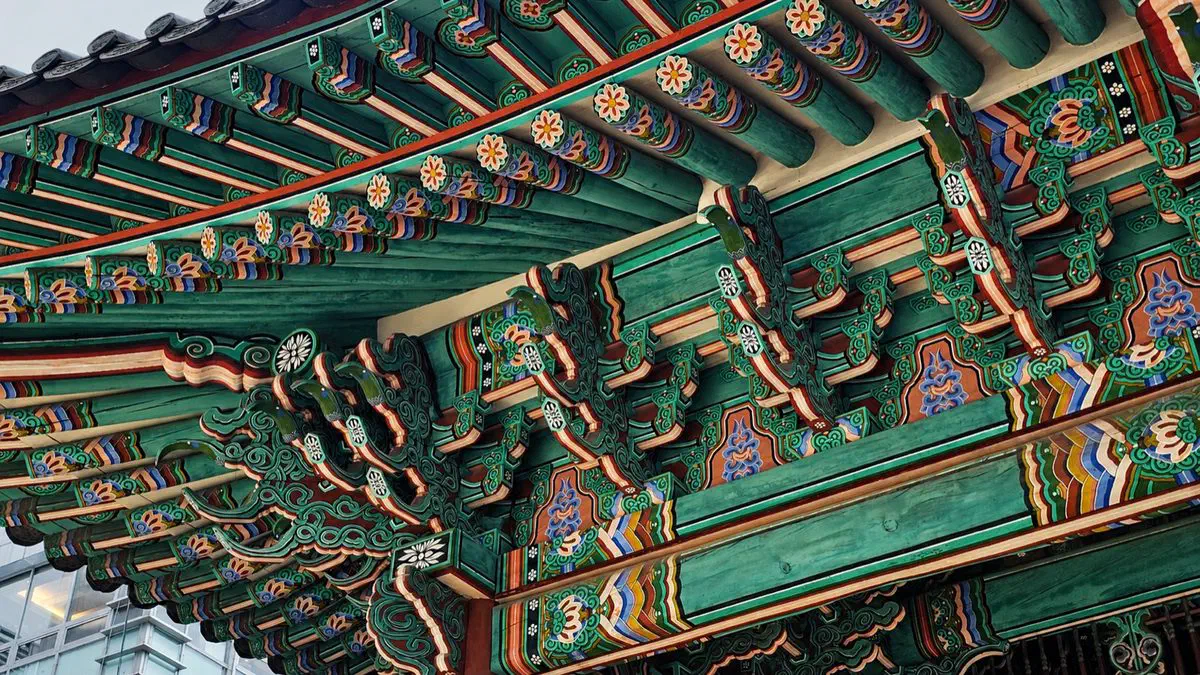
Every palace and temple photo on this site carries the same paintwork somewhere in it — layered blue, red, yellow, white and black under the eaves, on the brackets, running the length of a beam. That is dancheong, and it works differently from a mural. During the Joseon dynasty, even the wealthiest yangban nobles could not paint their own homes this way. Rules reserved dancheong for palaces, temples, and government and Confucian buildings. It was a color grammar, not a style anyone could simply choose.
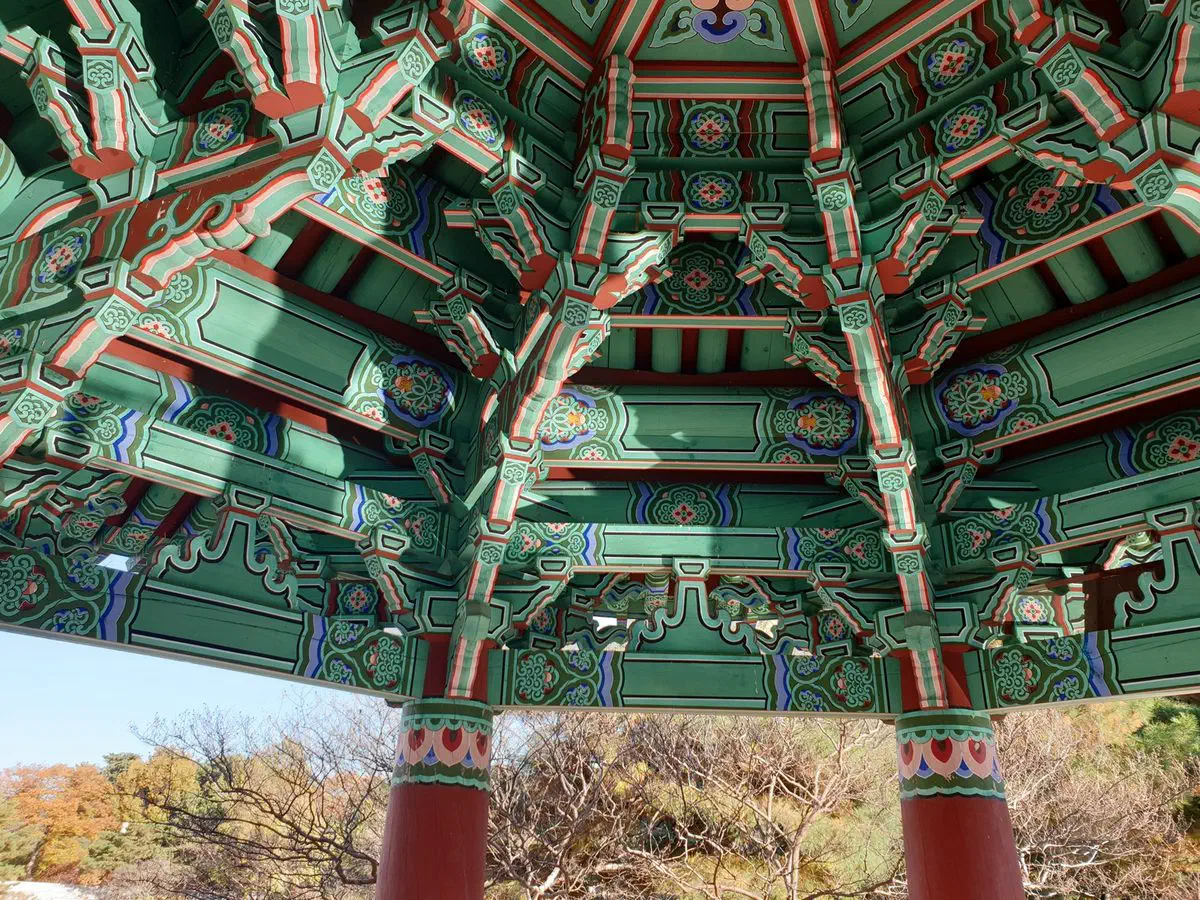
Dancheong’s five colors, five directions, one cosmology
Dancheong runs on obangsaek (오방색), the same five-color system this site is named for: blue for east, red for south, yellow for center, white for west, black for north. Each color maps onto one of five elements — wood, fire, earth, metal, water. Painting a beam in these colors was not a design choice. It placed the building inside that cosmology, the same reasoning behind hanbok trim and royal ceremony.
The pigments came from minerals, not dye: azurite for blue, cinnabar for red, orpiment for yellow, lime for white, carbon for black. That is also why dancheong survived on exposed wood for centuries. These mineral coatings shielded timber from weather and insects, so the paint job did double duty as structural maintenance. A newly painted building had, among other things, just been weatherproofed.
Five grades, from a single coat to a full scene
Dancheong is not one level of ornament. Craftsmen and heritage records group it into five grades, running from a plain base coat to the most elaborate figurative work:
- 가칠 Gachil
- A single flat color, green or reddish-brown, no pattern at all
- 긋기 Geutgi
- Gachil plus simple black-and-white lines
- 모루 Moru
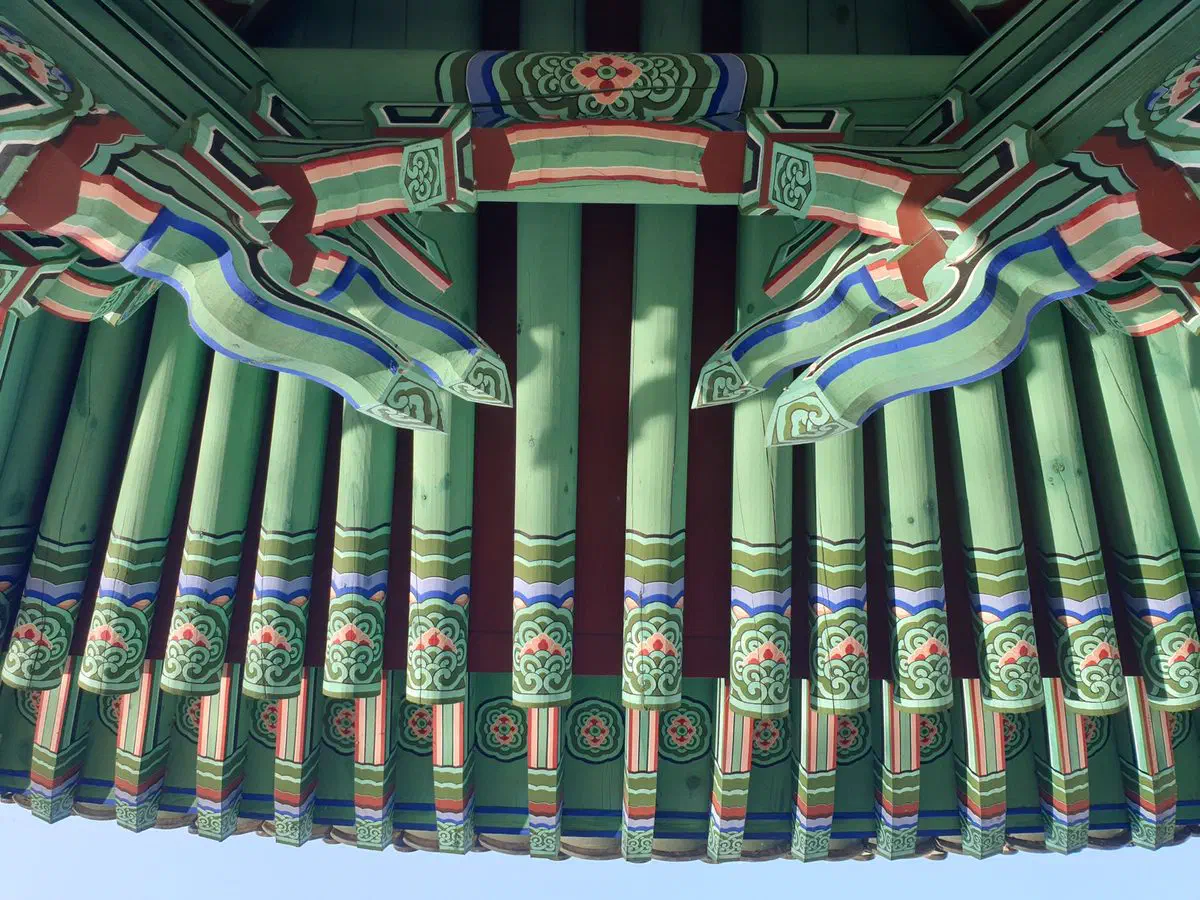
- Patterned end-pieces (meoreuji) at the tips of beams and brackets
- 금모루 Geummoru
- Moru’s patterns extended with more geometric decoration
- 금 Geum
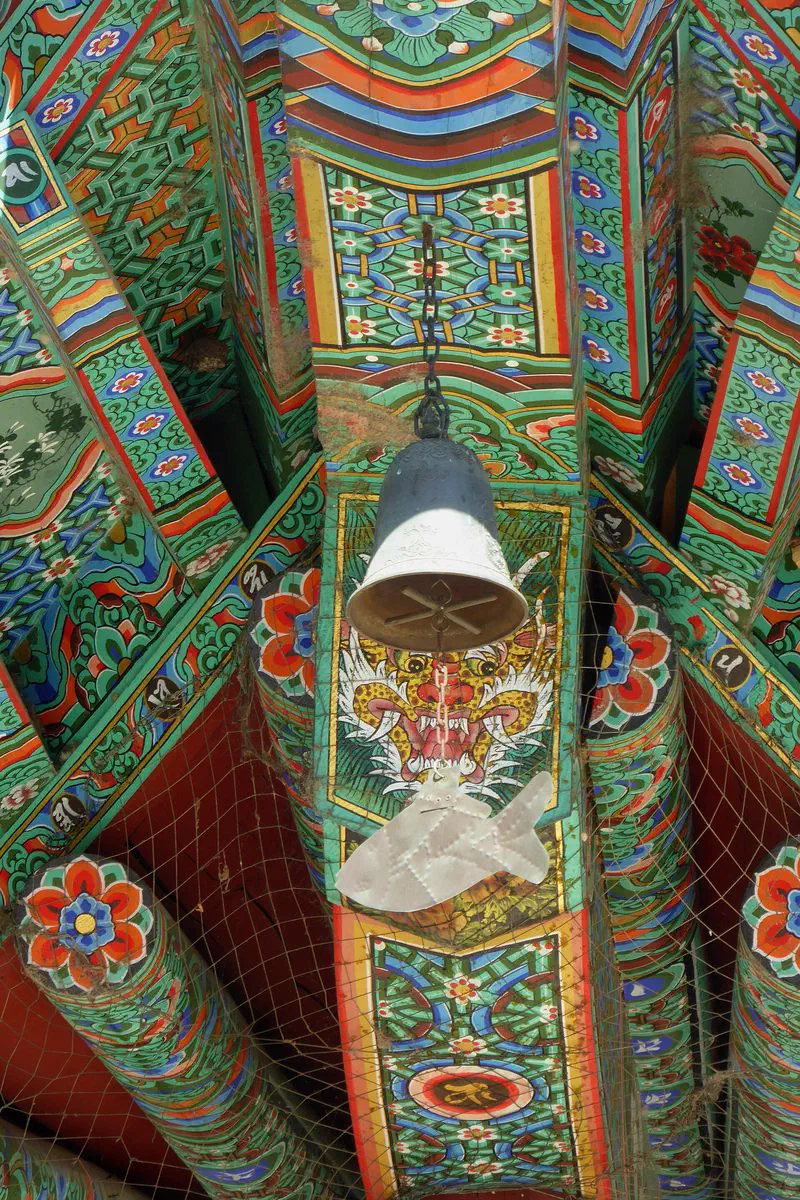
- The fullest form — patterned end to end, with figurative scenes (byeoljihwa) painted into the panels
Convention grants temples’ main halls geum, the top grade. That means the most visually dense dancheong you will see usually sits on a temple, not a palace hall. Meoreuji, the patterned caps at the ends of beams and brackets, is the piece most people photograph without knowing the term for it. Byeoljihwa are the small figurative paintings — dragons, lotus, guardian figures — that fill the panels of the highest grade.
Who painted it
A dancheongjang (단청장) is a dancheong master. The title sits inside Korea’s Important Intangible Cultural Heritage system, the same framework behind the master-craftsman titles our craft-title guide covers for other trades. Traditionally, each color had its own painter. A project needed as many hands as it had colors, each working in sequence rather than one artist covering the whole surface. That division of labor is part of why dancheong reads as a system rather than individual artwork. No single painter’s hand defines it.
Workers still apply and reapply dancheong today. Palace and temple restoration projects use the same grading system and, where possible, the same mineral pigment recipes. Conservation teams treat repainting a hall as heritage work, not redecoration.
Where to actually see it
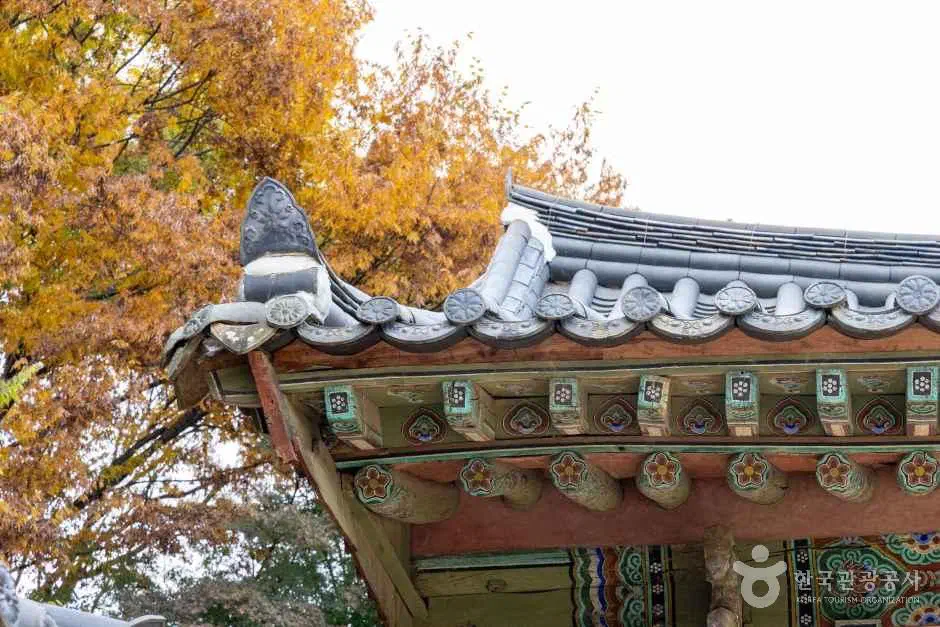
You do not need a dedicated trip. Dancheong is on every palace this site covers — the Gyeongbokgung ceiling detail, Changgyeonggung’s brackets, and Deoksugung’s Daehanmun gate all carry it, alongside temples like Bongeunsa and Confucian schools like Miryang Hyanggyo, further from Seoul. Look up at the eaves rather than straight ahead — most of it sits above eye level, which is exactly why photographs of it tend to look better than what people remember noticing in person.
A Korean eSIM is worth having before a palace visit either way — Naver Map gets you to the smaller sites like Miryang Hyanggyo that a phone signal, not a guidebook, actually finds.
Quick answers
Were Joseon nobles allowed to paint their homes with dancheong?
What do dancheong's five colors mean?
What are the five grades of dancheong?
Why did dancheong pigments help preserve palace buildings?
Checked 17 August 2026. Obangsaek color-direction-element mapping and mineral pigment composition from Korean heritage and materials- science sources, cross-checked against Korea Heritage Service’s own dancheong information. The five-grade system (gachil, geutgi, moru, geummoru, geum) and the practice of one painter per color from Korean dancheong-craft documentation. Joseon-era restriction of dancheong to palaces, temples and government buildings — barred even for wealthy yangban households — from Korean architectural-history sources on hanok sumptuary rules. Dancheongjang’s status within the Important Intangible Cultural Heritage system from Korea Heritage Service’s heritage registry. Practices and restoration methods can vary by site; this page describes the general system, not one specific building’s records.