Onggi: The Korean Jar That Breathes
Last verified: 2026-08-14. Rules and prices change — always confirm on the official site before you travel.
This page contains affiliate links. If you book through them we may earn a commission at no extra cost to you. It never changes what we recommend.
A jar that lets air through and keeps liquid in sounds like it should not work. Onggi has been doing exactly that for Korean fermented food for centuries, and the reason is not tradition — it is a hole so small you cannot see it.
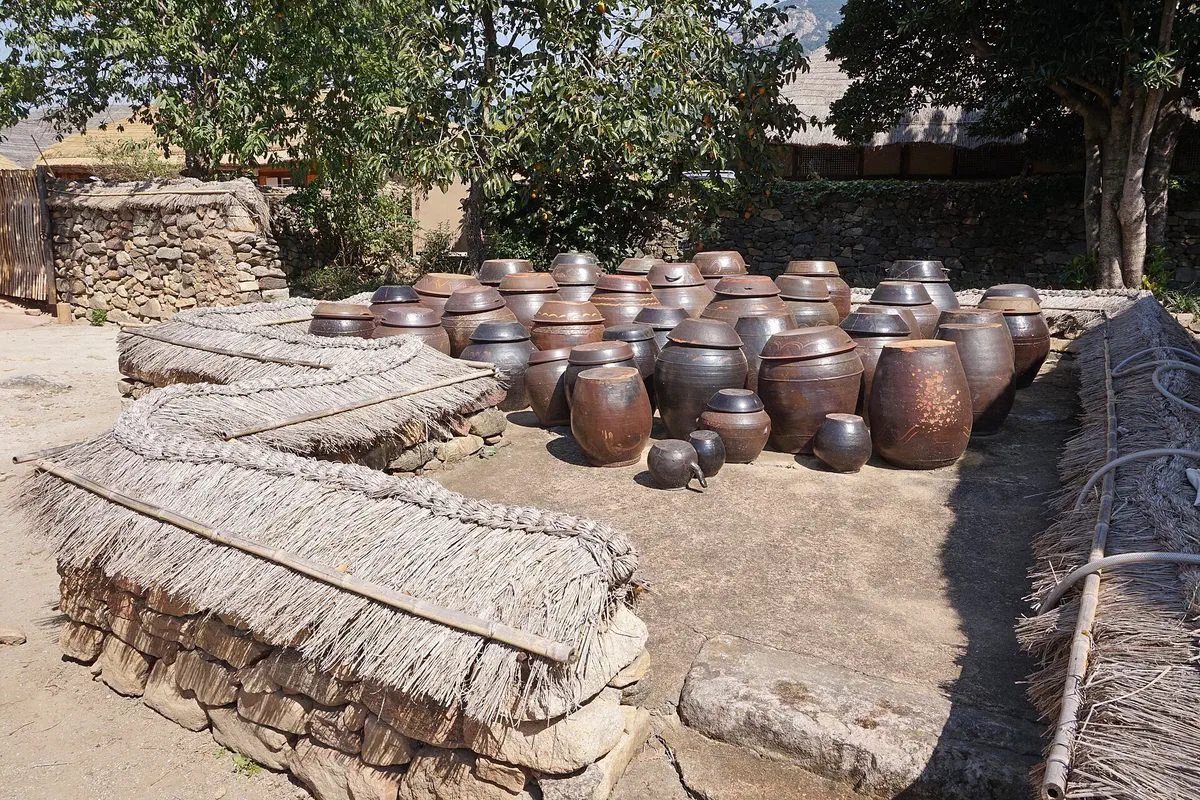
Why Korean onggi jars can breathe without leaking
Fire clay hot enough and the crystal-bound water trapped inside it escapes. Where that water used to be, a network of microscopic pores is left behind — too small for liquid to pass, large enough for air, microbes and yeast to move through. That is the whole trick. Nothing is glazed over it to seal it shut.
That porosity is also why onggi keeps things from spoiling in the first place. The same pores that let microbes in let waste gases and impurities work their way out, instead of building up against the food the way they would in a sealed container. Korean fermented staples — doenjang, ganjang, gochujang, kimchi in the version that is not refrigerated — are almost all matured in onggi for exactly this reason. It is less a tradition applied to fermentation than a container that happens to be correct for it.
Where to see Korean onggi actually made
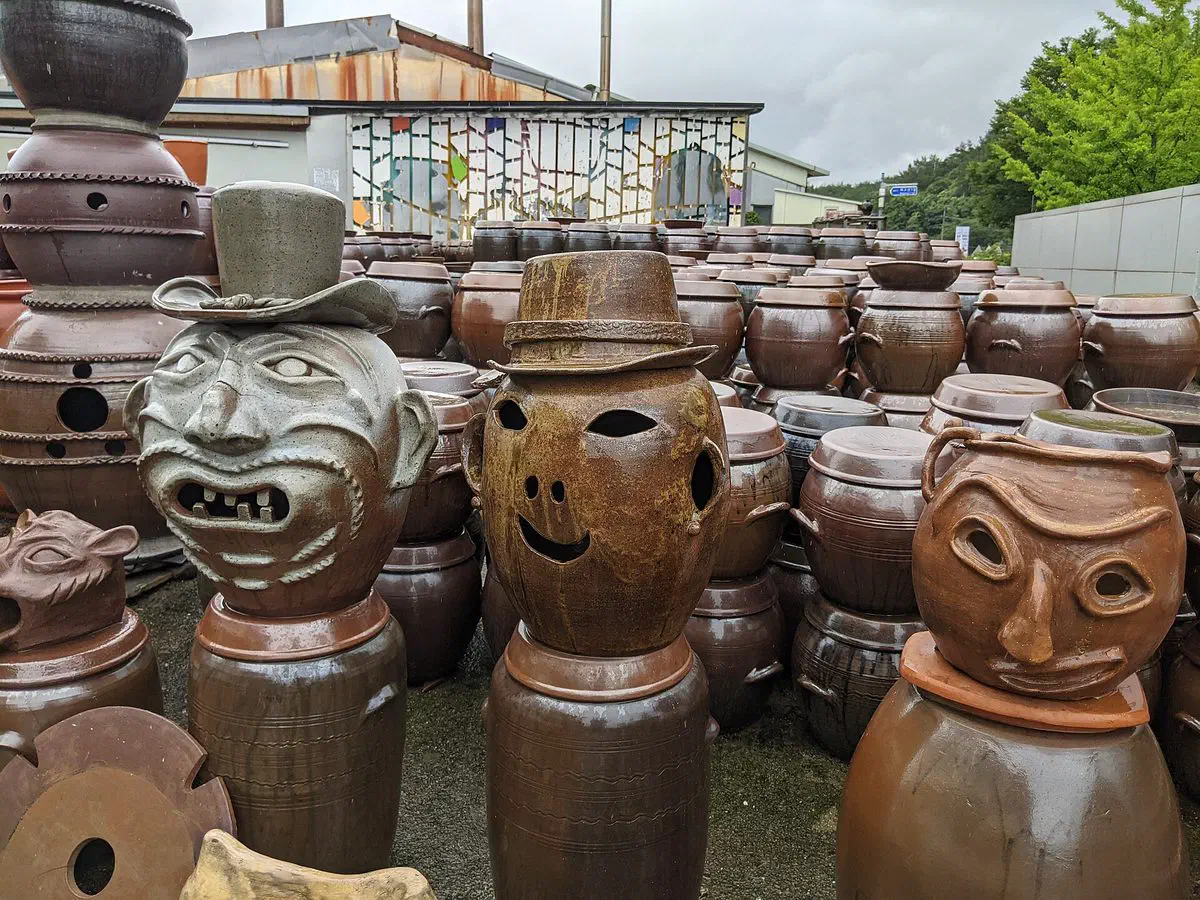
Oegosan Onggi Village, inland in Ulju County outside Ulsan, produces more than half of the onggi made in Korea and is the country’s largest onggi-producing settlement — not a recreation for visitors, a working industry that visitors can walk into.
The village runs an onggi museum — free to enter, 09:00–18:00, holding a Guinness-certified world’s-largest onggi jar among roughly 300 pieces on display — and a separate hands-on studio, the Onggi Academy, same 09:00–18:00 hours with a 12:00–13:00 lunch break, where you can throw a piece yourself for ₩7,000 per person (₩5,000 for groups of 30+).
- Museum
- Closed Mondays · 1 January · Seollal and Chuseok
- Onggi Academy
- Closed Mondays and Wednesdays · 1 January · Seollal and Chuseok
The two keep different closing days — the Academy also shuts Wednesdays, which the museum does not — so check both if your day depends on the hands-on session specifically. Contact numbers: 052-237-7894 for the museum, 052-237-7893 for the Academy.
What this means if you are buying
Here is the honest part: onggi is not a souvenir you carry home. A usable fermentation jar starts at a few liters and several kilograms, it is unglazed earthenware rather than reinforced stoneware, and it is exactly the category our shipping guide already warns about — ceramics are the type most likely to arrive in pieces, and onggi is heavier and thicker-walled than the celadon that guide is mainly talking about.
Sellers on Etsy do ship onggi internationally, handmade and in working sizes, and the reviews on the larger jars suggest they mostly arrive intact. But freight on several kilograms of fired clay is not small, and it is worth pricing the shipping before you price the jar. A miniature — the display-only jangdokdae sets sold as a decorative group — travels far better than anything meant to actually ferment something.
If you want the object rather than the function, that is the version to buy. If you want to actually make gochujang in one, buy it from a Korean retailer that ships domestically and have it waiting when you get home rather than in your luggage.
One weekend a year, the village itself is the event. The Ulsan Onggi Festival runs around 1 May, right here in Oegosan rather than in a stadium elsewhere in the city — the same museum and Academy, with a themed stage show and more going on around them. Worth checking the dates if your trip has any flexibility in early May.
Nearby
Oegosan is a dedicated trip, not a stop on the way to somewhere else — pair it with Busan, the nearest city this site covers, rather than trying to fit it around Seoul. If fermentation is the interest rather than the pottery, Korean traditional liquor covers the drinking side of the same technique, and the craft workshop guide covers hands-on classes if Ulsan is not on the itinerary. A Korean eSIM is worth having before a trip this far outside Seoul — the village is well past where casual wifi coverage can be assumed.
Quick answers
Why doesn't an onggi jar leak if the clay isn't glazed?
Can I ship an onggi jar home from Korea?
Where does most of Korea's onggi come from?
What foods are fermented in onggi?
Checked 14 August 2026. The porosity mechanism — crystal-bound water escaping during firing, leaving a pore structure that passes air and microbes but not liquid — from the National Intangible Heritage Center’s documentation of onggi. Oegosan Onggi Village’s production share and status as Korea’s largest onggi settlement from Ulju County’s own village site. Museum hours, admission, closing days and the Guinness-certified world’s-largest onggi (registered 28 June 2011) from the museum’s own information page. Onggi Academy hours, fees and closing days — confirmed separately because they differ from the museum’s — from the Academy’s own information page. KTX travel time from Korail’s published timetable. Etsy listing patterns for onggi checked the same day: consistently marked handmade and shipped from South Korea, unlike the printed goods found under other search terms.