Minhwa: Korea's Folk Paintings Nobody Signed
Last verified: 2026-08-19. Rules and prices change — always confirm on the official site before you travel.
This page contains affiliate links. If you book through them we may earn a commission at no extra cost to you. It never changes what we recommend.
Walk through a Korean painting gallery and nearly every scroll carries a seal — the artist’s, sometimes a collector’s stamped on top of it. Walk past the folk-painting cases and the seals mostly disappear. Minhwa (민화) is Joseon Korea’s largest surviving body of anonymous art, and the missing signature is not an accident of history. It is the whole story of who painted it and why.
Minhwa started in the palace, not the village
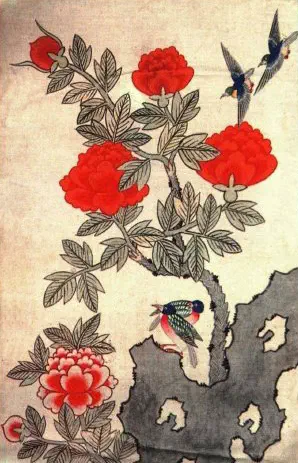
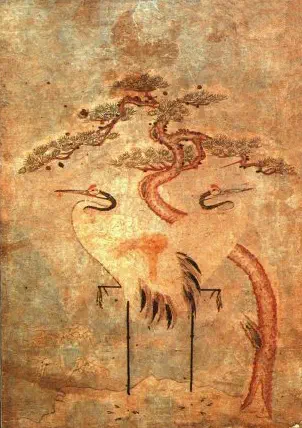
“Folk painting” suggests the tradition grew up among ordinary people from the start. It didn’t. Its grandest motifs — mountains, cranes, peonies, the sun and moon together — began as court subjects. Trained palace artists painted them for royal screens placed behind the throne. The minhwa most people picture today came later. Joseon’s rigid status system loosened through the 18th and 19th centuries. A newly wealthy merchant and commoner class wanted the same auspicious imagery for their own weddings, birthdays, and front gates. The motifs moved down the social scale. Painters outside the court system copied them, simplified them, and produced them by the hundred. What started as palace decoration became a folk tradition by drifting away from the palace, not by originating apart from it.
Why nobody signed it
Korea’s literati painters — yangban scholars working in ink, bamboo, and orchid — signed and sealed everything. The point of the painting was demonstrating their own cultivated character. Minhwa painters worked the opposite way. Most were itinerant or workshop tradesmen who traveled between towns painting screens, doors, and gate guardians to order. They treated the work as a craft trade, not personal expression. Nobody expected a signature on a set of doors, and nobody put one on a minhwa screen either. The anonymity was not modesty. It reflects where folk painters sat in Joseon’s social order — closer to a carpenter than to a scholar-artist, and paid and credited the same way.
Symbols instead of a signature
With no artist’s name to read, minhwa carried its meaning entirely in its imagery. Two genres show how deliberately that worked.
Munjado (문자도) paired the eight Confucian virtues with pictures built into the strokes of each character:
- 효 Hyo
- Filial piety toward parents
- 제 Je
- Respect between brothers
- 충 Chung
- Loyalty to the state
- 신 Sin
- Trustworthiness in one’s word
- 예 Ye
- Propriety, correct behavior
- 의 Ui
- Righteousness, moral duty
- 염 Yeom
- Integrity, incorruptibility
- 치 Chi
- A sense of shame and self-awareness
Families hung munjado screens in a child’s room or a scholar’s study, so the virtue was taught by sight rather than by lecture.
Kkachi-horangi (까치호랑이), the magpie-and-tiger genre, worked as satire rather than instruction. The tiger stands for the yangban aristocracy. Painters made it look clumsy and cross-eyed on purpose. The magpie, composed and sharp, scolds it from a pine branch above. Read straight, it is a forest scene. Read as Joseon audiences read it, it is a commoner mocking authority to its face — safely, from inside a decoration hung on someone’s own wall.
Who rescued it from being called doodles
For most of the 20th century, Korea’s art establishment ranked minhwa below literati painting, dismissing it as crude and unrefined. That changed largely through one collector: architect-turned-folklorist Zo Zayong began buying minhwa in the late 1960s, when it was still considered unworthy of serious collections, and founded Seoul’s Emileh Museum specifically to house it. His advocacy is a major reason minhwa is treated today as its own branch of Korean traditional art rather than a lesser copy of something else.
Where to see it, and where to try it
Our craft-workshops guide covers booking a hands-on minhwa painting class in Seoul directly.
If you would rather buy than paint, our guide to souvenirs that actually ship covers minhwa prints specifically — flat, light, and none of the breakage risk that ceramics or lacquerware carry through an airport.
A Korean eSIM is worth having before you go looking for either — the workshop studios and the folk-art print shops both tend to sit on alley addresses that a phone signal finds faster than a paper map.
Quick answers
Why don't minhwa folk paintings have a signature?
Did minhwa folk painting originate among ordinary people?
What does the magpie-and-tiger (kkachi-horangi) minhwa genre mean?
Who helped establish minhwa as serious Korean art?
Checked 19 August 2026. Minhwa’s court origins and its diffusion to commoner and itinerant painters during the late Joseon period, the distinction from signed literati painting, and the eight-virtue munjado tradition cross-checked against the National Folk Museum of Korea’s own minhwa entry and other Korean folk-art scholarship. Kkachi-horangi’s satirical reading of the tiger as yangban authority and the magpie as the commoner voice from established folklore interpretation of the genre. Zo Zayong’s collecting activity from the late 1960s and his founding of the Emileh Museum from published accounts of minhwa’s 20th-century critical rediscovery. Practices and attributions can vary by source; this page describes the general tradition, not one specific collection’s records.