Hallasan Hiking: The Reservation Only Covers the Top Part
Last verified: 2026-08-27. Rules and prices change — always confirm on the official site before you travel.
This page contains affiliate links. If you book through them we may earn a commission at no extra cost to you. It never changes what we recommend.
Hallasan hiking draws more foreign visitors than any other mountain in Korea, and it is also the one trip in this series that starts with a plane ticket rather than a bus or a subway card. At 1,947 meters it is the tallest peak in South Korea, its summit is a volcanic crater lake rather than a rock outcrop, and the permit system that controls access to it is more specific than most guides let on — it does not cover the whole mountain, only the last stretch of it.
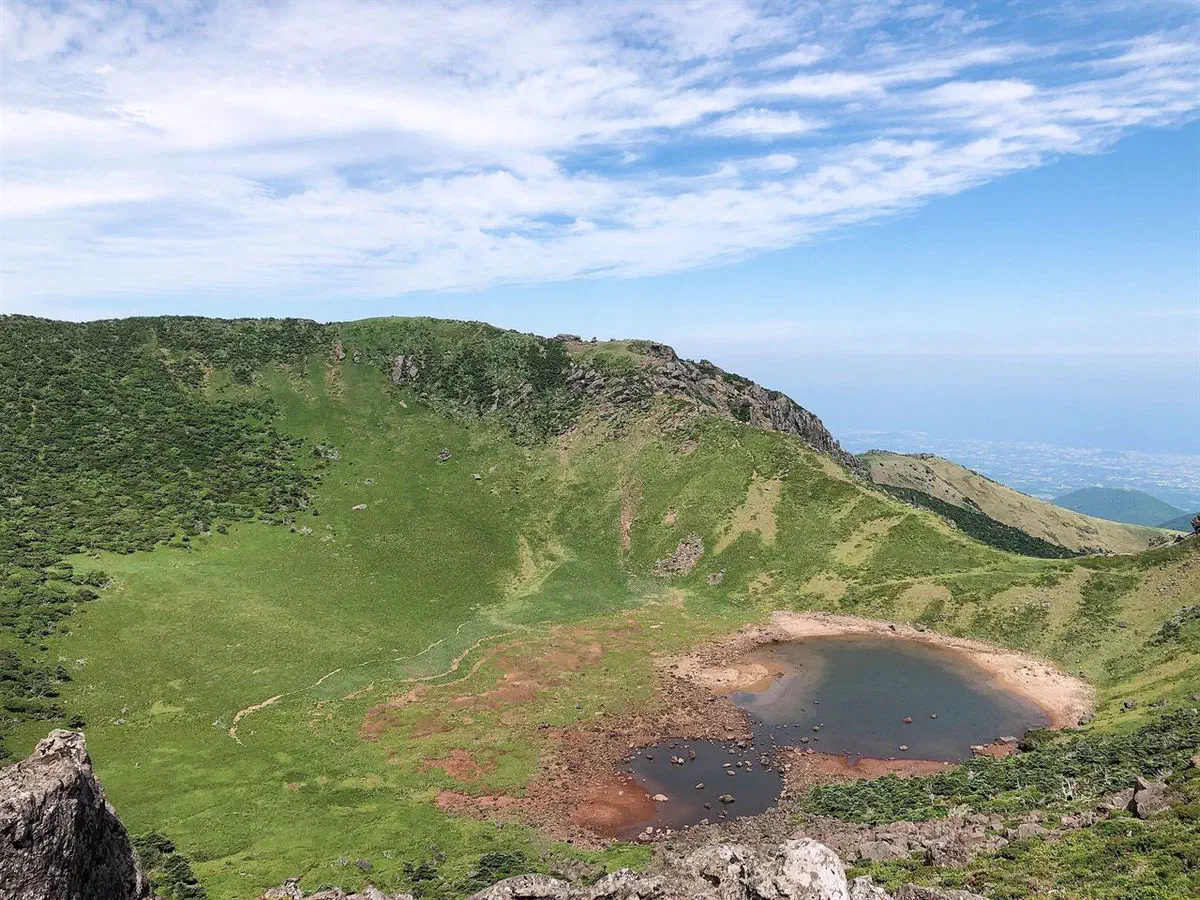
The permit covers less of the mountain than people assume
Since 2025 the reservation requirement applies only to the final stretch into Baengnokdam itself — Jindalraebat and beyond on the Seongpanak side, Samgakbong and beyond on Gwaneumsa. Walk-in hikers can use everything below that point, on either trail, with no booking at all.
For live conditions and the reservation portal itself, visithalla.jeju.go.kr is the official system — Naver Map and Kakao Map cover walking directions on the ground once you have a slot booked.
Daily quotas: Seongpanak 1,000, Gwaneumsa 500. Bookings for an entire month open at once, at 09:00 on the 1st of the previous month — climbing in May means booking in the first minutes of April 1st if the popular dates matter to you. One reservation covers up to four people. A no-show blocks new bookings for three months, and a second one extends that to a year, so cancel rather than skip if plans change.
Hallasan hiking routes, and only two reach the actual summit
Seongpanak — the standard route. 9.6 km one way, about 4.5 hours up, roughly 9 hours round trip. The gentlest grade of the two summit routes, which is why most first-timers start here.
Gwaneumsa — steeper, rockier, fewer people. 8.7 km one way, about 5 hours up, and its valley and rock-face terrain make it noticeably harder than Seongpanak despite the shorter distance.
Eorimok and Yeongsil — to Witseoreum, not the summit. Eorimok reaches Witseoreum shelter in about 2 hours; Yeongsil covers its 3.7 km in a similar window past volcanic rock formations. Neither needs a reservation, because neither goes to Baengnokdam — many visitors combine the two into one traverse, up one side and down the other.
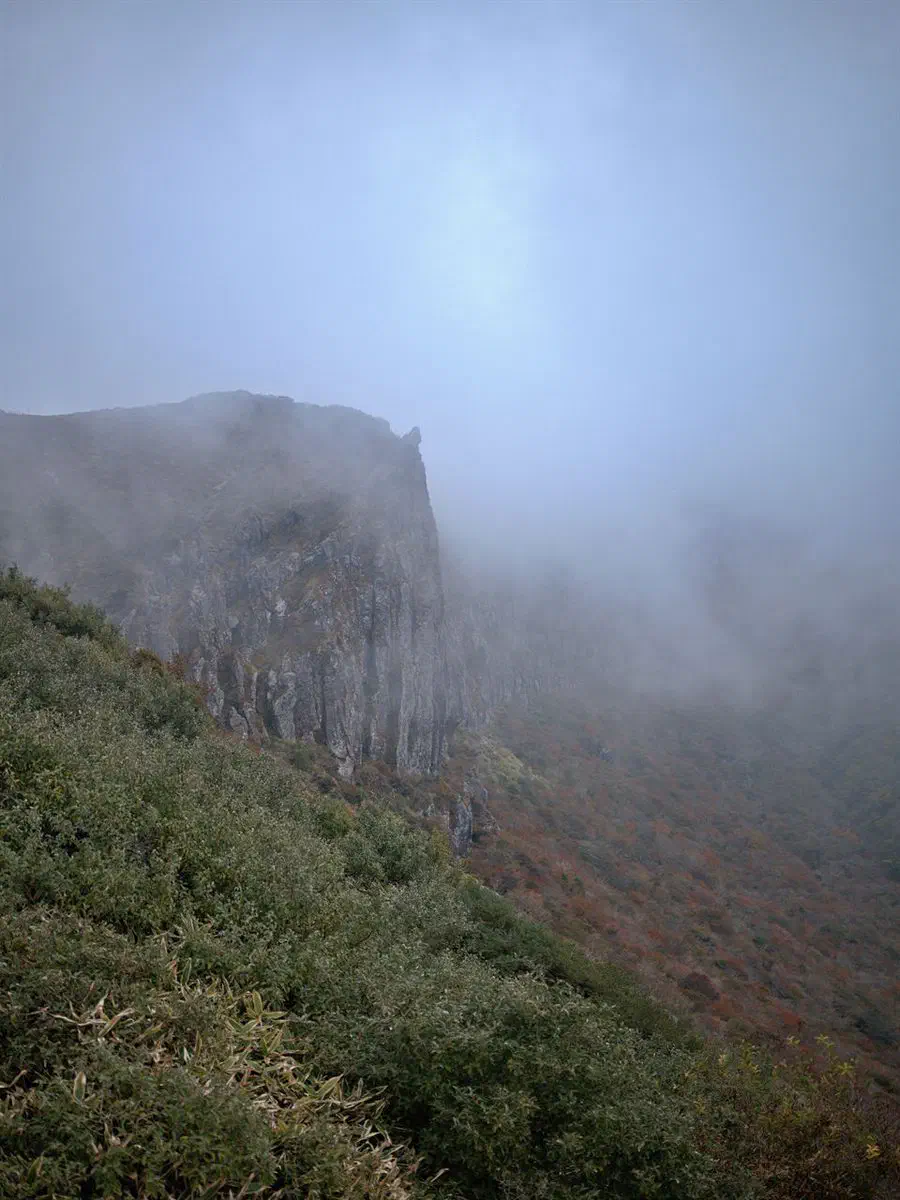
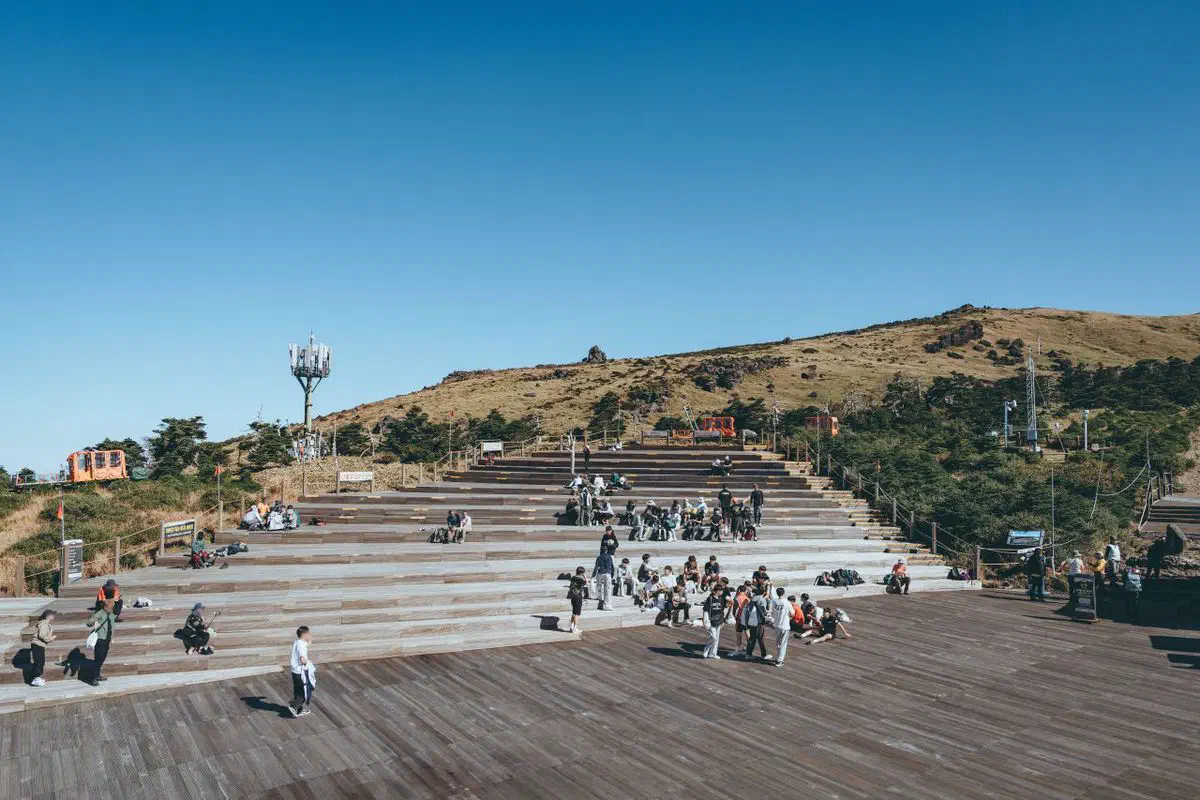
Both entry systems matter, and they are different things
Separate from the monthly reservation, a daily entry-time cutoff controls when you can still start: 05:00 opening year-round, with the gate closing around 12:30 in summer and 11:30 in winter so nobody starts a route they cannot finish before dark. Booking a slot does not override this — arrive after the cutoff and the reservation does not get you past the gate.
The crater is dry more often than it looks in photos
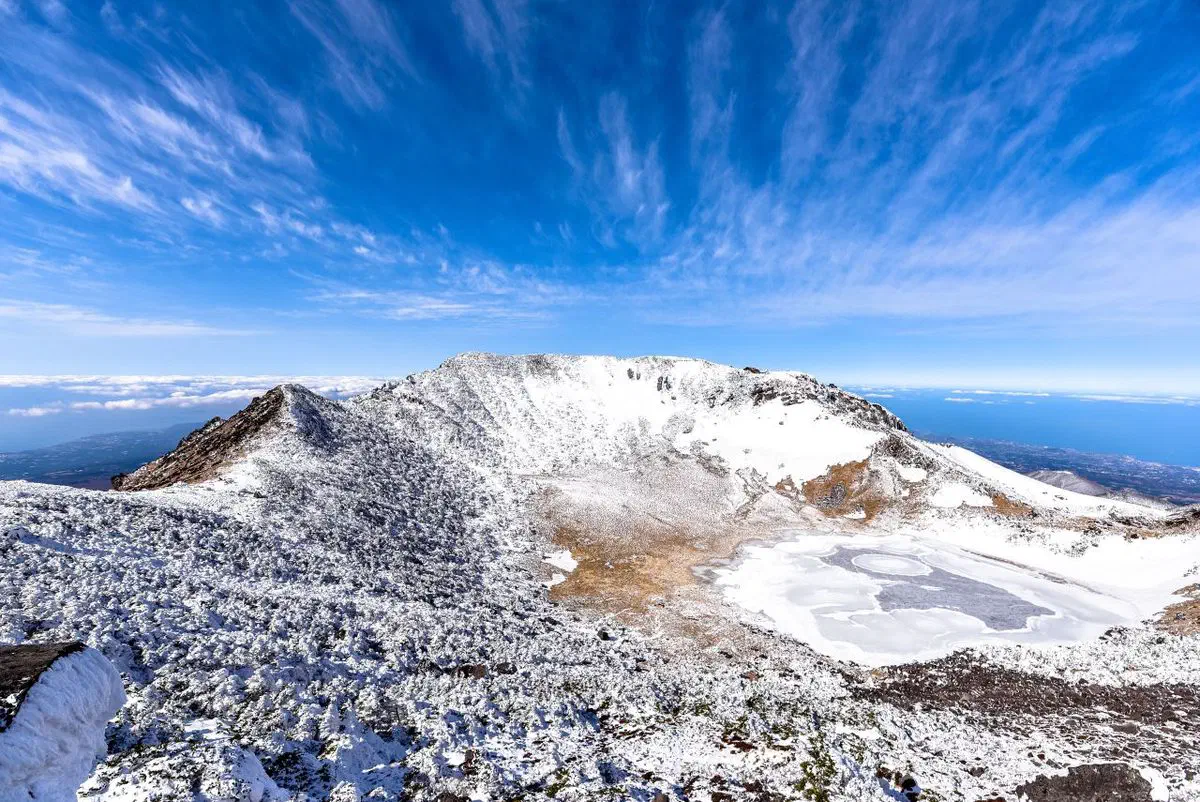
Baengnokdam is an oval crater roughly 400 by 600 meters, but the postcard version — full to the rim — needs 500 to 800 mm of rain concentrated at the summit to fill, and it drains at around 7.8 cm a day afterward. Most of the year it is a shallow pool at the bottom of a mostly dry basin, the way it appears in the photo at the top of this page. Plan to be impressed by the crater itself rather than counting on a full lake.
Getting to the trailhead is its own errand
Seongpanak’s parking lot fills early enough that the park authority recommends the bus over driving. Route 281 (and 182) connects Jeju City and Seogwipo along the cross-island road, stopping at both Seongpanak and Gwaneumsa — check the day’s first departure and plan around it rather than arriving mid-morning and hoping for a parking space.
Unlike Sorak-dong or Ui-dong, neither trailhead sits inside a real village — Seongpanak and Gwaneumsa are both stops on a forest highway, not a tourist strip. Gear rental exists on Jeju in a way it doesn’t for the other two mountains in this series — shops along the cross-island road rent crampons and poles rather than only selling them — but there is no cluster of them right at either gate, so sort it out before you leave Jeju City if renting is the plan.
Food follows the same pattern: nothing at the trailhead itself, but gogigguksu (pork and noodle soup) and momguk (a seaweed-and-pork soup unique to Jeju) are the island’s own specialties, worth the stop back in Jeju City or Seogwipo rather than something to expect at the gate.
Before you book anything
A Korean eSIM matters here as much as the flight does — the reservation portal, the bus schedule and the trail map all live on your phone, and Jeju’s own transit runs on the same Naver Map and Kakao Map habits as the mainland. Our guide to getting around Korea covers why data comes before the map app choice.
If the reservation window and the permit rules are more than you want to manage yourself, a guided Eorimok–Yeongsil hike with a licensed guide covers both non-reservation trails to Witseoreum in one day — the permit question solved by not needing one.
The short version
- Getting there
- Flight to Jeju (about 1h from Seoul) — no rail or road link to the mainland
- Reservation needed
- Only Jindalraebat→Baengnokdam (Seongpanak) and Samgakbong→Baengnokdam (Gwaneumsa)
- Daily quota
- Seongpanak 1,000 · Gwaneumsa 500
- Booking opens
- 09:00, the 1st of the prior month, for the whole month at once
- No reservation ever
- Eorimok and Yeongsil — but they stop at Witseoreum, not the summit
- Entry cutoff
- 05:00 start · gate closes ~12:30 summer, ~11:30 winter
- The crater
- Usually shallow or dry — full only after 500–800 mm of summit rain
- Parking
- Fills early at Seongpanak — bus 281/182 is the recommended option
Book the summit slot the moment the month opens if the date matters, and treat the entry-time cutoff as the harder deadline — a reservation gets you in the queue, not past a gate that has already closed. If a flight to Jeju is more than a day trip calls for, Bukhansan and Seoraksan are the mainland options that don’t need one.
In the same trip
Other museums within reach
- Jeju National Museum — Jeju, about 17 km away.
- Jeju Haenyeo Museum — Gujwa-eup, Jeju, about 35 km away. Sea and ecology rather than history.
Festivals near here
These run on their own dates, so check them against yours before you build a route around them.
- Jeju Olle Walking Festival — November, about 22 km away.
Filmed near here
- K-Pop Locations in Jeju — Oedolgae, Seogwipo, Jeju, about 14 km away.
Quick answers
Do I need a reservation to hike Hallasan?
When does the Hallasan reservation window open?
Which Hallasan trails don't need a reservation?
Is Hallasan's crater lake usually full?
Checked 27 August 2026. Foreign-visitor park rankings from current Korean and English travel reporting. Trail distances and times for Seongpanak, Gwaneumsa, Eorimok and Yeongsil, and the 05:00 start with seasonal entry cutoffs, from the Hallasan reservation system’s own trail pages. The 2025 change narrowing the reservation requirement to Jindalraebat/Samgakbong-and-above, daily quotas, monthly booking-window timing and no-show penalties from Korean news reporting on the policy — this system has changed before and may again; confirm on visithalla.jeju.go.kr before you plan a date around it. Baengnokdam’s dimensions, rainfall threshold to fill and daily drainage rate from Korean science reporting on the crater. Seongpanak parking and the recommended bus routes from the park authority’s own transit guidance. Dates, quotas and prices change — confirm before you travel.