Seoul Will Lend You Hiking Boots — Free
Last verified: 2026-09-22. Rules and prices change — always confirm on the official site before you travel.
This page contains affiliate links. If you book through them we may earn a commission at no extra cost to you. It never changes what we recommend.
Seoul will lend a foreign visitor hiking boots and a jacket for free. Not a discount, not a rental-shop rate — the city government runs three centers that hand out hiking gear at no charge to anyone who isn’t Korean, five minutes from three separate trailheads.
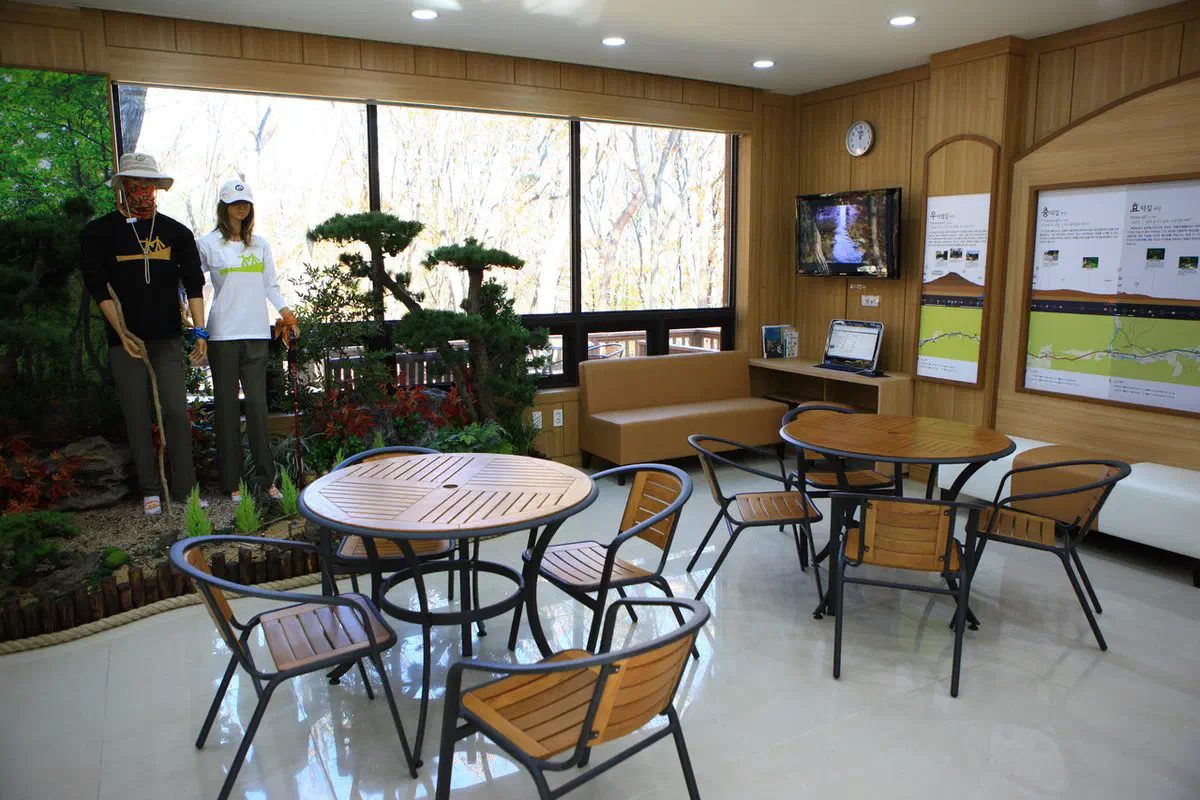
This isn’t a one-off pilot at a single mountain. It’s a Seoul Metropolitan Government program, run by the Seoul Tourism Organization, and it exists at three trailheads.
Not just Bukhansan — three centers
The Bukhansan center opened first, in September 2022, and Bugaksan followed in April 2024, with Gwanaksan starting as a pilot that November. Two weeks after Gwanaksan opened, the city had already counted 27,612 total visits across the three centers combined, with foreign visitors making up roughly 40% of that — evidence the program found an audience fast, even if that specific count is now dated.
All three sit inside or right against the city — none of them is a day trip out of Seoul the way Seoraksan or Jirisan are, and the map above places them against the Han River and three landmarks most visitors already have a mental fix on: Seoul Station, City Hall and the Express Bus Terminal. Bugaksan, in the north-center, is the closest — practically downtown, just north of the river; Gwanaksan, on the southern city line well south of the river, is the farthest of the three, though still well inside an hour by subway from most of central Seoul.
- Bukhansan
- 52 Samyang-ro 173-gil, Gangbuk-gu, 5F · 5 min from Bukhansan-ui Station (Ui LRT) Exit 2 · opened Sept 2022 · 12 kinds of gear
- Bugaksan
- Samcheong-dong, inside a traditional hanok near Gwanghwamun and Gyeongbokgung · opened Apr 2024 · 17 kinds of gear, including umbrellas and camping chairs
- Gwanaksan
- Inside Gwanaksan Station (Sillim Line), B1F · opened Nov 2024 · 8 kinds of gear
Bugaksan’s location is worth a second look on its own: the center sits inside a hanok in Samcheong-dong, and the trail above it looks out over the former Blue House and the Bugak Skyway — a night view most gear-rental counters anywhere in the world cannot claim.
None of Korea’s other hiking regions on this site — Seoraksan, Hallasan, Jirisan, Songnisan — have anything like this yet. It is, for now, a Seoul program only.
Why two of these three names end in “-aksan”
Bugaksan (北岳山) and Gwanaksan (冠岳山) both end in 악 (岳) — the same character in Seoraksan and Chiaksan, two of Korea’s best-known granite peaks. A common belief is that the character itself means “rock,” and that mountains get it because they’re rocky and hard to climb. That’s not quite what the character says: 岳 literally means “great mountain,” not rock or difficulty. Korean hiking terminology does have a real word for a rocky peak — 골산 (骨山, “bone mountain”), as opposed to a soil-covered 육산 (肉山, “flesh mountain”) — and it’s a separate word from 岳 entirely.
The belief persists for a reason, though: 岳-named peaks in Korea do tend to be the taller, steeper ones, and a tall, steep Korean granite peak is usually the kind that ends up bare rock rather than soil-covered — Gwanaksan’s own boulder ridges are a good example. The pattern is real even if the character’s literal meaning isn’t about rock.
Bukhansan (北漢山), the third mountain here, breaks the pattern on purpose — its name has never had 岳 in it as an official name. Its oldest recorded name, from the Silla period, was actually 부아악 (負兒嶽) — “the mountain carrying a child on its back,” describing Insubong’s shape, and yes, spelled with 嶽, an alternate form of the same character. Later it became known as 삼각산 (三角山), “three-horn mountain,” for its three peaks — Baegundae, Insubong and Mangyeongdae — and only took its current name, using 漢 (a character referring to China’s Han dynasty, the same one in Han River’s own name), in an official 1917 survey report, formalized when the national park was designated in 1983. So the mountain that dropped 岳 from its name is, historically, the one that started with it.
What’s actually free
Hiking boots and hiking clothing are free, full stop, for foreign visitors — that’s the headline the Seoul city government leads with, and it’s the part every source agrees on. Lockers inside the center, changing rooms and showers (bring your own towel) are also free.
Where sources start to disagree is everything past that: trekking poles, gloves and crampons (아이젠) are also stocked, and older pilot-period write-ups from 2022–2023 described small per-item fees for extras, while the city’s current pages describe the whole rental as free. Treat “boots and clothes: free” as confirmed, and confirm anything beyond that at booking — prices and item lists are exactly the kind of detail that changes without this page knowing about it.
How to book
Each center takes walk-ins — staff will help you pick gear on the spot — but Seoul’s own advice is to reserve up to two days ahead online, since sizes run out. All three centers book through Klook:
Reserve gear at the Bukhansan center Reserve gear at the Bugaksan center Reserve gear at the Gwanaksan centerBefore you go
- Hours: 09:00–18:00 at all three centers.
- Closed: Bukhansan is closed Mondays; the other two centers close on a different weekday each (check at booking), and all three close on Seollal and Chuseok.
- Return by 16:30. Gear has to come back to the center the same day, before closing — plan your hike around that, not around 18:00.
- Nothing here is insured. The centers say so directly: if you’re worried about an accident on the trail, that’s on personal or mountain insurance, not the rental.
- Korean visitors can use the lockers but not the rental gear — the boots-and-clothes service is specifically for foreign visitors (and Koreans hiking as part of a foreign visitor’s group).
- Bring a way to get online. Booking, the Klook confirmation and Naver or Kakao Map to find the center all need data — our eSIM comparison covers the options, and Klook sells the most common one as an installable QR code.
Is hiking gear rental in Seoul really free?
Do I have to book online, or can I just show up?
Is this only at Bukhansan?
Checked 22 September 2026. The 岳 character’s meaning, the 골산/육산 (rocky/soil-covered) distinction, and the pattern linking 岳-named peaks to granite terrain are corroborated across multiple Korean-language sources, including Namuwiki’s entry on 岳. Bukhansan’s naming history — 부아악 in the Silla period, 삼각산 afterward, and 북한산 only becoming the official name via a 1917 Japanese colonial-era survey report, formalized at the 1983 national park designation — is drawn from Seoul Metropolitan Government’s own history feature and cross-checked against Korean Wikipedia and the Academy of Korean Studies’ Encyclopedia of Korean Culture. Gwanaksan and Bugaksan coordinates from their respective English Wikipedia entries; Seoul Station, City Hall and Express Bus Terminal coordinates likewise from their English Wikipedia entries. Seoul’s district boundaries are KOSTAT’s 2013 simplified administrative map (via the southkorea/seoul-maps public dataset); the Han River line is from Natural Earth’s public-domain Rivers and Lake Centerlines dataset. Program history, opening dates, per-center gear counts and the November 2024 visitor count from a Seoul Metropolitan Government press release dated 25 November 2024. Free boots-and-clothing policy, hours, return time and insurance notice from the official Seoul travel guide and each center’s own reservation listing on Klook (linked above). Bukhansan center address and transit access corroborated by VisitKorea. Item counts change with what’s in stock — this page describes the program, not a live inventory.