Korean Festivals Worth Planning a Trip Around
Last verified: 2026-08-31. Rules and prices change — always confirm on the official site before you travel.
This page contains affiliate links. If you book through them we may earn a commission at no extra cost to you. It never changes what we recommend.
Most lists of Korean festivals do one of two things badly. They quote last year’s exact dates as if those still apply. Or they stay so vague they are useless for planning. This page tries neither. Dates below follow how these events actually behave — “early October,” not “3–7 October” — because the organizers move them a little most years, and a page that pins one specific day goes wrong the moment a new schedule comes out. Want the exact date? Each festival’s official link below has it.
What this page covers, and what it skips: cultural and civic festivals — parades, crafts, food, light, ice — that you attend as a spectator. None of them are religious services. None of them require or expect participation in worship. A note flags it where a festival has religious roots, and the coverage stops at the public, cultural part of it.
The year at a glance
- January
- Hwacheon Sancheoneo Ice Festival, Hwacheon
- February–March
- Nothing on this page
- April–May
- Icheon Ceramics · Yeondeunghoe · Boseong Tea · Ulsan Onggi — four festivals, all by mid-May
- June
- Nothing on this page
- July
- Boryeong Mud Festival, mid-July
- August
- Nothing on this page
- September–October
- Andong Mask Dance · Gyeongju Silla Cultural · Jeonju Hanji · Jinju Namgang Lantern · Jeonju Bibimbap — five festivals, the busiest stretch
- November
- Korea Traditional Liquor Grand Festival, Seoul
- December
- Nothing on this page
Two months carry nearly the whole page. Early-to-mid May and the September–October stretch each hold four or five festivals at once. Rooms in Gyeongju, Jeonju and Andong get tight in exactly those weeks. The rest of the calendar sits close to empty. That is useful either way — for a trip built around one of these events, or for a quieter one that avoids them on purpose.
Spring
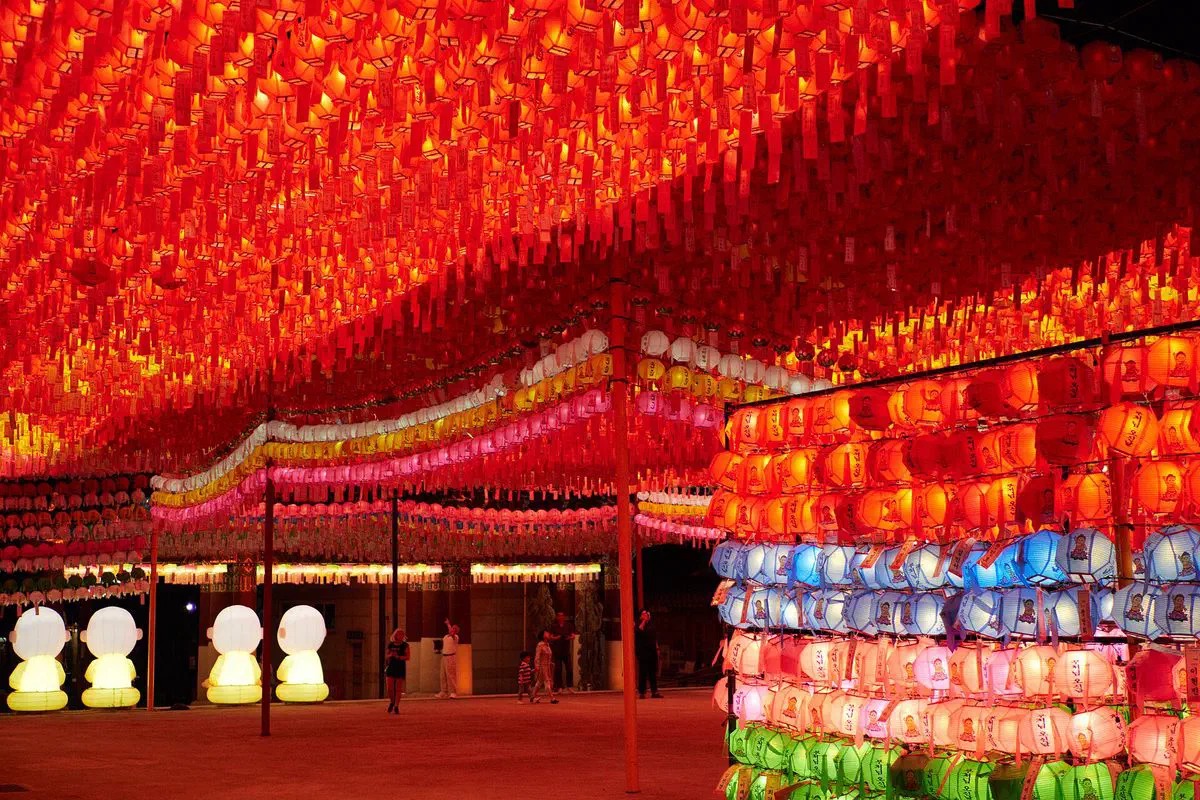
Yeondeunghoe (연등회) — the lantern festival, around Buddha’s Birthday
Roughly 1,200 years old, designated Korea’s National Intangible Cultural Heritage in 2012 and inscribed on UNESCO’s Representative List of the Intangible Cultural Heritage of Humanity in 2020. The event people come for is the lantern parade — tens of thousands of participants carrying handmade lanterns through central Seoul, from Dongdaemun along Jongno, on the evening before Buddha’s Birthday. Streets close for it, and it is a public procession you watch or join from the pavement, not a temple service. Buddha’s Birthday follows the lunar calendar, so it lands on a different date each year — usually early-to-mid May — and the Lotus Lantern Festival’s own site publishes the confirmed date each year.
Boseong Tea Festival — early May, Boseong
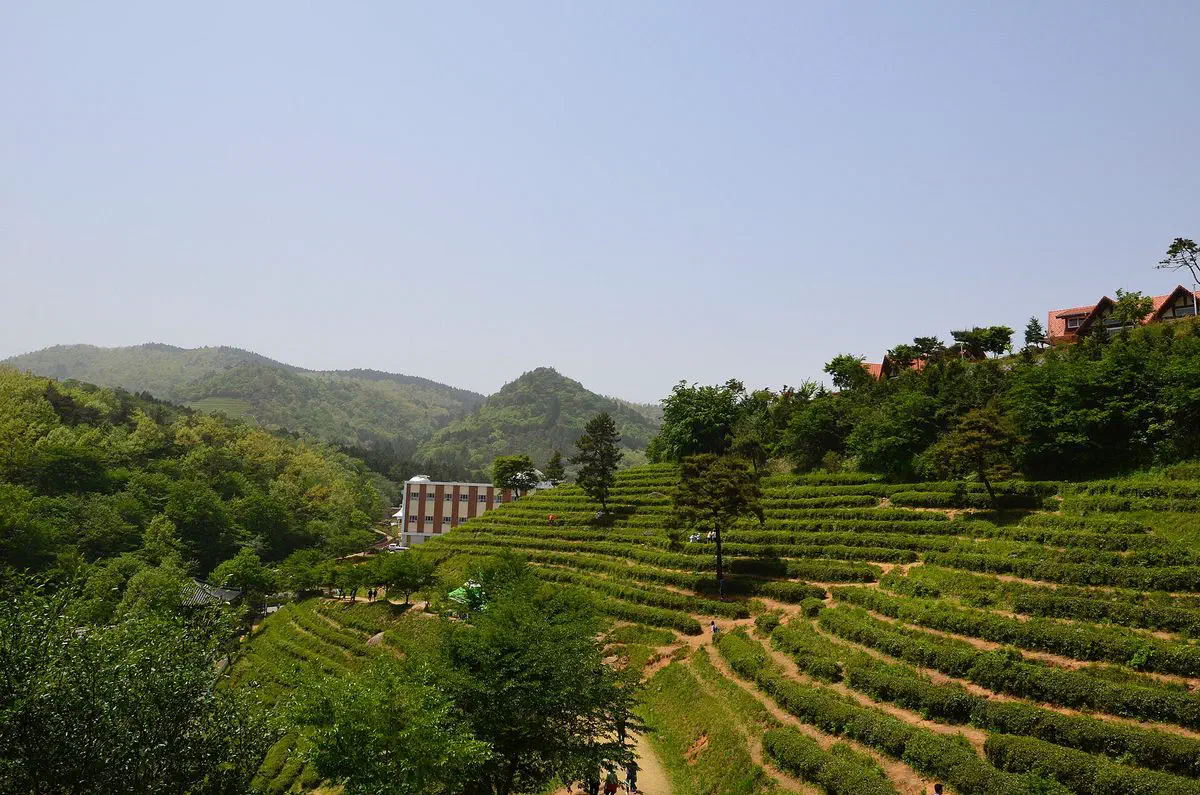
Korea’s largest tea festival, running since 1975 and now in its fifth decade. The tea fields themselves are the draw — Boseong’s terraced rows are the most photographed in the country — and the festival week adds tea-picking, tasting and a green-tea-everything food stretch on top of the scenery that is there year-round anyway.
Ulsan Onggi Festival — around 1 May, Oegosan Onggi Village
Most festivals on this page happen near their subject. This one happens inside it — Oegosan Onggi Village itself, not a stadium or a park elsewhere in the city. Wheel-throwing sessions. A stage show built around a real local onggi-making family. The same hands-on studio the village runs all year, just with more going on around it. Three days total; the village’s own festival site has the confirmed dates.
Icheon Ceramics Festival — late April into May, Icheon
Covered in more detail in our ceramics guide: about two weeks of open kilns and extra hands-on programs at Sagimakgol, on top of what the village already offers the rest of the year.
Summer
Boryeong Mud Festival — around mid-July, Daecheon Beach
Mud slides, mud wrestling, a mud pool the size of a stadium — genuinely built for tourists rather than adapted for them, and the closest thing Korea has to a beach festival with no cultural-heritage pretense at all. Runs about ten days at Daecheon Beach, roughly two hours from Seoul by express bus. Klook carries a full-day tour from Seoul with hotel pickup, which solves the transport question if you would rather not manage the bus connection yourself.
Autumn
Gyeongju Silla Cultural Festival — early October, Gyeongju
Running since 1962, past its sixtieth year now — the oldest festival on this page by a wide margin. Three days of parades, folk games, music and arts competitions across Gyeongju’s historic core, built around civic and cultural heritage rather than any single site. A few individual programs carry Buddhist content, which fits Silla’s history. The parade and competitions are the public, secular part, and that is what this page covers.
Jeonju Hanji Culture Festival — early October, Jeonju
A separate event from the Bibimbap Festival below, at a different venue: the Korea Traditional Culture Center, a five-minute walk from Jeonju Hanok Village rather than the park the food festival now uses. Hanji fashion shows, craft competitions and hands-on paper-making — a natural pairing with our hanji guide.
⚠️ Sources disagree on this one’s timing — some list it in early October, others in early May — and we have not been able to confirm the 2026 dates against the organizer. Check jjhanji.or.kr before planning around it.
Jeonju Bibimbap Festival — 2–4 October, Jeonju
Two things changed for 2026: the festival moved to Deokjin Park, and it moved roughly three weeks earlier. Most English listings still print late October at Jeonju World Cup Stadium, which is the old schedule at the old venue. Our full guide covers what actually runs, and why the eight-provinces bibimbap comparison is the part worth going for.
It still fills the city’s accommodation, so if you are timing a Jeonju hanok stay around it, book earlier than you otherwise would — just for the right weekend.
Andong International Mask Dance Festival — late September into October
Centers on talchum, Korean mask dance drama, which UNESCO inscribed on its Representative List of the Intangible Cultural Heritage of Humanity in 2022 — Korea’s 22nd item on that list. Performances are built to need no formal stage and no shared language: masked performers act out broad social satire, and the audience’s reactions are part of the performance. Running since 1997, usually about ten days, and connects naturally to Andong Hahoe Village, the folk village the mask tradition comes from — now about two hours from Seoul by KTX-eum.
Jinju Namgang Lantern Festival — around October, Jinju
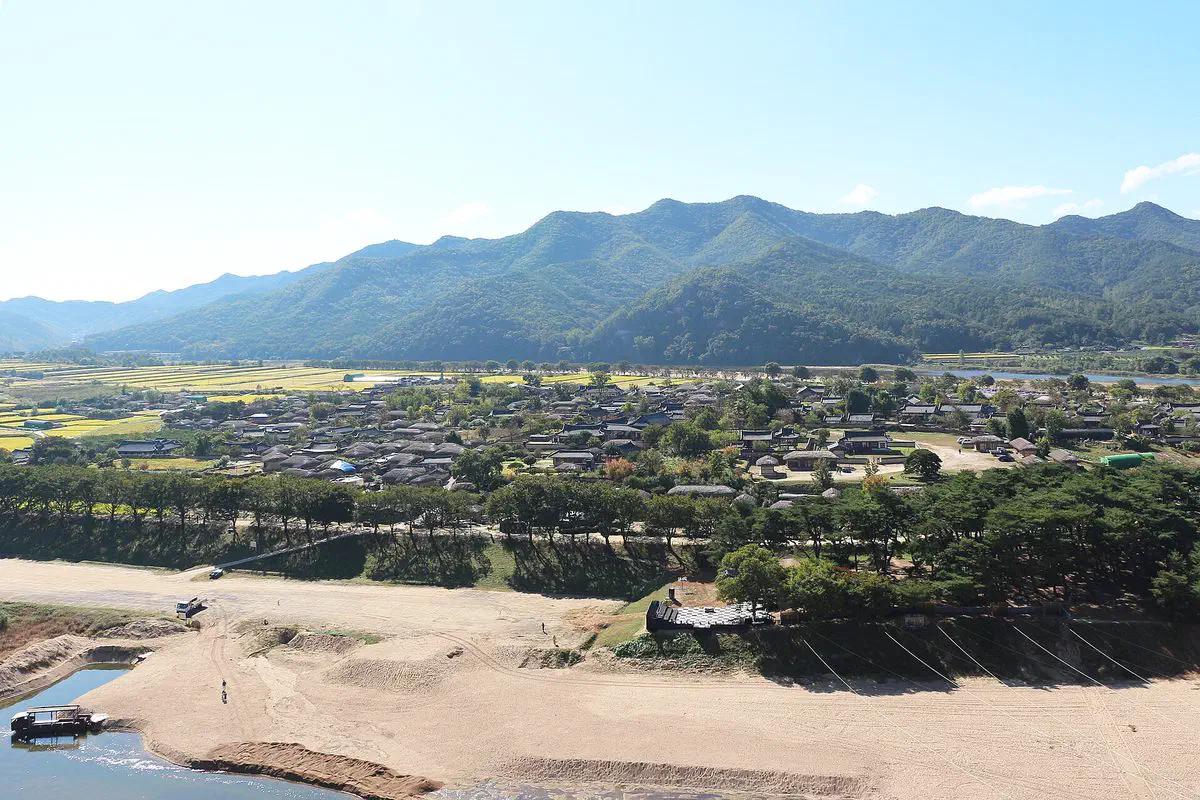
The origin is a war story, not a decoration. In the 1592 Imjin War, defenders floated lanterns on the Namgang River as a night signal. The lanterns also blocked Japanese troops from crossing in the dark. A second, bloodier siege hit Jinju Fortress in 1593, and afterward the floating lanterns became a memorial rite for the dead. That rite is what today’s festival comes from. It now runs each October alongside the Gaecheon Arts Festival, and after dark the river fills with lit-up lantern displays.
Korea Traditional Liquor Grand Festival — mid-November, Seoul
Not a regional harvest festival like the others here — a trade-show-style event at Seoul’s aT Center, with over a hundred breweries pouring in one building. If Bukchon’s Sool Gallery gave you a taste for makgeolli and yakju beyond what a supermarket stocks, this is the place to compare dozens of small producers in an afternoon rather than hunting them down one bottle shop at a time. thesool.com carries the confirmed dates each year.
Winter
Hwacheon Sancheoneo Ice Festival — January, Hwacheon
The festival on this page with the deepest affiliate inventory: Klook carries a day tour from Seoul that bundles ice fishing with hotel pickup, rated 4.8 with over 5,000 bookings — unusual for a regional Korean festival, most of which have no tour inventory at all. The Hwacheoncheon river freezes solid enough to fish through the ice by hand, and the festival built around it consistently ranks among Korea’s biggest winter draws.
The 2027 edition runs 9–31 January, and it now has its own guide — worth reading before you book, because the festival runs three separate fishing areas and one of them exists specifically for foreign visitors.
Planning a trip around Korean festivals
Book accommodation earlier than you would for an ordinary date, not just for the festival city itself — nearby cities absorb overflow, and prices move first. Our seasonal guide covers the rest of the calendar, including the weather each of these festivals lands in. A Korean eSIM sorted before you land matters more on a festival weekend than an ordinary one — transit apps and crowd information are what get you out of a closed street rather than stuck in it.
Quick answers
When is Korea's biggest ice fishing festival?
What is the origin of the Jinju Namgang Lantern Festival?
Is the Andong Mask Dance Festival accessible without speaking Korean?
Why does the Jeonju Bibimbap Festival affect hanok bookings?
Checked 14 August 2026. Yeondeunghoe’s history, National Intangible Cultural Heritage designation and 2020 UNESCO inscription from UNESCO’s own ICH listing and Korean heritage reporting. Talchum’s 2022 UNESCO inscription from UNESCO’s ICH listing directly. Jinju Namgang Lantern Festival’s origin in the 1592–93 Imjin War sieges of Jinju Fortress from Korean historical and festival-history sources. Hwacheon Sancheoneo tour ratings from Klook’s own listings.
Boseong Tea Festival’s 1975 start from Korean heritage reporting. Ulsan Onggi Festival’s dates and venue from the village’s own festival site. Gyeongju Silla Cultural Festival’s 1962 start and program content from the city’s own festival site. Jeonju Hanji Culture Festival’s venue and its distance from the hanok village from Jeonju city tourism pages. Korea Traditional Liquor Grand Festival’s scale from Korean food-industry reporting on its most recent edition.
Dates for every festival here are approximate on purpose — we link each festival’s own site where one exists, and that site is the authority for the confirmed date in any given year.