Cheongju National Museum: Metal, in the City of Metal Type
Last verified: 2026-09-01. Rules and prices change — always confirm on the official site before you travel.
This page contains affiliate links. If you book through them we may earn a commission at no extra cost to you. It never changes what we recommend.
In 1377, at a temple called Heungdeoksa in Cheongju, monks printed a Buddhist text using movable metal type. The book is the Jikji, and the surviving copy of it is the oldest book printed that way anywhere in the world — seventy-eight years before Gutenberg’s Bible.
Cheongju National Museum does not have it. Nobody in Korea does; the surviving volume is in Paris. But the museum has built its identity on the material, and in this city that is not an arbitrary choice.
The book that is not here
The Jikji was compiled by the monk Baegun in 1372 and printed at Heungdeoksa in 1377. Only the lower volume survives, and it is held by the Bibliothèque nationale de France — it left Korea in the nineteenth century and has never come back. It is on UNESCO’s Memory of the World register.
Cheongju did the next best thing. The Cheongju Early Printing Museum opened in 1992 beside the excavated Heungdeoksa site, and it is a city museum rather than a national one, about a twenty-minute drive from the national museum on the other side of town.
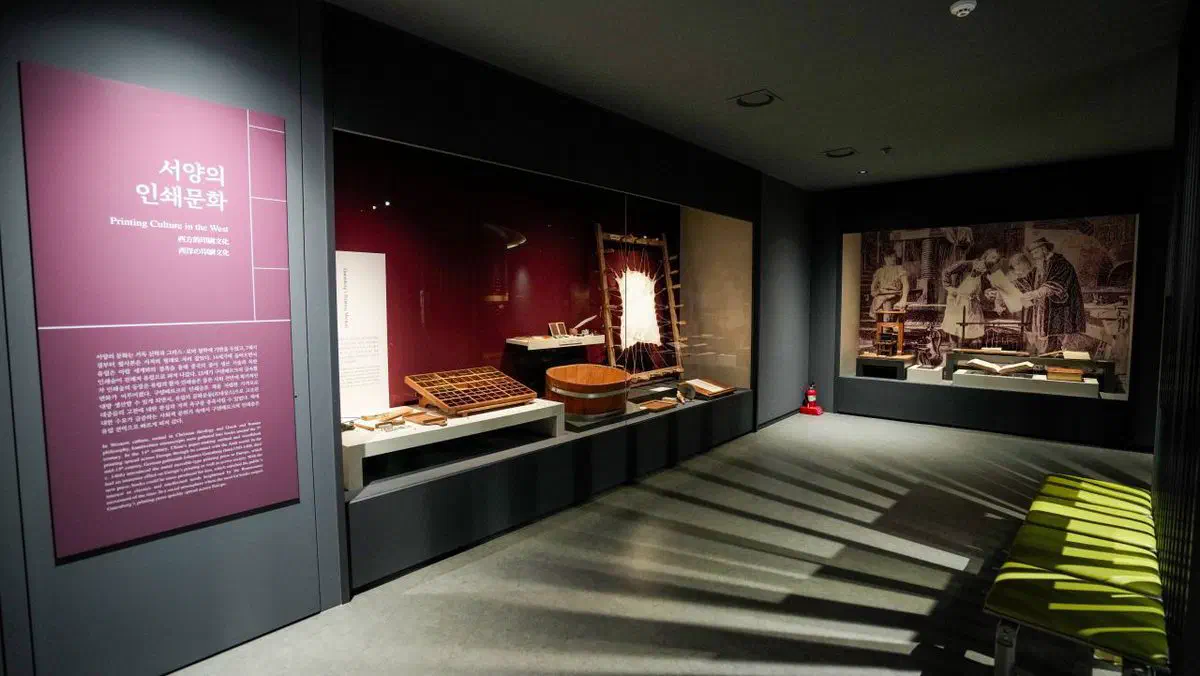
If metal type is why you came to Cheongju, that is the museum you want. What follows is the other one.
What the national museum actually took as its subject
Cheongju National Museum covers North Chungcheong — Cheongju and Chungju — and it has four galleries: two archaeology rooms, an art room, and a Gold Crown Room.
That last one is the specialization. It is a permanent gallery built to show masterpiece metalwork only, and it exists to strengthen what the museum calls its metal-culture brand. The archaeology and art rooms hold about 1,400 objects — the province’s prehistoric, ancient and medieval finds, its metal heritage, and its Buddhist steles.
One caution. The Gold Crown Room’s contents rotate. A much-publicized showing of the Seobongchong gold crown and gold belt — a Treasure, excavated in Gyeongju — ran there through 31 December 2024. Some pages still describe it in the present tense. Do not plan a trip around seeing that particular crown without checking first.
The object that is always here
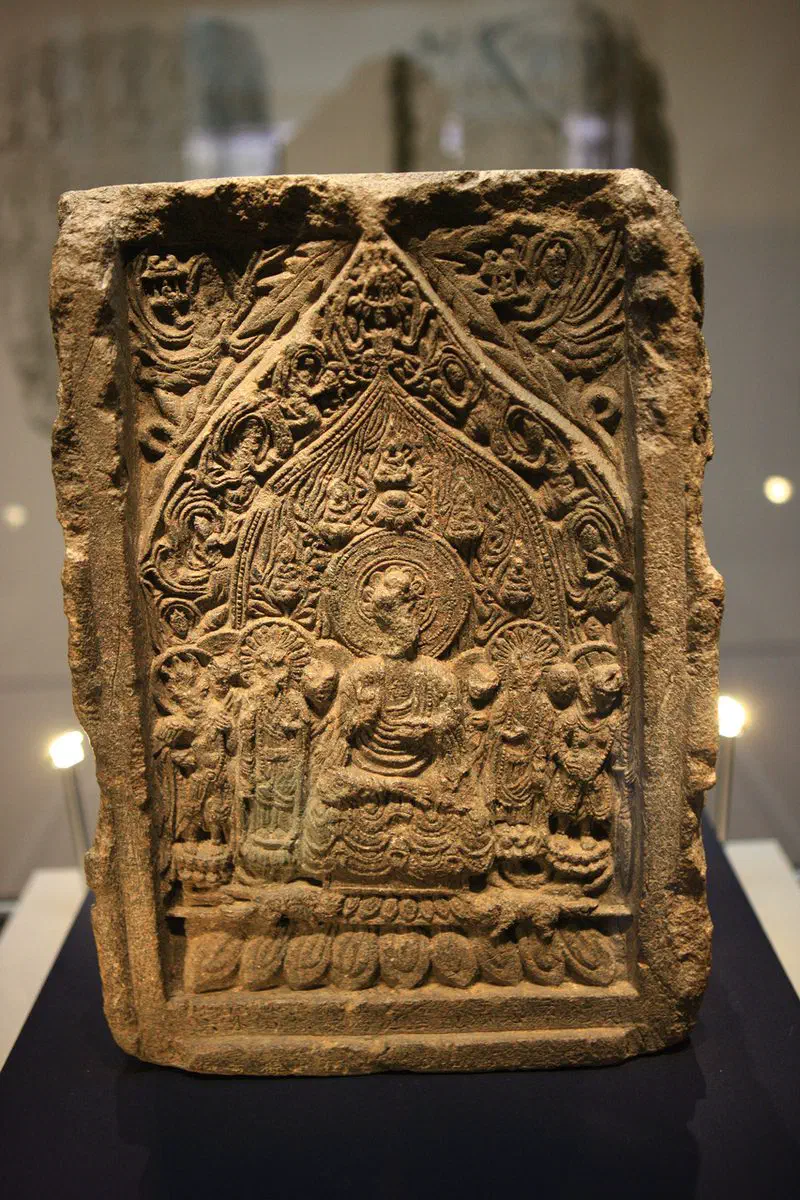
The museum’s headline holding is National Treasure No. 106, the Gyeyu-inscribed Amitabha Buddha stele.
It is a block of soapstone, 26.7 by 43 by 17 centimeters, carved on all four faces with Buddha images and an inscription. The inscription dates it to the gyeyu year — 673 — and names the Jeon clan as the patrons who paid for it. It was found in the 1960s at Biamsa, a temple in what is now Sejong, along with two other steles.
The form matters. A stone worked on four sides with images and donor inscriptions is a Northern Wei Chinese type, and it is rare in Korea. It is a small object doing something unusual, which is roughly the museum’s whole disposition.
The building is a posthumous work
The museum opened on 30 October 1987. It was designed in 1980 by Kim Swoo-geun, the most influential Korean architect of his generation, who died in 1986 — a year before it opened. It won the Korean Institute of Architects award in 1988.
The building is usually cited as an expression of his central idea, that the substance of architecture is the making of space rather than the making of form. It is set into a wooded hillside rather than placed on it.
There is a coincidence here worth a sentence. Gimhae National Museum is also its architect’s last work — Jang Se-yang died in 1996, two years before that building opened. Two of Korea’s regional national museums were finished by other hands.
Outside, the garden holds more than 210 stone pieces from the collection donated by the late Samsung chairman Lee Kun-hee, whose 2021 bequest was the largest private donation in Korean museum history.
Cost, hours and the Monday rule
Admission is free. Hours are 09:00 to 18:00, Tuesday to Sunday and on public holidays.
It closes Mondays — and when the Monday is itself a public holiday, it closes the next weekday instead. It also shuts on 1 January, Seollal and Chuseok. Ten of Korea’s fourteen national museums follow this pattern; only Seoul, Gyeongju, Jeonju and Gwangju stay open on Mondays, and they are marked on our museum map.
Getting there
Cheongju is 113 km south-east of Seoul and has its own international airport, which makes it more reachable than its size suggests. The museum sits below Sangdangsanseong fortress on the wooded eastern edge of the city, about two kilometers from MMCA Cheongju and a short ride from the old Confucian school.
Stays in Cheongju listed 40 properties when we checked on 1 September 2026 — more than the Baekje museum towns, fewer than Daejeon or Daegu. A Korean eSIM covers the local buses, since Google Maps will not route you.
In the same trip
Other museums within reach
- Gongju National Museum — Gongju, South Chungcheong, about 42 km away.
Festivals near here
These run on their own dates, so check them against yours before you build a route around them.
- Sejong Hangeul Festival — October, about 27 km away.
- Daejeon Science Festival — April, about 32 km away.
- Eumseong Pumba Festival — June, about 35 km away.
- Cheonan World Dance Festival — October, about 41 km away.
Quick answers
Can you see the Jikji in Cheongju?
Why does Cheongju National Museum specialize in metal?
Is the Seobongchong gold crown at Cheongju National Museum?
What is National Treasure No. 106?
Is Cheongju National Museum free?
Checked 1 September 2026. The museum’s opening on 30 October 1987, its design by Kim Swoo-geun in 1980, its 1988 Korean Institute of Architects award, its four galleries including the Gold Crown Room, the roughly 1,400 objects in the archaeology and art rooms, and the 210-plus stone pieces from the Lee Kun-hee donation in the outdoor garden, from the museum’s own pages. The Seobongchong gold crown and gold belt showing ran through 31 December 2024 per Korean press coverage of the Gold Crown Room’s opening; the museum’s own page still describes it in the present tense, and we have flagged the discrepancy rather than repeating either version as current. The Gyeyu-inscribed Amitabha Buddha stele’s designation as National Treasure No. 106 on 30 December 1962, its dimensions, its four carved faces, the 673 date and Jeon clan patronage, its 1960s discovery at Biamsa and the Northern Wei origin of the form, from Korea Heritage Service records and the Sejong and Chungbuk regional encyclopedias. The Jikji’s compilation by Baegun in 1372, its printing at Heungdeoksa in 1377, its status as the oldest surviving metal-type printed book, the surviving lower volume’s location at the Bibliothèque nationale de France and its place on UNESCO’s Memory of the World register, from the National Institute of Korean History and UNESCO materials; the Cheongju Early Printing Museum opened in 1992 beside the excavated Heungdeoksa site. Hours, the Monday closure and free admission from the museum’s visitor information. Hours change — confirm before you travel.