Chuncheon National Museum: Three Hundred Faces From a Field
Last verified: 2026-08-31. Rules and prices change — always confirm on the official site before you travel.
This page contains affiliate links. If you book through them we may earn a commission at no extra cost to you. It never changes what we recommend.
In 2001, a couple clearing ground in Yeongwol to build a small temple hit a stone. It turned out to be a carved figure of an arhat — a Buddhist sage who has attained enlightenment.
Two seasons of excavation by the Gangwon Cultural Heritage Research Institute in 2001 and 2002 brought up around three hundred more, along with roof tiles stamped with the name Changnyeong, which is how anyone knew what the site had been.
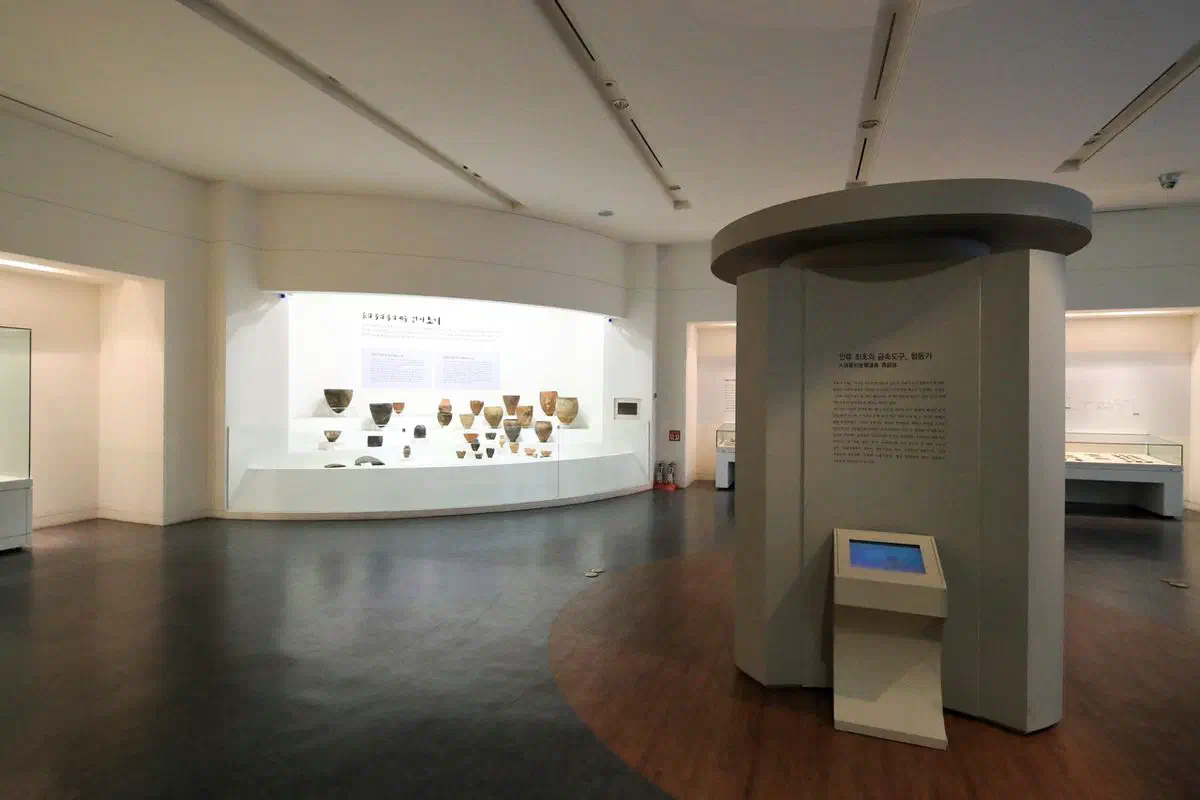
They are in Chuncheon National Museum now, and the reason they draw crowds is not that they are old. It is that they look like people.
Why these particular statues
Buddhist art normally renders an arhat the way it renders holiness generally: composed, remote, idealized.
These are not. The faces are ordinary — some smiling, some sulking, some apparently mid-thought, carved plainly in local stone by hands that were not trying to make them beautiful. The National Museum of Korea titled the touring exhibition “Faces That Resemble Your Own Heart,” and Chuncheon’s permanent gallery is called “the road to myself.”
That is unusually sentimental labeling for a national museum, and it is also an accurate description of what happens in the room.
What the site actually was
The excavation put the temple’s life in a fairly narrow window.
Goryeo celadon, Goryeo roof tiles and a Northern Song coin — the Sungnyeong Jungbo, minted between 1102 and 1106 — show the temple was running well before Joseon. Buncheong ware fragments from the site point to the late fifteenth century. The temple was gone before the middle of the Joseon period.
The statues themselves are generally dated to early Joseon, though the question is still live enough that Korean scholars publish papers on it. Either way, they sit at a hinge: a Buddhist workshop carving three hundred figures in a dynasty that had just replaced Buddhism with Neo-Confucianism as the state creed, at a temple that did not last much longer.
317 statues came out of the site by one count. Fourteen of them are on permanent display.
The tour
Rural stone carvings do not normally travel. These did.
The Sydney showing was the striking one. The Powerhouse Museum ran it with Chuncheon to mark sixty years of Australia–Korea diplomatic relations, and the museum’s own figure is more than 230,000 visitors — for three hundred plain stone faces from an abandoned temple in a Korean mountain county.
Chuncheon is the easy one
Eight of the museum articles on our museum map are in the south or the center. This is the one that is genuinely close to Seoul: 76 km north-east, and reachable on the ITX-Cheongchun from Yongsan or Cheongnyangni, or on the Gyeongchun subway line if you would rather pay less and take longer.
That makes Chuncheon the most practical national museum day trip from Seoul after the National Museum of Korea itself — and unlike most of the list, you can pair it with a city people already visit for other reasons.
The museum holds about 120,000 objects covering Gangwon from prehistory onward, so the arhats are the draw but not the whole visit. There is a children’s museum and an immersive-media room as well.
Cost, hours and the Monday rule
Admission to the permanent galleries is free, and it opens 09:00 to 18:00, the same at weekends and on public holidays.
It closes Mondays — as ten of Korea’s fourteen national museums do. Only Seoul, Gyeongju, Jeonju and Gwangju stay open, and they are marked on our map. If Chuncheon is your Monday plan, it is not a plan.
Yeongwol, if you want the other end of it
The arhats came from Yeongwol, about 100 km south of Chuncheon, and that county has its own reason to visit: Jangneung, the tomb of the boy king Danjong, who was deposed, exiled there and killed in 1457. It is part of the Royal Tombs of the Joseon Dynasty, inscribed by UNESCO in 2009.
That is a separate trip rather than an add-on — the two are not close — but it is the ground the faces came out of.
Stays in Chuncheon are in a different league from the other museum towns — 88 properties listed when we checked on 31 August 2026, against 17 in Gongju and five in Buyeo. Chuncheon has a domestic tourism trade of its own, and you benefit from it. A Korean eSIM covers the local buses from the station; Google Maps will not route you.
In the same trip
Festivals near here
These run on their own dates, so check them against yours before you build a route around them.
- Chuncheon Mime Festival — May, about 3 km away.
- Chuncheon Makguksu & Dakgalbi Festival — October, about 3 km away.
- Hwacheon Sancheoneo Ice Festival — January, about 28 km away.
Quick answers
What are the Changnyeongsa arhats?
Where can you see the Changnyeongsa arhats?
Is Chuncheon National Museum free?
How do you get to Chuncheon from Seoul?
How old are the arhat statues?
Checked 31 August 2026. The 2001 discovery by a couple clearing ground for a small temple at Changwon-ri in Yeongwol, the 2001 and 2002 excavations by the Gangwon Cultural Heritage Research Institute, the roughly three hundred statues recovered, the count of 317, and the roof tiles inscribed Changnyeong that identified the site, from Korea Heritage Service records and Korean press accounts of the excavation. The Goryeo celadon and roof tiles, the Northern Song Sungnyeong Jungbo coin of 1102–1106, the late fifteenth-century buncheong fragments and the early Joseon dating of the statues from the same excavation reporting — the dating is still debated in Korean scholarship and we have said so rather than picking a side. The exhibition history, the permanent gallery of fourteen statues and the figure of more than 230,000 Sydney visitors are Chuncheon National Museum’s own; the Powerhouse Museum ran the 2022 show with Chuncheon to mark sixty years of Australia–Korea relations. Hours, the Monday closure and free permanent admission from the museum’s visitor information. Danjong’s tomb at Jangneung in Yeongwol is part of the Royal Tombs of the Joseon Dynasty, inscribed by UNESCO in 2009. Hours change — confirm before you travel.