Daegu National Museum: The City That Makes What You Wear
Last verified: 2026-09-01. Rules and prices change — always confirm on the official site before you travel.
This page contains affiliate links. If you book through them we may earn a commission at no extra cost to you. It never changes what we recommend.
Korea’s national museums divide the country’s past between them by region and by kingdom. Daegu National Museum took a different kind of subject: clothes.
Not costume as decorative art. Clothing as an industry and a technology — how thread is made, how cloth is woven, how it is colored, and how it becomes something a person puts on. That is a strange remit for a national museum, and it exists because of where the building is.
Why clothing, and why here
Daegu became a modern city on textiles.
In the 1950s and 60s the fabric wholesale trade at Seomun Market dominated the national textile market outright. Cloth for the country moved through Daegu.
That did not last. The Gyeongbu Expressway opened in 1970, economic weight kept concentrating in the capital region, and Daegu’s wholesale function shrank against it. By the end of the 1970s its role as the country’s fabric wholesaler had faded out completely.
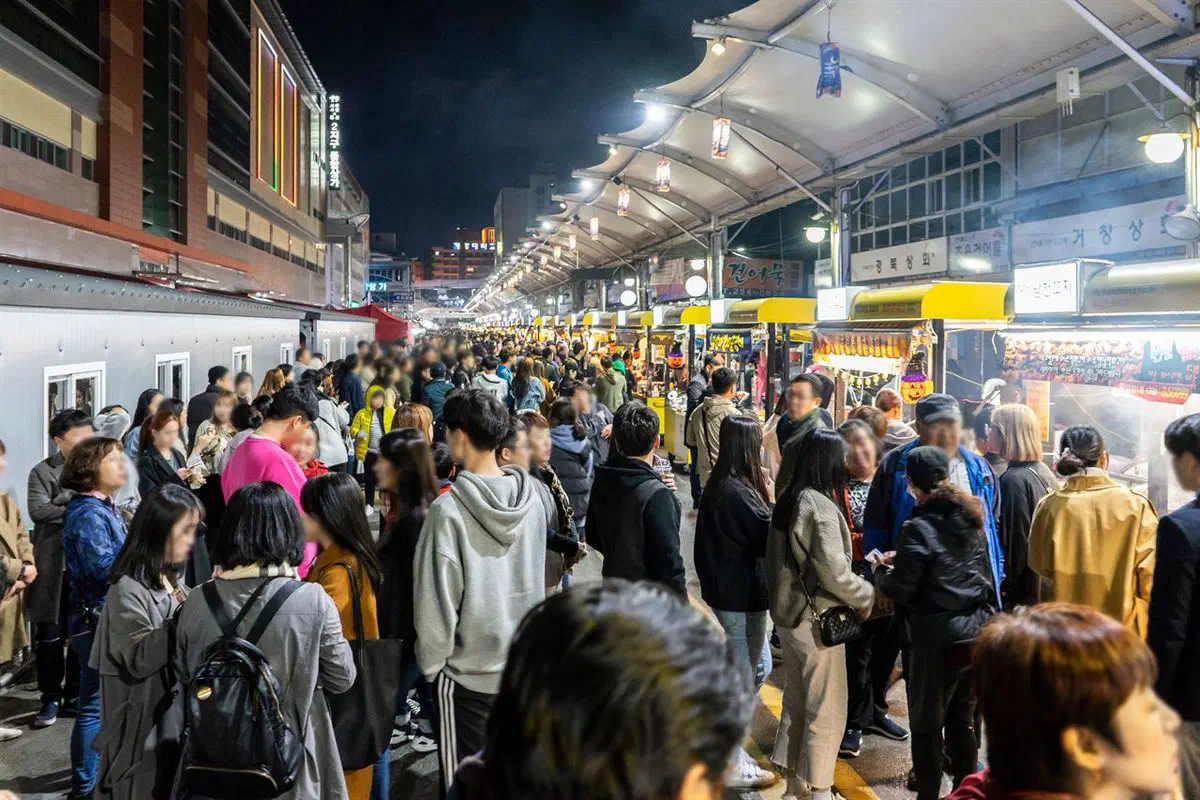
What Daegu did next was try to rebuild the industry upward rather than mourn it. The Milano Project put textile and fashion design departments into local universities and built out research institutes — DYETEC, the Korea Research Institute for Fashion Industry, the Daegu Textile Complex, the Korea Fashion Center.
The museum’s Costume Culture Gallery is the cultural half of that same instinct. It runs the history of Korean dress from antiquity to the modern period, organized around four words: thread, weaving, color, clothing.
The gallery is about to triple
This is the news, and no English source has it.
The current costume gallery is 673 m². Korea is building it a home of its own: a Costume Culture Hall of roughly 5,000 m² across four floors and a basement, at a cost of about ₩33.6 billion, entirely nationally funded.
- Cost
- About ₩33.6 billion, all national funding
- Size
- Roughly 5,000 m², B1 to 4F — about three times the current gallery
- Contents
- Special exhibition hall, immersive media room, archive, storage
- Access
- Its own dedicated entrance, with some floors linked to the main building
- Groundbreaking
- Second half of 2026 — design is being finalized now
- Target opening
- December 2028
That fits a pattern worth noticing if you follow Korean museums. Buyeo opened a whole building for a single censer in December 2025. Gwangju opened Korea’s first national ceramics hall five days before it. Daegu is next, in 2028. Korea is currently giving its regional national museums specialist buildings, one subject at a time.
The other thing Daegu makes that you wear
Textiles are not the only manufacturing this city does with the human body in mind.
Daegu makes eyeglass frames — the city describes itself as one of the world’s four eyewear production centers, alongside Belluno in Italy, Fukui in Japan and Wenzhou in China. The trade traces back to a celluloid works set up in Chimsan-dong in 1946.
That is a claim Daegu makes about itself rather than an independent ranking, but the industry is real and it is why buying glasses in Korea works the way it does — the frames on the shelf in Seoul were very often made here.
A city that makes the cloth and the frames, with a national museum about what people wear. The pieces fit better than they usually do.
What else is in the museum
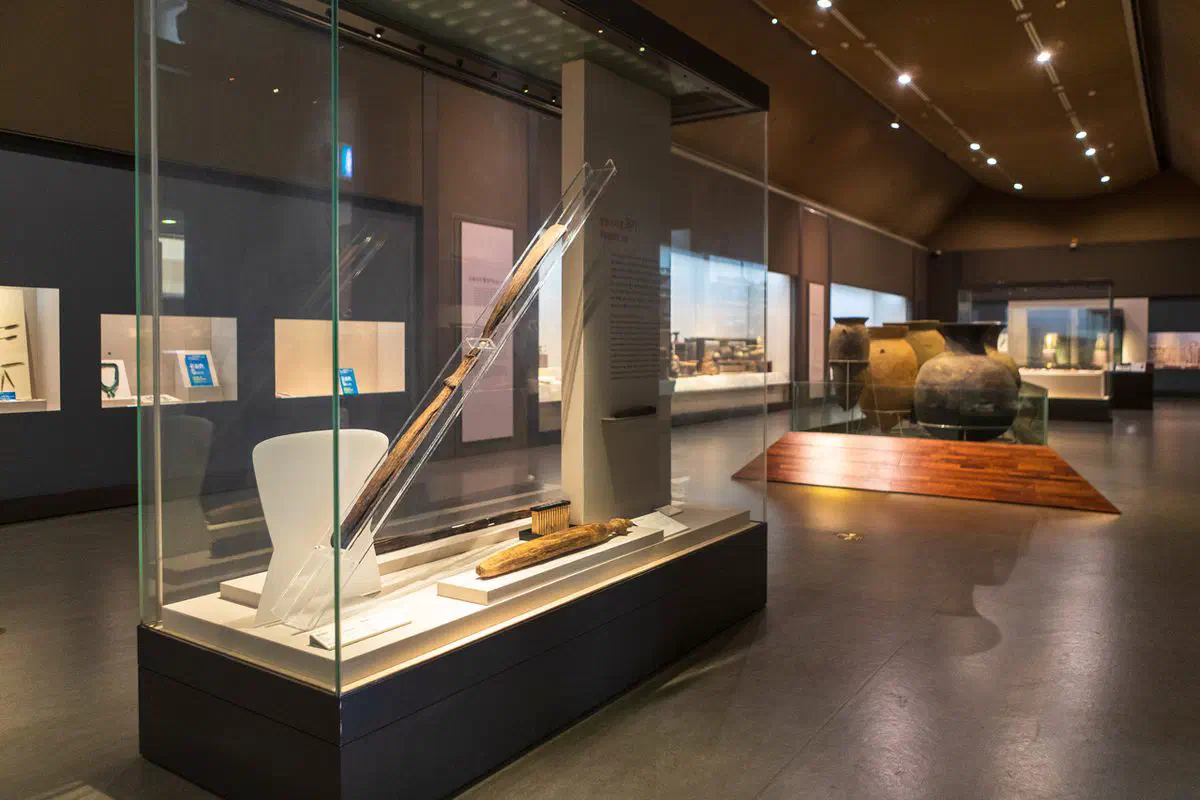
Daegu opened in 1994 as the country’s eighth national museum, to preserve and show the heritage of Daegu and North Gyeongsang. Alongside the costume gallery there is an archaeology hall and an art hall covering Buddhist culture and metalwork.
So it works as a regional museum first and a specialist one second, which is worth knowing if you arrive expecting only clothes.
Cost, hours and the Monday rule
Admission to the permanent galleries is free. Hours are 09:00 to 18:00 with last entry at 17:30.
It closes Mondays, 1 January, Seollal and Chuseok — the majority pattern. Ten of Korea’s fourteen national museums close on Mondays; only Seoul, Gyeongju, Jeonju and Gwangju stay open, and they are marked on our museum map.
Getting there
Daegu is a KTX stop on the Seoul–Busan line, which makes it one of the easiest cities on this list to reach, and it has a metro. The museum is in Suseong-gu, east of the center, rather than downtown — closer to Suseong Lake than to the markets.
Stays in Daegu listed 167 properties when we checked on 1 September 2026, priced for business travel rather than tourism — which usually works in your favor at weekends. A Korean eSIM covers the metro and buses, since Google Maps will not route you.
In the same trip
Festivals near here
These run on their own dates, so check them against yours before you build a route around them.
- Daegu Chimac Festival — July, about 7 km away.
- Goryeong Daegaya Festival — March, about 37 km away.
- Miryang Arirang Festival — May, about 41 km away.
- Gumi Ramyun Festival — November, about 42 km away.
Quick answers
Why does Daegu National Museum specialize in clothing?
Is Daegu National Museum expanding?
Is Daegu National Museum free?
Is Daegu really a center for eyeglasses?
What else is at Daegu National Museum besides clothing?
Checked 1 September 2026. The museum’s opening in 1994 as Korea’s eighth national museum, its remit for Daegu and North Gyeongsang, and its archaeology, art and costume galleries from the museum’s own pages. The Costume Culture Gallery’s framing around thread, weaving, color and clothing, and its grounding in Daegu’s textile industry, from the gallery’s own description. The planned Costume Culture Hall — about ₩33.6 billion in national funding, roughly 5,000 m² over B1 to 4F, roughly three times the current 673 m² gallery, its special exhibition hall, immersive media room, archive and storage, its separate entrance, groundbreaking in the second half of 2026 and a December 2028 target — from Maeil Shinmun’s June 2026 report. Seomun Market’s dominance of the national fabric wholesale trade in the 1950s and 60s, the effect of the 1970 Gyeongbu Expressway and capital-region concentration, and the Milano Project’s institutions, from the Daegu Cultural Encyclopedia. Daegu’s description of itself as one of the world’s four eyewear production centers is the city’s own claim, made through its district government’s materials, and we have labeled it as such rather than presenting it as an independent ranking; the 1946 celluloid works is from the same regional encyclopedia. Hours, the Monday closure and free admission from the museum’s visitor information. Hours change — confirm before you travel.