National Institute of Ecology: Built Instead of a Factory
Last verified: 2026-08-31. Rules and prices change — always confirm on the official site before you travel.
This page contains affiliate links. If you book through them we may earn a commission at no extra cost to you. It never changes what we recommend.
Korea’s National Institute of Ecology puts tropical rainforest, desert, Mediterranean scrub, temperate woodland and polar habitat under one roof, in five connected halls covering about 20,975 square meters, on a site of roughly a square kilometer.
It is in Seocheon, a rural county on the west coast with a population around fifty thousand and no obvious reason to hold a national research institute. The reason is the mudflat outside it.
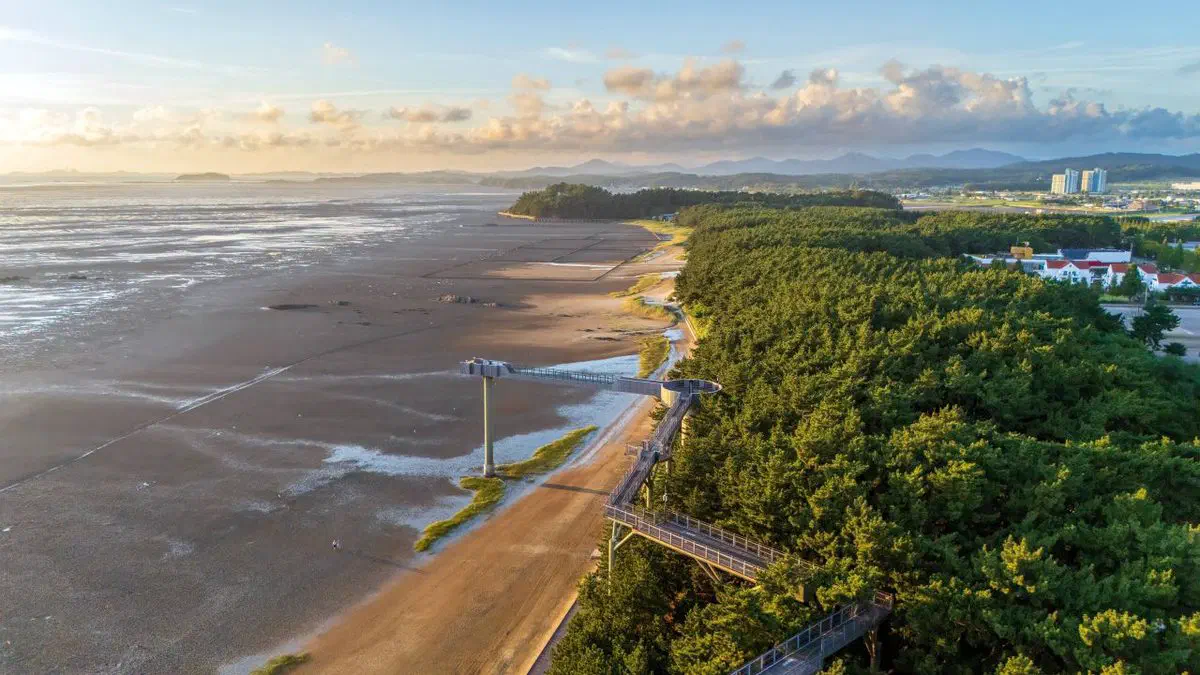
Why an ecology institute is in a county of fifty thousand
Janghang’s twentieth century was industrial and it went badly.
In 1936 the Japanese colonial administration built a smelter here — Chosun Smelting — to process minerals for export. It ran for roughly fifty years, venting heavy metals from its chimney the whole time. The furnace shut in 1989.
The consequences surfaced later, and specifically. In 2007, rice and green onions grown around Janghang tested above the legal limits for cadmium and lead. The whole harvest was destroyed.
The National Institute of Environmental Research then found arsenic and heavy metals in soil within a 4 km radius of the smelter. Cleaning it up meant buying the land. The Ministry of Environment, South Chungcheong Province and Seocheon County spent about ₩97 billion on 1.1 million square meters of it.
Meanwhile, from 1989, the government planned the Janghang National Industrial Complex on the coast — a plan that required reclaiming the tidal flats. It stalled for eighteen years, largely over exactly that.
In June 2007 the government and Seocheon County signed a deal that ended the standoff. The reclamation plan went. In its place came a package worth about ₩1.08 trillion. Its two biggest items were national institutions: the National Institute of Ecology and the National Marine Biodiversity Institute, both built at Janghang.
A town that had been poisoned by one national industrial project was compensated with two national ecological ones, instead of a third industrial project that would have buried the mudflat.
The mudflat has since won twice
On 26 July 2021, UNESCO’s World Heritage Committee inscribed Getbol, Korean Tidal Flats — four component sites including Seocheon, alongside Gochang, Sinan and Boseong–Suncheon. It was Korea’s second natural World Heritage property, fourteen years after Jeju’s volcanic island and lava tubes. The committee’s stated reason was migratory birds: the flats are a staging ground for globally threatened species.
Seocheon’s component covers about 68 km², running from Wolhaseong up to the shore around Yubudo, an island off Janghang. Korean survey figures describe it as habitat for some 300,000 individual shorebirds across 23 species, including the spoon-billed sandpiper, which sits on the IUCN Red List.
Then in July 2026, at the 48th session, the committee approved a second-phase expansion adding Yeosu, Goheung, Muan and Seosan. The mudflat the industrial complex was going to reclaim is now part of a World Heritage property that has grown twice.
- 1936
- Japanese colonial smelter opens at Janghang
- 1989
- Furnace closes · industrial complex planned on the tidal flats
- 2007
- Cadmium and lead found in local crops · reclamation plan dropped, institutes agreed instead
- 2013
- National Institute of Ecology opens
- 2021
- Seocheon Getbol inscribed by UNESCO (26 July)
- 2026
- Getbol inscription expanded to four more sites (July)
What is inside the Ecorium
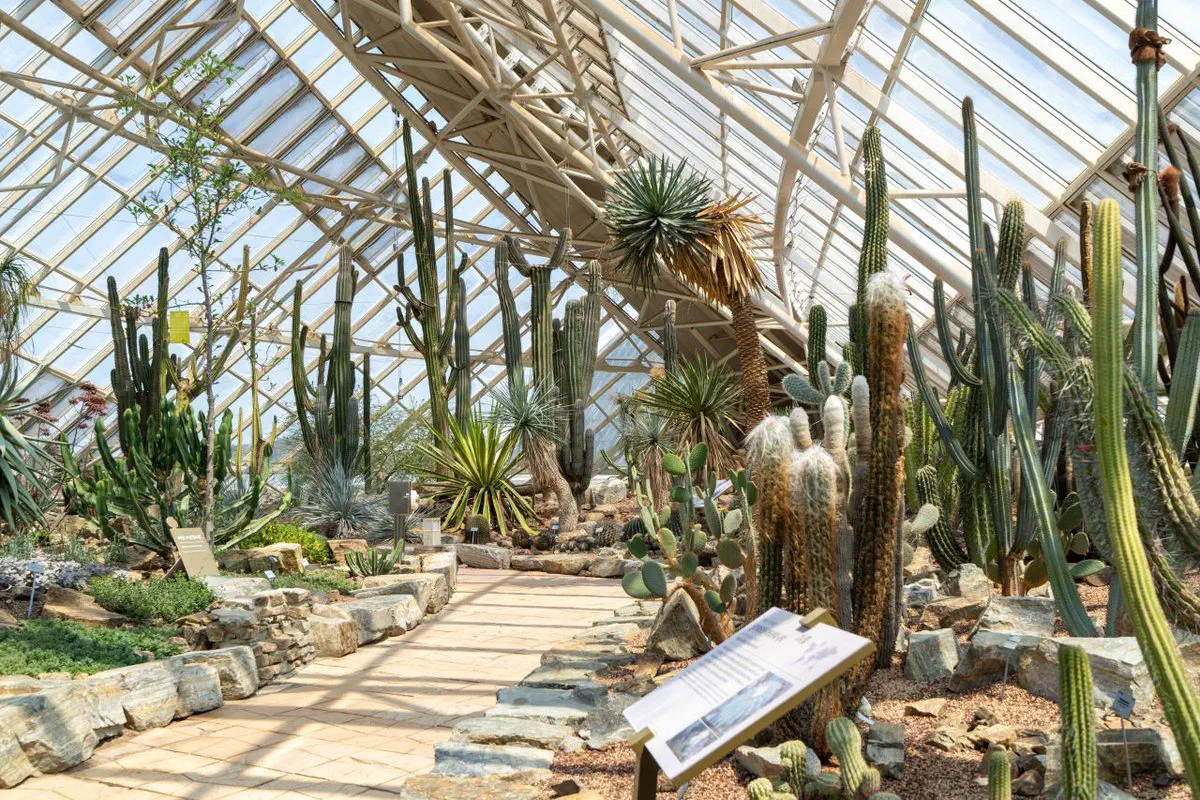
The Ecorium opened in 2013 and is built as five connected greenhouse volumes, each holding a different climate:
- Tropical
- Rainforest, the largest of the halls
- Desert
- Cacti, agaves and desert animals including prairie dogs
- Mediterranean
- Dry scrub and the plants adapted to it
- Temperate
- The climate Korea itself sits in
- Polar
- Cold-habitat species
Alongside them are two rotating thematic galleries, a 4D theater and a children’s ecology room. The grounds outside carry further habitat gardens across a site of roughly a square kilometer, so the indoor route is not the whole visit.
Practically: the halls run in sequence and the temperate and polar ends are noticeably colder than the tropical one. Animal enclosures keep shorter hours than the building — 10:00 to 17:00 against the Ecorium’s 09:30 to 17:30 — so arriving late costs you the animals rather than the plants.
Cost, closing days and the ticket detail worth knowing
Admission is ₩5,000 for adults, ₩3,000 for teenagers and ₩2,000 for children aged five to twelve. Under-fives are free, and so is anyone 65 or over. Ticket sales stop an hour before closing, which in practice means the last entry is 16:30.
It closes Mondays, which puts it with the majority: ten of Korea’s fourteen national museums shut on Mondays as well. Only four stay open — Seoul, Gyeongju, Jeonju and Gwangju, marked on our museum map. If you are building a west-coast day around this place, do not build it on a Monday, and do not assume a nearby museum will rescue it.
Getting there, and what else is within reach
Seocheon sits on the Janghang Line, and Gunsan is about 5 km away across the Geum River estuary — close enough that Gunsan’s Japanese colonial architecture quarter is a natural pairing with a morning here. Both towns carry the same colonial-industrial history from opposite banks.
The other thing worth timing around is nine kilometers away. The Hansan Ramie Fabric Cultural Festival runs in Seocheon in June. Hansan mosi — the ramie cloth it celebrates, woven in Hansan-myeon in this same county — joined UNESCO’s Intangible Cultural Heritage list on 28 November 2011, and had been a National Intangible Cultural Property since 1967.
So Seocheon holds a natural World Heritage site and an intangible one at once. For a county of fifty thousand, that is unusual.
Stays around Gunsan and Seocheon are limited on the Seocheon side, and most visitors base in Gunsan. A Korean eSIM matters here more than in a city — rural bus timings live in Kakao Map and Naver Map, and Google Maps will not route you.
In the same trip
Other museums within reach
- Iksan National Museum — Iksan, North Jeolla, about 28 km away.
- Buyeo National Museum — Buyeo, South Chungcheong, about 32 km away.
- Jeonju National Museum — Jeonju, North Jeolla, about 42 km away.
Festivals near here
These run on their own dates, so check them against yours before you build a route around them.
- Hansan Ramie Fabric Cultural Festival — June, about 9 km away.
- Gimje Horizon Festival — October, about 34 km away.
- Boryeong Mud Festival — July, about 36 km away.
- Nonsan Strawberry Festival — March, about 39 km away.
Quick answers
What is the Ecorium at Korea's National Institute of Ecology?
Why is the National Institute of Ecology in Seocheon?
How much does the Ecorium cost?
When is the National Institute of Ecology closed?
Is Seocheon's mudflat a UNESCO site?
Checked 31 August 2026. Opening hours, admission bands, the Monday closure and the 10:00–17:00 animal-facility hours from the National Institute of Ecology’s own visitor information. The Ecorium’s five climate halls, its roughly 20,975 m² floor area and the 2013 opening from the institute’s materials and Korean press coverage. Janghang smelter history — the 1936 founding under Japanese colonial rule, the roughly fifty years of operation, the 1989 furnace closure, the 2007 cadmium and lead findings in local crops, the arsenic and heavy-metal contamination within 4 km, and the roughly ₩97 billion spent buying 1.1 million m² of contaminated land — from Ministry of Environment materials and Korean press reporting. The eighteen-year delay to the Janghang National Industrial Complex over tidal-flat reclamation, the June 2007 agreement, and the roughly ₩1.08 trillion alternative package that brought the National Institute of Ecology and the National Marine Biodiversity Institute, from Korean government and press records. Note: the industrial complex was not abandoned outright — a smaller eco-industrial complex was built under the same agreement; what was dropped was the plan requiring reclamation of the flats. The 26 July 2021 inscription of Getbol, Korean Tidal Flats at the 44th session of the World Heritage Committee, its four original components, and the July 2026 second-phase expansion adding Yeosu, Goheung, Muan and Seosan, from Korea Heritage Service and Ministry of Foreign Affairs announcements. Seocheon’s ~68 km² component area, the Wolhaseong-to- Yubudo extent and the shorebird figures are Korean survey figures as reported, not counts we can verify. Hours and prices change — confirm before you travel.