Gwangju National Museum: The Ship That Never Arrived
Last verified: 2026-08-31. Rules and prices change — always confirm on the official site before you travel.
This page contains affiliate links. If you book through them we may earn a commission at no extra cost to you. It never changes what we recommend.
In 1323 a trading ship built in Yuan China left Ningbo for Japan. It drifted off course and went down in the shallows off Sinan, on Korea’s south-west coast, with everything still aboard.
It stayed there for six and a half centuries. Then in 1975 a fisherman hauled his net up off Jeungdo and found celadon in it.
What was in the hold
Excavation ran from 1976 to 1984 — nine years, Korea’s first underwater recovery of a wreck on this scale, and the country called it the find of the century at the time.
- Ceramics
- 20,661 pieces, Yuan dynasty
- Coins
- 28 tons — roughly eight million of them
- Purple sandalwood
- 1,017 logs
- Metalwork
- 729 items
- Stone
- 43 items · other 574
Twenty-eight tons of coins is the number that stops people. It was not treasure in the sense of a hoard — Chinese copper cash circulated as a commodity in medieval East Asian trade, valued by weight as much as by denomination. But a single ship carrying eight million coins tells you something specific about the volume of fourteenth-century trade between China, Korea and Japan that no chronicle records.
Then everything went to different buildings
The hull was a separate problem. In 1994 the reassembled ship went to Mokpo, where the national marine heritage institute now displays it, and the artifacts went out to several national museums and heritage bodies.
So for thirty years the most famous shipwreck in Korea was scattered: the boat in one city, the cargo across several others.
On 18 December 2025, Gwangju finished a building for it.
The Ceramics Culture Hall is, in the National Museum of Korea’s own words, the first exhibition space at any Korean national museum dedicated specifically to ceramics. It took about four years and covers 7,137 m² across two floors. The ground floor holds the Korean ceramics and Sinan seabed galleries, a digital art zone and a dedicated ceramics store; upstairs there is a stone-sculpture court, a shop, a café and a ceramics studio.
On display: about 500 Korean pieces and 6,500 from the Sinan wreck — roughly seven thousand objects, a thousand years of Korean ceramics on one side and a single sunken cargo on the other.
Five days later, Buyeo opened its own new building for a single censer. December 2025 was a good month for Korean museums.
This is one of the four that open on Mondays
Worth putting plainly, because it changes itineraries.
Ten of Korea’s fourteen national museums close every Monday. Gwangju does not. It closes on 1 January, Seollal and Chuseok, plus the first Monday of April and November — and that is all.
Seoul, Gyeongju, Jeonju and Gwangju are the four, and they are marked on our museum map. If your Monday lands in the south-west, this is the answer.
Note the hours are later than most: 10:00 to 18:00, not 09:00, with last entry at 17:30.
Outside, and the dolmens
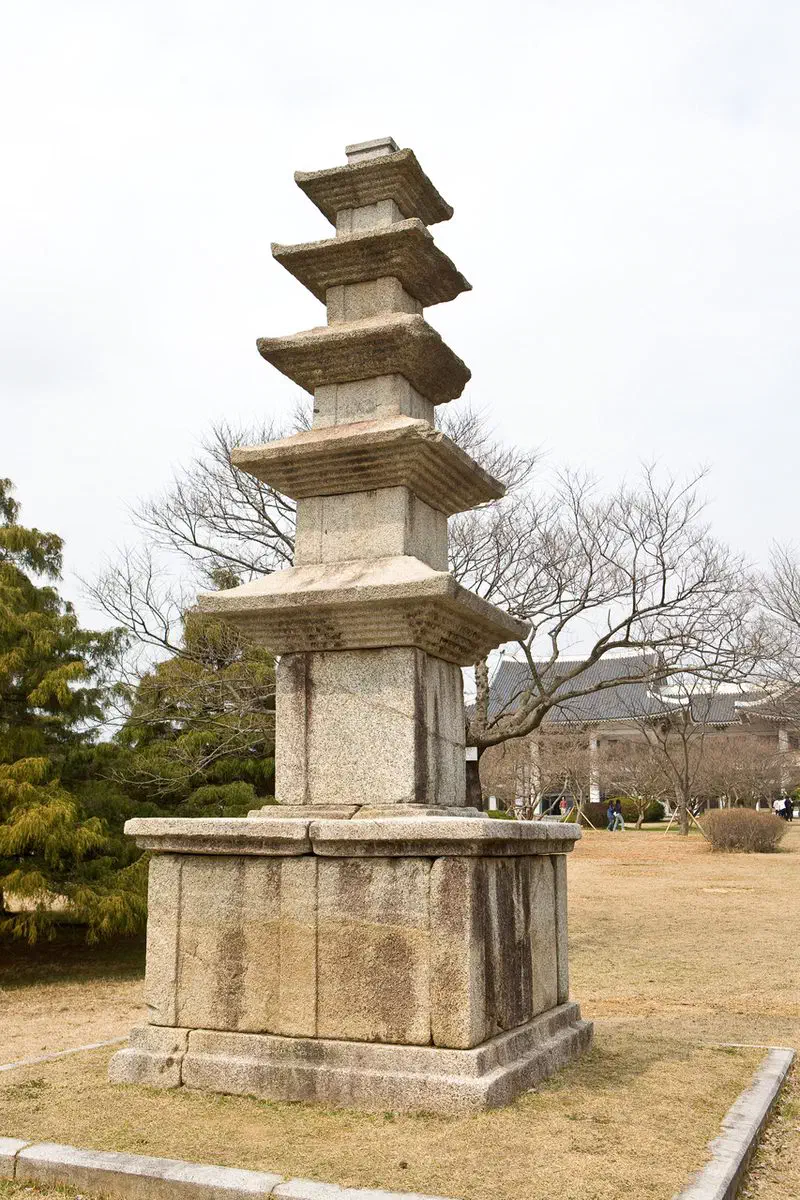
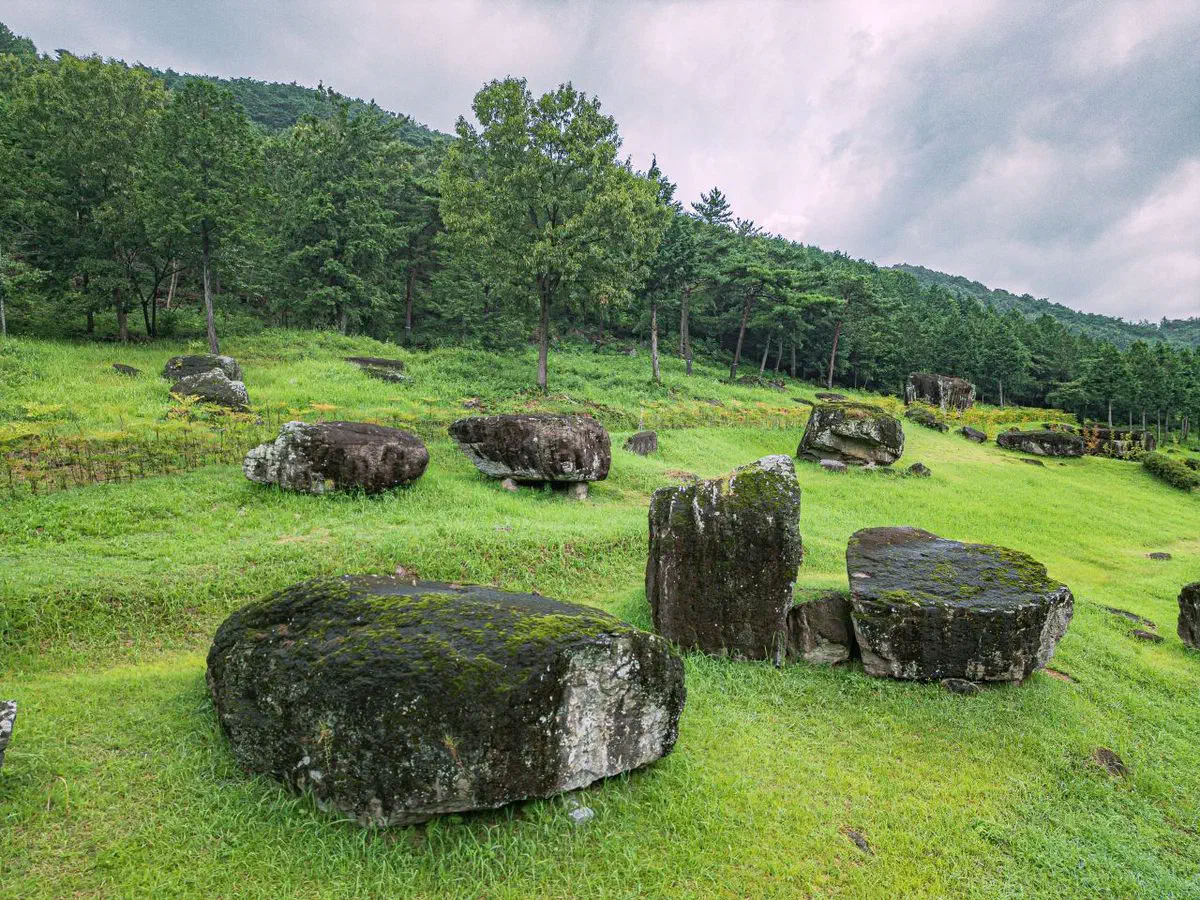
The grounds carry Buddhist stone sculpture, a five-story pagoda and a set of dolmens — the megalithic tombs this region has more of than almost anywhere on earth.
That last part is not a local curiosity. Hwasun, in the same province, holds 596 dolmens including the largest capstone in Korea. UNESCO inscribed the Gochang, Hwasun and Ganghwa dolmen sites on 2 December 2000, and Hwasun sits about 30 km from the museum.
The name of the province changed last year
Small but real, and English guides have not caught up.
On 1 July 2026, Korea folded Gwangju Metropolitan City and South Jeolla Province into one administrative unit — 전남광주통합특별시 — the country’s first province-level merger. English renderings vary and no single official English form is in general use yet, so you will still see “Gwangju Metropolitan City” and “South Jeolla” almost everywhere in English.
For a traveler it changes nothing practical. For anyone reading an address or a government page, it explains why the province has stopped appearing under the name you looked up.
Getting there and staying
Gwangju is on the Honam KTX line from Yongsan — Gwangju Songjeong is the station — and it has a metro line, which puts it ahead of most cities on this list for getting around without a car.
Stays in Gwangju are the widest choice anywhere on our museum map outside Seoul and Busan: 98 properties listed when we checked on 31 August 2026, against 17 in Gongju and five in Buyeo. A Korean eSIM covers the metro and buses; Google Maps will not route you.
In the same trip
Other museums within reach
- Naju National Museum — Naju, Jeonnam-Gwangju, about 37 km away.
Festivals near here
These run on their own dates, so check them against yours before you build a route around them.
- Gwangju Kimchi Festival — October, about 4 km away.
- Chungjang Street Festival of Recollection — October, about 5 km away.
- Damyang Bamboo Festival — May, about 18 km away.
- Sunchang Jangryu Festival — October, about 29 km away.
- Hampyeong Butterfly Festival — April, about 36 km away.
The coast from here
- Getting In the Mud — Hajeon Village, Gochang, North Jeolla, about 40 km away.
Quick answers
What is the Sinan shipwreck?
Where can you see the Sinan shipwreck finds?
Is Gwangju National Museum open on Mondays?
Are there UNESCO dolmens near Gwangju?
Is Gwangju still called Gwangju?
Checked 31 August 2026. The Sinan wreck’s 1975 discovery by a fisherman’s net off Jeungdo, the 1976–1984 excavation, and the recovered totals of 20,661 Yuan ceramics, 729 metal items, 43 stone items, 28 tons of coins numbering about eight million, 1,017 pieces of purple sandalwood and 574 other objects, from Korean government records and heritage reporting; the ship’s 1323 construction and departure from Ningbo for Japan from the same sources. The 1994 transfer of the reassembled hull to Mokpo and the dispersal of the cargo among national institutions from Korean heritage records. The Ceramics Culture Hall’s opening on 18 December 2025, its 7,137 m² over two floors, the roughly four-year construction, the gallery layout, and the display of about 500 Korean and 6,500 Sinan ceramics, from the National Museum of Korea’s press release, which also describes it as the first ceramics-specialist exhibition space at a Korean national museum. Hours, the 10:00 opening and the closing days including the first Monday of April and November from the museum’s visitor information. The Gochang, Hwasun and Ganghwa dolmen sites’ inscription on 2 December 2000 and Hwasun’s 596 dolmens from Korea Heritage Service and Ministry of Culture materials. The 1 July 2026 merger of Gwangju and South Jeolla from Korean government announcements — we have not found a settled official English form of the new name and have said so rather than inventing one. Hours change — confirm before you travel.