Jeju National Museum: The Island Was Its Own Country
Last verified: 2026-09-01. Rules and prices change — always confirm on the official site before you travel.
This page contains affiliate links. If you book through them we may earn a commission at no extra cost to you. It never changes what we recommend.
People describe Jeju as Korea’s holiday island. That framing gets the history backwards, and Jeju National Museum is where you find that out.
The oldest settled village yet found in Korea is on this island. Its pottery belongs to a distribution that runs to Siberia and Japan rather than to the Korean mainland. And Jeju ran as a separate kingdom for about a thousand years. The Korean state only absorbed it fully in 1402 — ten years after Joseon was founded.
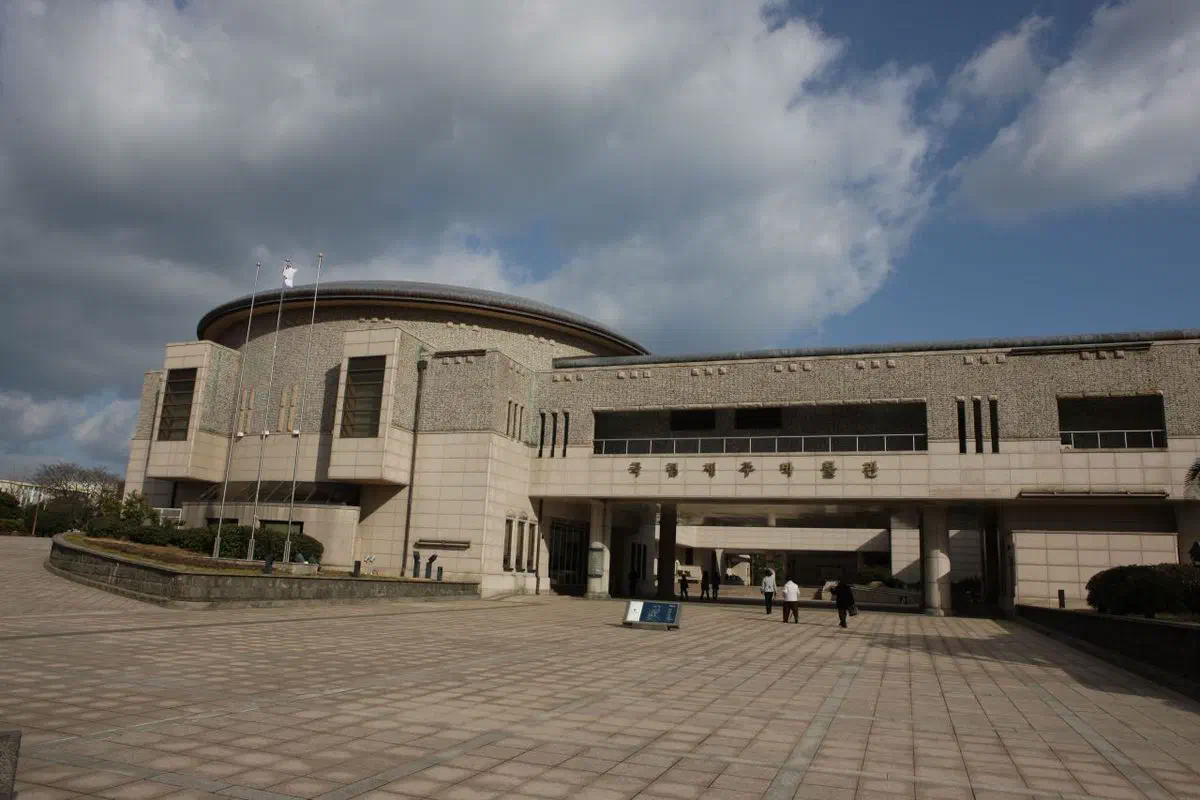
The oldest village in Korea is here
At Gosan-ri, on Jeju’s west coast, archaeologists found a settlement dating to around 10,000 years ago — roughly 8000 BCE. That beats Osan-ri in Gangwon, the previous record holder, by about two thousand years. Korea made it Historic Site No. 412 in 1998.
Excavation turned up 28 round pit dwellings, more than 300 pits, and ten outdoor hearths. This was not a camp. People stayed.
The pottery is the part that matters for how you read the island. Gosan-ri ware is a reddish, fiber-tempered type that turns up nowhere else on the Korean peninsula. It predates the comb-pattern pottery that defines the mainland Neolithic, and its related wares spread across the Amur, Primorye, Baikal, the Japanese archipelago and China.
Jeju’s earliest material culture does not point north to Korea. It points outward, around the rim of north-east Asia.
Tamna was a country, and it lasted
- Until early Goryeo
- Tamna functions as an independent kingdom
- **938**
- Submits to Goryeo as a tributary
- **1105**
- Reorganized as Tamna-gun — a Goryeo county. Vassal status gone.
- **1402**
- The Seongju and Wangja titles are abolished. A thousand years ends.
That last date is the one worth carrying around. Joseon was founded in 1392. Tamna’s own royal titles survived it by a decade. The island was governed as a distinct thing for longer than most visitors assume, and its absorption is late enough to be documented rather than legendary.
The museum’s response to this is structural: alongside the prehistory and Joseon galleries, it gives three separate rooms to Tamna — early, middle and late. Most regional national museums give a kingdom one.
The founding myth is on an ordinary street
Two kilometers from the museum is Samseonghyeol, where three holes in the ground mark where the island’s three progenitors are said to have emerged — the ancestors of the Ko, Yang and Bu families.
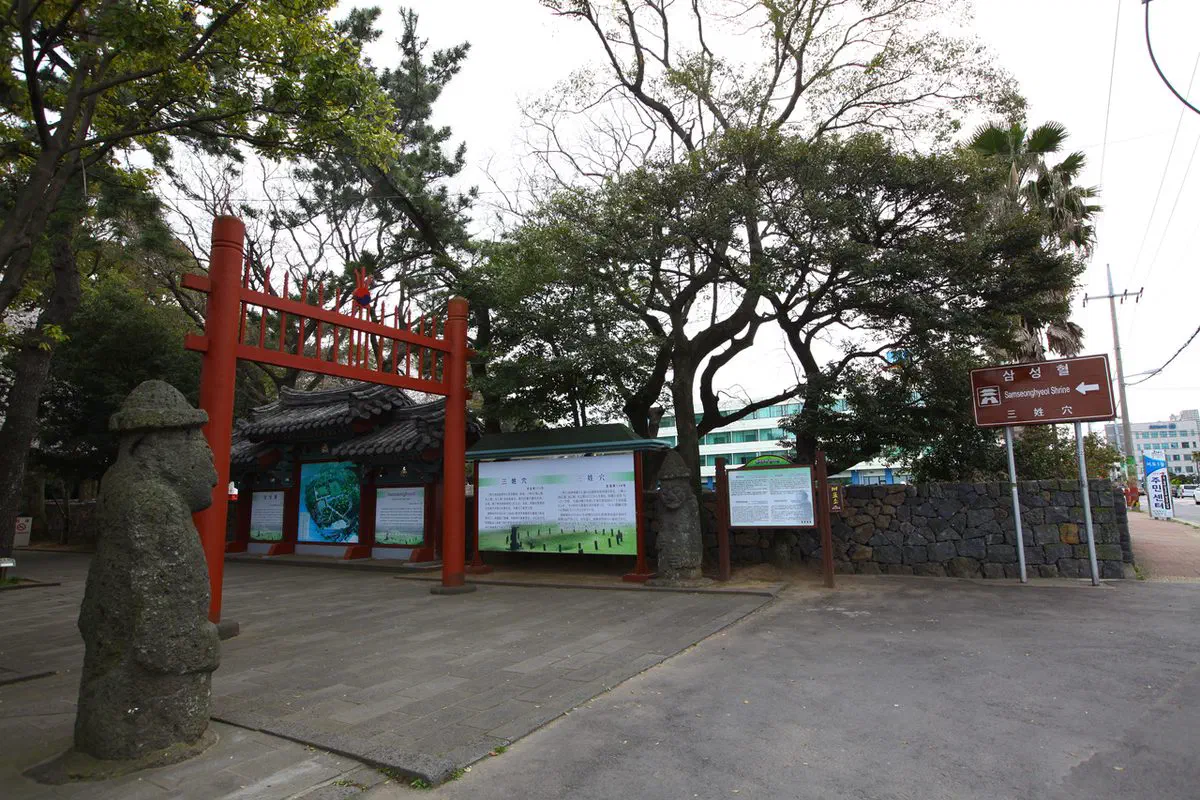
A founding myth with an address, a bus stop and a road sign, wedged into a working neighborhood. That is fairly typical of how Jeju carries its own history, and it pairs with the museum in about half a day.
The UNESCO count nobody mentions
Jeju holds three separate UNESCO designations in the natural-heritage programs, which the island’s government describes as unmatched anywhere:
- **2002**
- Biosphere Reserve
- **2007**
- World Natural Heritage — Jeju Volcanic Island and Lava Tubes
- **2010**
- UNESCO Global Geopark
And a fourth in a different program: Jeju haenyeo culture, inscribed on the Intangible Cultural Heritage list in 2016. The Haenyeo Museum is about 28 km east of here and is the other half of this museum’s subject — the sea rather than the land.
When this museum is the right answer
Most people come to Jeju for Hallasan, the oreum, the coast, and never enter a museum. Fair enough. But there are two situations where this one earns its place.
Arrival and departure days. It is on the Jeju City side, near the harbor, which is the part of the island you pass through rather than stay in. It fills a half day that would otherwise go to a café.
Weather. Jeju’s weather turns fast, and the island’s attractions are overwhelmingly outdoors. Hallasan’s trails in particular can be shut or miserable with no notice. This is a free, indoor, substantial alternative.
Note that it closes Mondays, as ten of Korea’s fourteen national museums do — only Seoul, Gyeongju, Jeonju and Gwangju stay open, and they are marked on our museum map. Hours are 09:00 to 18:00 and admission to the permanent galleries is free.
Getting there and staying
The museum is a short ride from Jeju City’s harbor and about twenty minutes from Jeju International Airport, which makes it genuinely practical on a flight day.
Stays in Jeju City listed 161 properties when we checked on 1 September 2026 — worth knowing that searching the island as a whole returns over a thousand, so if you are not tied to the city, look wider. A Korean eSIM matters on Jeju more than most places because the bus network is how you get around without a car, and Google Maps will not route you.
In the same trip
Other museums within reach
- Jeju Haenyeo Museum — Gujwa-eup, Jeju, about 28 km away. Sea and ecology rather than history.
Festivals near here
These run on their own dates, so check them against yours before you build a route around them.
- Jeju Olle Walking Festival — November, about 9 km away.
Filmed near here
- K-Pop Locations in Jeju — Oedolgae, Seogwipo, Jeju, about 30 km away.
Quick answers
Was Jeju a separate country?
Where is Korea's oldest village?
Why is Gosan-ri pottery significant?
How many UNESCO designations does Jeju have?
Is Jeju National Museum worth visiting?
Checked 1 September 2026. The museum’s opening on 15 June 2001 and its permanent gallery structure — a central hall, prehistory and archaeology, three Tamna galleries, a Joseon gallery, a donated-collection room and an outdoor display — from the museum’s own pages and the Digital Jeju Cultural Encyclopedia. The Gosan-ri site’s dating to around 10,000 years ago, its designation as Historic Site No. 412 in 1998, the 28 round pit dwellings, over 300 pits and ten outdoor hearths, and the character and distribution of Gosan-ri ware, from the National Institute of Korean History and Jeju Institute of Cultural Heritage excavation reporting. Tamna’s status as an effectively independent kingdom, its submission to Goryeo in 938, its reorganization as Tamna-gun in 1105 and the abolition of the Seongju and Wangja titles in 1402, from Korean historical reference sources. Jeju’s UNESCO designations — Biosphere Reserve 2002, World Natural Heritage 2007, Global Geopark 2010 — from Jeju Province’s own materials; the haenyeo inscription of 2016 is sourced in our Haenyeo Museum guide. Hours, the Monday closure and free admission from the museum’s visitor information. Hours change — confirm before you travel.