Jeonju National Museum: Six Kilometers From the Crowd
Last verified: 2026-08-31. Rules and prices change — always confirm on the official site before you travel.
This page contains affiliate links. If you book through them we may earn a commission at no extra cost to you. It never changes what we recommend.
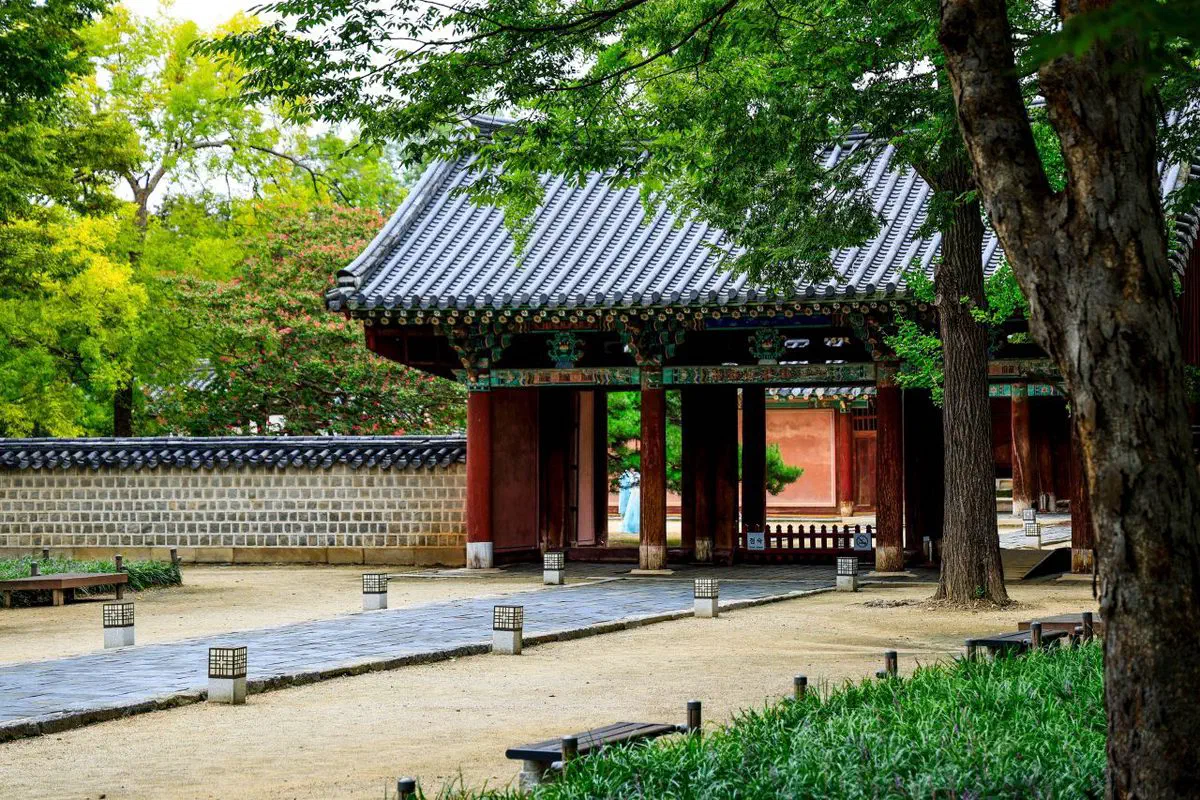
Jeonju’s hanok village holds 735 hanok and is one of the most-visited places in the country. Inside it, behind a painted gate, is the shrine the whole city’s history runs through.
Jeonju National Museum — which exists to explain that history — is six kilometers away, on the other side of town.
Why Jeonju is a royal city at all
Most visitors arrive for hanok, bibimbap and hanbok photographs, and leave without finding out why a provincial city has a royal shrine in the middle of it.
Jeonju is where the family that founded the Joseon dynasty came from. Yi Seong-gye, who took the throne in 1392, belonged to the Yi clan of Jeonju. When the new dynasty wanted to mark the place as its ancestral seat, it did the most direct thing available: it put the founder’s portrait there.
Gyeonggijeon was built in 1410 to house that portrait, and took its present name in 1442. The portrait inside — the Royal Portrait of King Taejo, National Treasure No. 317 — is the only surviving likeness of him. The version there today is an 1872 copy, painted in color on silk, 220 by 151 centimeters, showing him full-length in everyday court dress rather than ceremonial robes.
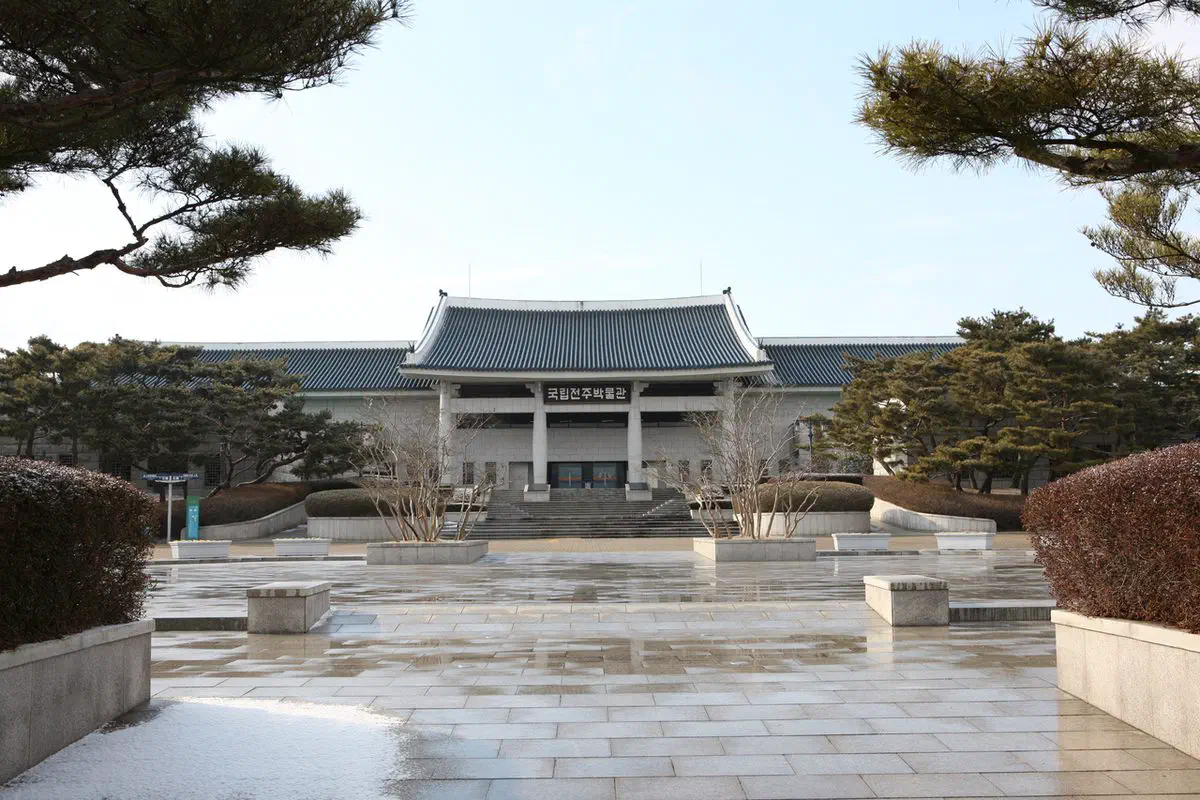
That is the thread the museum picks up. Its permanent galleries run North Jeolla’s history end to end, with a hall on royal culture — Jeonju’s relationship with the Joseon court — and a hall on the calligraphy and painting of the province’s scholars.
The museum opened on 26 October 1990. It holds about 40,000 objects and shows roughly 2,000 of them across four galleries and an outdoor display.
The National Treasure that left
For fifty-five years this museum held National Treasure No. 123, the reliquary set from the five-story pagoda at Wanggung-ri in Iksan — found in 1965 when the pagoda came apart for repair, and including the Diamond Sutra engraved on nineteen sheets of pure gold, folded and tied with gold cord.
In January 2020 it went back to Iksan, for the museum that opened there on the site it came from.
Museums lose things this way and it is usually the right outcome. It is worth knowing before you come looking for it.
The reason to plan a Monday around this place
Ten of Korea’s fourteen national museums close every Monday. Jeonju is one of the four that do not — with Seoul, Gyeongju and Gwangju. It shuts on 1 January, Seollal and Chuseok, and that is the list.
If you are in Jeonju anyway, that makes this the Monday fallback rather than an also-ran. Everything on our museum map is marked for it.
One thing to note: it opens at 10:00, not 09:00 like most of the others, with last entry at 17:30.
Getting there from the hanok village
This is the practical problem. The museum is not walkable from the hanok village — six kilometers is a bus or a taxi, and the tourist circuit does not run past it.
The nearby-attraction list is telling. Within a few kilometers of the museum you have a makgeolli alley, the west market and a park — real Jeonju rather than the photographed part of it. The hanok village, the Bibimbap Festival grounds and the restaurants are all on the other side.
Treat it as its own half-day rather than something you squeeze in between hanbok rentals.
Hanok stays in Jeonju are the obvious base — 203 accommodation businesses inside the village itself, which our hanok village guide covers along with the two Korean words to search for in a listing. A Korean eSIM matters for the bus out here, since Google Maps will not route you.
In the same trip
Other museums within reach
- Iksan National Museum — Iksan, North Jeolla, about 24 km away.
- National Institute of Ecology (Ecorium) — Janghang, Seocheon, South Chungcheong, about 42 km away. Sea and ecology rather than history.
Festivals near here
These run on their own dates, so check them against yours before you build a route around them.
- Jeonju Hanji Culture Festival — October, about 6 km away.
- Jeonju Bibimbap Festival — October, about 6 km away.
- Gimje Horizon Festival — October, about 22 km away.
- Imsil N Cheese Festival — October, about 27 km away.
- Jinan Red Ginseng Festival — September, about 30 km away.
The coast from here
- Getting In the Mud — Hajeon Village, Gochang, North Jeolla, about 65 km away.
Quick answers
Is Jeonju National Museum in the hanok village?
Is Jeonju National Museum open on Mondays?
Why does Jeonju have a royal shrine?
What is the Royal Portrait of King Taejo?
Is Jeonju National Museum free?
Checked 31 August 2026. The museum’s opening on 26 October 1990, its collection of around 40,000 objects with roughly 2,000 on permanent display across four galleries and an outdoor area, and the gallery structure covering North Jeolla history, royal culture and the province’s calligraphy and painting, from the museum’s own pages. Hours, the 10:00 opening and the closing days from its visitor information. Gyeonggijeon’s construction in 1410 and its naming in 1442, the Royal Portrait of King Taejo as National Treasure No. 317, its status as the only surviving portrait of Taejo, the 1872 copy, and its dimensions of 220 by 151 centimeters on silk, from Korea Heritage Service records and Jeonju city heritage materials. The Wanggung-ri reliquary set, National Treasure No. 123, its 1965 discovery during the dismantling of the pagoda, the Diamond Sutra on nineteen gold sheets, and its transfer to Iksan when the national museum there opened in January 2020, from Korea Heritage Service records and Jeonbuk press reporting — we had this the wrong way round in an earlier article and have corrected it. Hanok village figures are sourced in our Jeonju guide. Distances from Korea Tourism Organization location data. Hours change — confirm before you travel.