National Lighthouse Museum: One Light at a Time
Last verified: 2026-09-03. Rules and prices change — always confirm on the official site before you travel.
This page contains affiliate links. If you book through them we may earn a commission at no extra cost to you. It never changes what we recommend.
The National Lighthouse Museum — Korea’s only one — sits at Homigot, the headland everyone calls the easternmost point of the mainland. It technically is not. That title belongs to Seokbyeong-ri, a little south at Guryongpo. But Seokbyeong-ri has nothing marking it, and Homigot has a lighthouse, a museum and a giant bronze hand reaching out of the sea. Fame went to whichever spot had something to look at.
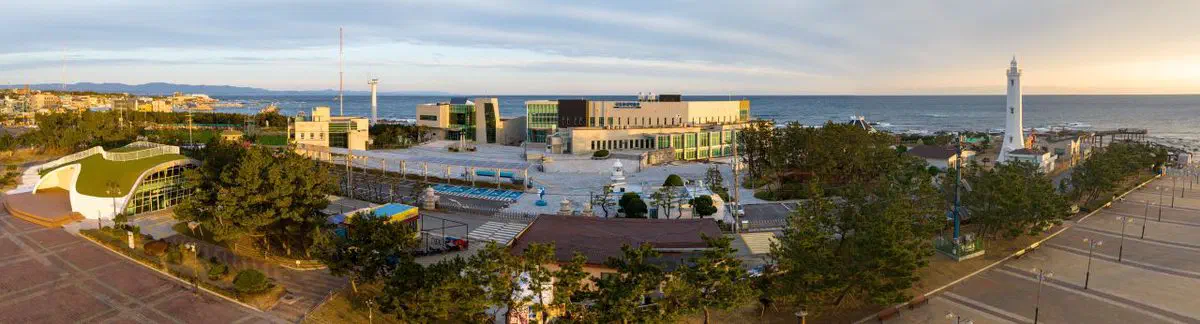
The National Lighthouse Museum outgrew a local memorial
It opened on 7 February 1985 as the Janggigap Lighthouse Museum, run by Pohang City around the working lighthouse already on the point. Management passed to the regional maritime affairs office in 1995, and the museum was renamed and reopened as the National Lighthouse Museum in 2002 — the national designation followed the collection, not the other way around.
The lighthouse that gave the headland its reason to exist predates the museum by seventy-seven years. Homigot Lighthouse was built in 1908, during the Korean Empire period, and its ironwork and construction are internationally recognized as architecturally significant — one of the oldest working lighthouses on the Korean mainland.
Four eras, told through the lighthouses themselves
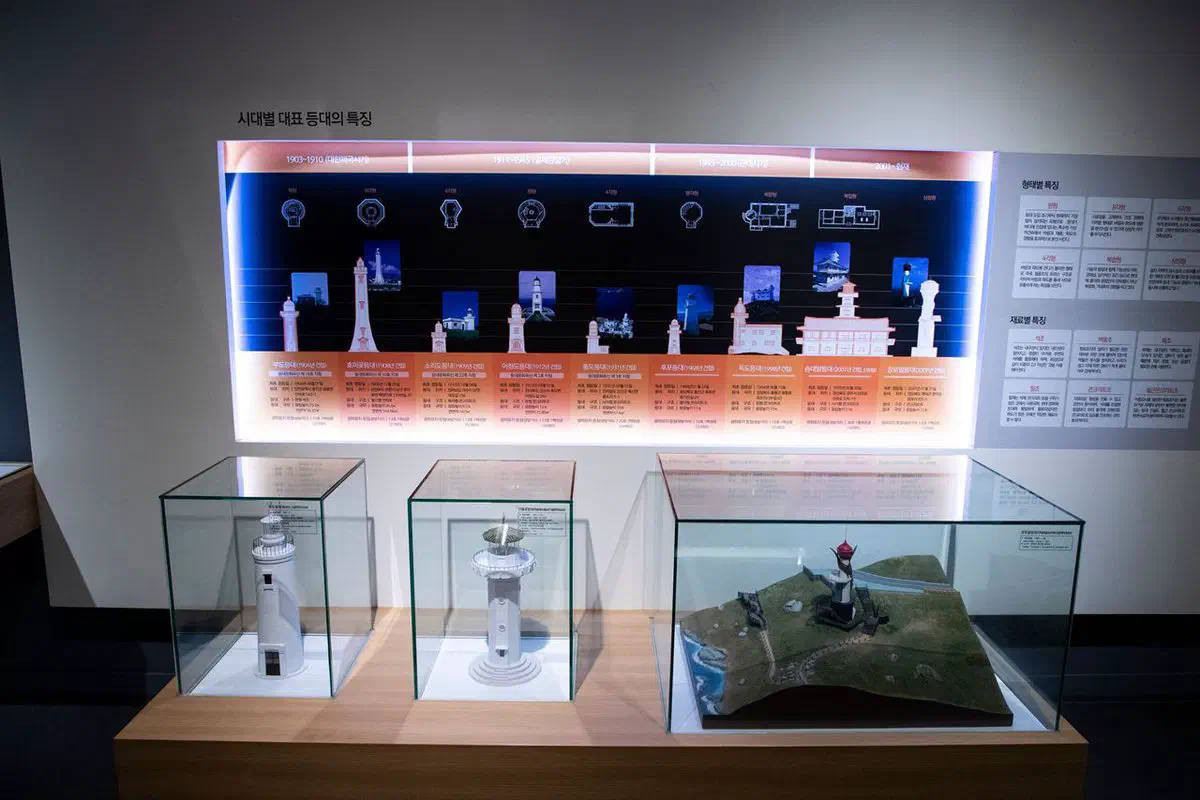
One wall inside does the museum’s real work in a single glance. Models and photographs of named lighthouses around the Korean coast, sorted into four periods —
- 1903–1910
- Korean Empire — Homigot’s own lighthouse belongs to this generation
- 1911–1945
- Japanese colonial period
- 1945–2000
- Postwar, modern construction
- 2001–
- Contemporary
Line them up and the shape of the coastline’s history becomes visible in concrete and iron rather than in a textbook paragraph — which lighthouse went up under which government, and how the towers themselves changed shape across a century.
Before the state built any of them, fishermen built their own
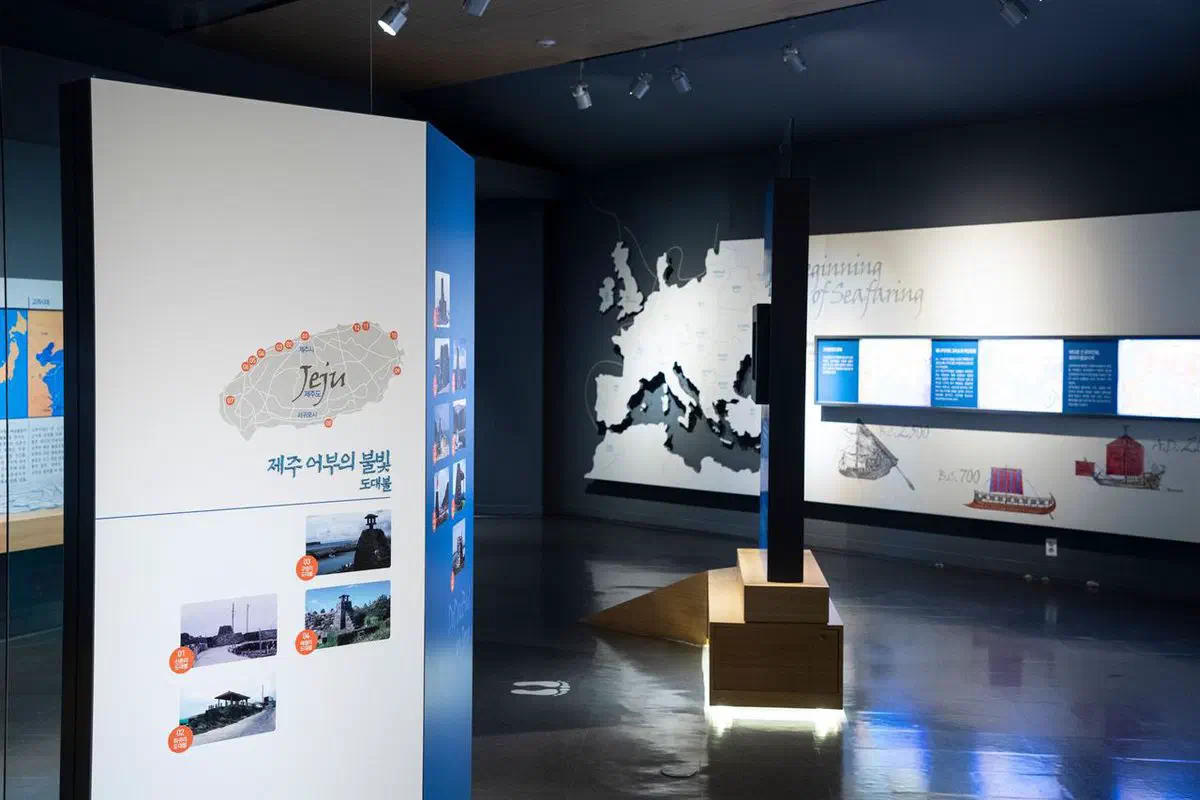
The museum’s galleries widen out from Korea’s official lighthouses into the larger story of finding your way home by sea. The most striking exhibit in that story is not a lighthouse at all.
Dotaebul (도대불) were folk beacons — built from stacked basalt by fishermen and villagers themselves, not by any government, mostly between the 1910s and 1960s, before electricity reached rural coastlines. A fire of burning petroleum or fish oil sat on top, lit by hand each night. Jeju had the largest concentration of them. Six survive in reasonable condition and were registered as Jeju heritage in 2021 — the folk counterpart to every official tower the rest of the museum documents.
It is worth pausing on, next to the Korean Empire-era model in the previous room. One lighthouse was built by a state with an engineering budget. One was built by fishermen with volcanic rock and fish oil. Both solved the identical problem.
The hand reaching out of the water
Homigot’s “Sang-saeng-ui Son” — the Hand of Harmony — is the sculpture most people actually come to photograph. Two matching bronze hands, one standing in the sea and one on the plaza behind it, installed in 1999 for the 2000 sunrise. It has become the visual shorthand for the headland itself, well beyond anyone who has heard of the lighthouse museum a short walk from it.
The Homigot Sunrise Festival runs the same stretch of coast every 31 December into 1 January — one of the country’s best-attended New Year sunrise gatherings, timed to the same view the lighthouse has been marking for over a century.
In the same trip
Other museums within reach
- Gyeongju National Museum — Gyeongju, North Gyeongsang, about 41 km away.
Festivals near here
These run on their own dates, so check them against yours before you build a route around them.
- Pohang International Fireworks Festival — November, about 17 km away.
- Gyeongju Silla Cultural Festival — October, about 42 km away.
Getting there
Homigot sits outside Pohang’s city center, on a headland with no rail connection of its own. The trip means a bus or a taxi from the KTX station. From Pohang Station, city bus 200 runs out to Homigot, around an hour depending on traffic; a taxi cuts that closer to 35–40 minutes.
A Korean eSIM earns its keep on a bus route like this one — live arrival times beat a printed schedule, and Naver Map handles addresses outside the city center better than Google Maps does. Our eSIM comparison covers which to buy.
Stays in Daegu put you on the KTX line if Pohang is a day trip rather than an overnight; Pohang itself has its own hotel stock nearer the station for anyone staying on the coast.
Quick answers
Is Homigot actually Korea's easternmost point?
When was the National Lighthouse Museum's own lighthouse built?
What is a dotaebul?
What is the Hand of Harmony sculpture at Homigot?
Checked 3 September 2026. Museum hours, admission and address from the museum’s own site. The museum’s 1985 opening as the Janggigap Lighthouse Museum, its 1995 transfer to the regional maritime affairs office and 2002 renaming to National Lighthouse Museum, and Homigot Lighthouse’s 1908 construction, from Korean-language museum history sources. The four-era lighthouse timeline read directly from the museum’s own wall exhibit. Dotaebul construction period, materials, fuel and the 2021 heritage registration of six survivors from Korean cultural heritage reporting on Jeju’s registered folk lighthouses. The Hand of Harmony sculpture’s 1999 installation and Seokbyeong-ri’s status as the mainland’s technical easternmost point, correcting Homigot’s popular reputation, from Korean-language geography references. The Homigot Sunrise Festival’s 31 December–1 January date is its recurring annual pattern, not a year-specific claim. Hours and prices change — confirm before you travel.