Naju National Museum: A Crown Inside a Clay Jar
Last verified: 2026-08-31. Rules and prices change — always confirm on the official site before you travel.
This page contains affiliate links. If you book through them we may earn a commission at no extra cost to you. It never changes what we recommend.
From roughly the third to the sixth century, the people of the Yeongsan River basin buried their dead inside enormous ceramic jars — up to two meters long and weighing around 300 kilograms.
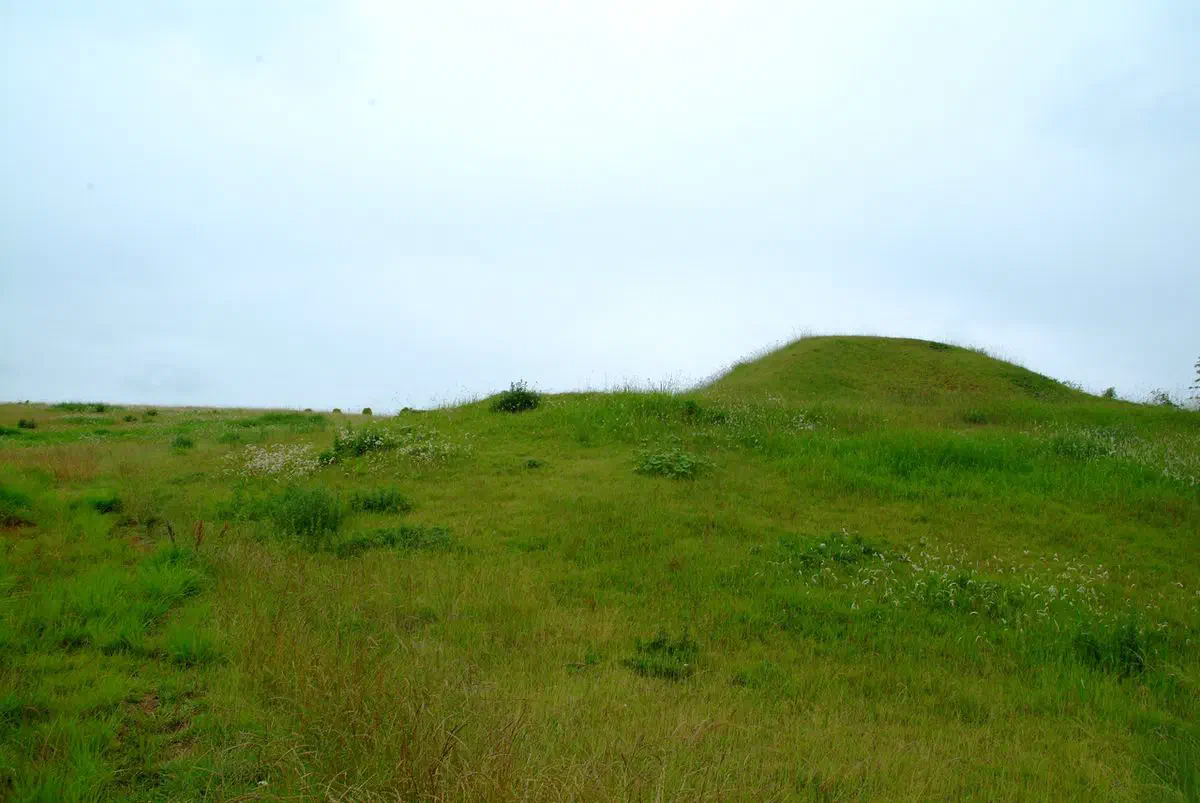
Nobody else in Korea did this at that scale. Naju National Museum exists because of it, and it is built out in the fields at Bannam, next to the mounds themselves.
They built kilns that made nothing but coffins
The practice started the way you would expect: people took large storage jars, the kind already in every household, and used them as coffins.
Then it stopped being improvised. The jars became purpose-built coffins, made to no other specification and for no other use — and the region built industrial capacity to produce them. At the Oryang-dong kiln site in Naju, archaeologists have confirmed 77 kilns, one of them 7 meters long, turning out jar coffins and nothing else.
Making a 300-kilogram ceramic vessel that will be used exactly once, and building seventy-seven kilns to keep making them, is not a burial custom. It is an economy organized around a burial custom.
Then they found a crown in one
In 1917 and 1918, Japanese archaeologists opened Tomb 9 at Sinchon-ri, one of the Bannam mounds. Inside a jar coffin was a gilt-bronze crown — 25.5 centimeters tall, an outer band carrying three tree-shaped uprights, with an inner cap made from two half-round copper plates joined together.
It was the first gilt-bronze crown found anywhere on the Korean peninsula, and it became National Treasure No. 295 in 1997.
That single object reframes the whole site. A crown of that quality is not what you bury a village headman in. Whoever went into that jar had standing — and the Yeongsan basin’s relationship with Baekje, which was consolidating to the north at the same time, is still argued over by Korean archaeologists as a result. Local Mahan rulers with their own regalia, or Baekje appointees?
The tombs are the evidence and the question at once, which is a more interesting thing for a museum to be built on than a settled story.
You can watch the storeroom
The museum opened on 3 September 2013, and its actual institutional job is less glamorous than its collection: it is the regional repository for archaeological finds from across the Honam region. Things dug up in the south-west come here to be stored.
Rather than hide that, the museum made it the attraction. Of its six storage rooms, one has a large window onto the gallery — the first “visible storage” at any national or public museum in Korea. You can stand and watch conservators working.
Most museums show you the finished sentence. This one shows you the filing cabinet, and it turns out the filing cabinet is interesting.
Where it sits, and what that means
This is the most rural national museum in Korea. It is in Bannam-myeon, a township, and the nearest attraction of any kind on the tourism board’s own location data is 8.8 km away. There is no town around it — the point is that the tombs are here, so the museum is here.
That has one practical consequence: Gwangju is about 37 km away and is where you should base. Gwangju is also one of the four national museums that open on Mondays, and Naju is not — Naju closes Mondays like ten of the fourteen. Pairing them means doing Naju first.
South Jeolla — the province folded into 전남광주통합특별시 in July 2026 — applied to have the Mahan jar-coffin tombs at Naju and Yeongam added to Korea’s tentative list for World Heritage nomination. That is an application, not an inscription, and it may go nowhere — but it is the clearest signal of how the region now reads these fields.
Cost and hours
Admission is free. It opens 09:00 to 18:00 with last entry at 17:30; the immersive-content hall opens at 10:00.
It closes Mondays, 1 January, Seollal and Chuseok.
Stays in Gwangju are the sensible base — 98 properties listed when we checked on 31 August 2026, against almost nothing in Bannam itself. A Korean eSIM matters more here than in a city, because rural bus timings live in Kakao Map and Naver Map and Google Maps will not route you.
In the same trip
Other museums within reach
- Gwangju National Museum — Gwangju, Jeonnam-Gwangju, about 37 km away.
Festivals near here
These run on their own dates, so check them against yours before you build a route around them.
- Yeongam Wangin Culture Festival — April, about 18 km away.
- Hampyeong Butterfly Festival — April, about 20 km away.
- Mokpo Port Festival — October, about 28 km away.
- Gwangju Kimchi Festival — October, about 32 km away.
- Jeongnamjin Jangheung Water Festival — July, about 34 km away.
The coast from here
- Getting In the Mud — Hajeon Village, Gochang, North Jeolla, about 58 km away.
- The Seohaerang Trail — Ttangkkeut, Haenam, South Jeolla, about 70 km away. The trail itself runs the length of the west coast, so it likely passes closer than this.
Quick answers
What are Yeongsan River jar coffins?
What is the Sinchon-ri gilt-bronze crown?
Can you see inside the storage at Naju National Museum?
Is Naju National Museum free, and when does it close?
Where should you stay to visit Naju National Museum?
Checked 31 August 2026. The scale of Yeongsan basin jar coffins — up to two meters and around 300 kilograms, in use from roughly the third to sixth century — and their development from reused storage jars into purpose-made coffins, from National Museum of Korea collection notes. The Oryang-dong kiln site and its 77 confirmed kilns from Korea Heritage Service announcements. The Sinchon-ri Tomb 9 gilt-bronze crown — its 25.5 cm height, three tree-shaped uprights, inner cap of two joined plates, its 1917–18 excavation, its status as the first gilt-bronze crown found on the peninsula and its designation as National Treasure No. 295 on 22 September 1997 — from Korea Heritage Service records. The museum’s 3 September 2013 opening, its role as the Honam regional repository, its six storage rooms and Korea’s first visible storage from the museum’s own materials. Hours, the Monday closure and free admission from its visitor information. Distances from Korea Tourism Organization location data. The World Heritage tentative- list application for the Mahan jar-coffin tombs is an application by the province, not an inscription, and we have said so. The Baekje-versus-Mahan question is an open argument in Korean archaeology; we have described it as open rather than picking a side. Hours change — confirm before you travel.