Jangsaengpo Whale Museum: A Hall for a Whale Nobody Has Seen Since 1977
Last verified: 2026-08-31. Rules and prices change — always confirm on the official site before you travel.
This page contains affiliate links. If you book through them we may earn a commission at no extra cost to you. It never changes what we recommend.
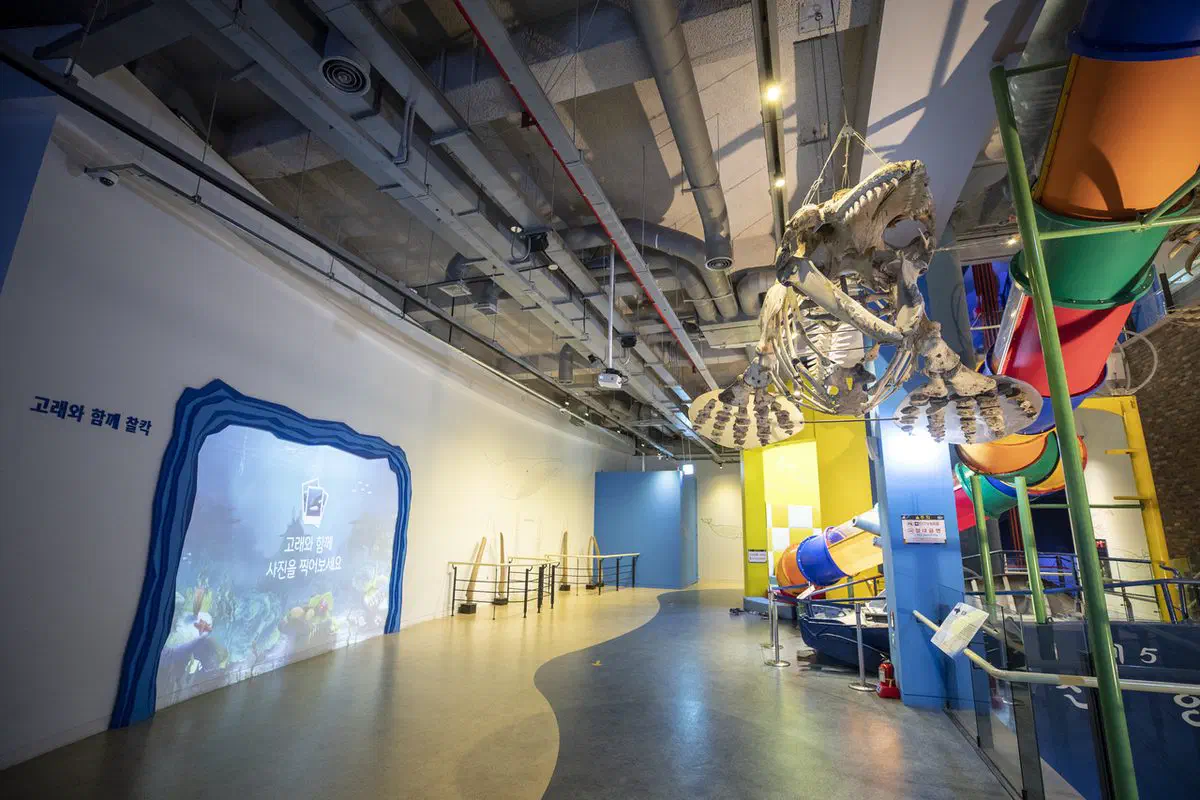
On the third floor of the Jangsaengpo Whale Museum there is a hall built around a full-size model of a Korean gray whale, with a recording of the sound it makes — Koreans describe it as something like a cow lowing.
Nobody has seen one in Korean waters since 3 January 1977, when two were sighted off Bangeojin. That is four and a half kilometers from where the model now hangs.
Ulsan has been about whales for seven thousand years
This is not a town that picked a theme. The relationship is documented in stone, and in July 2025 UNESCO said so.
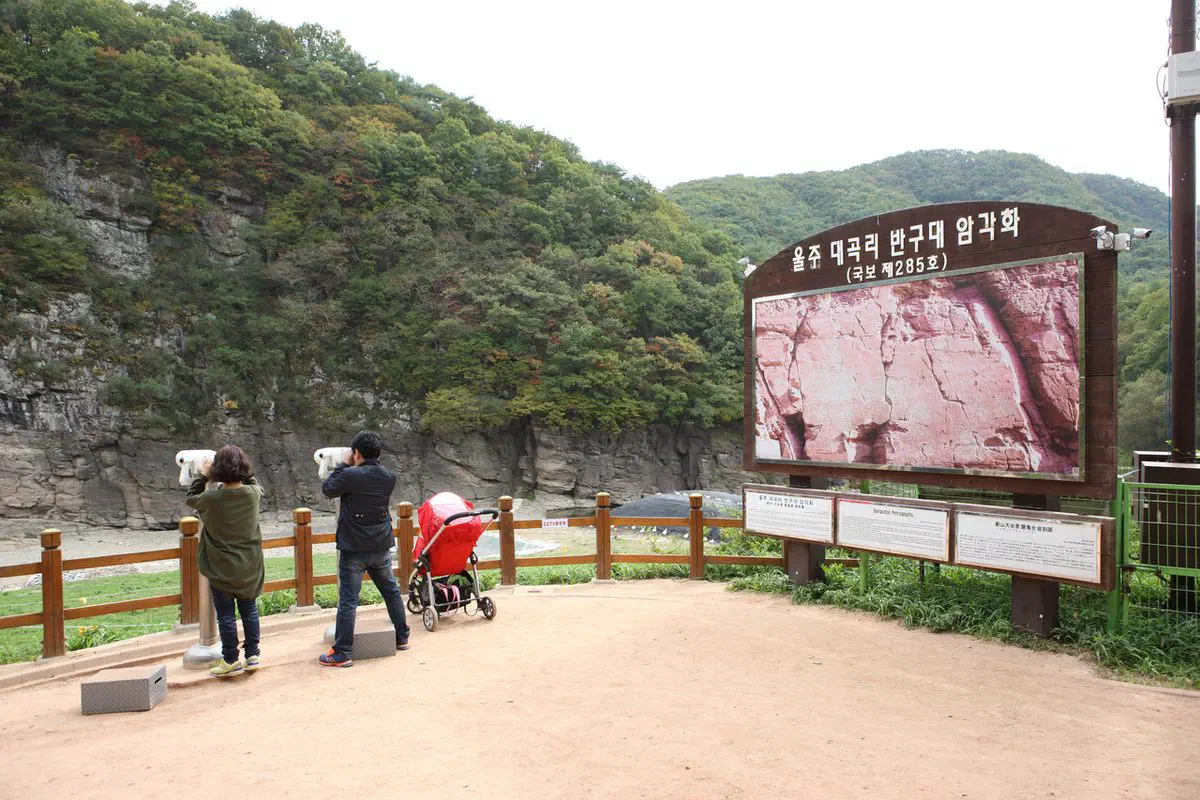
UNESCO added the Bangudae petroglyphs, cut into a rock face about 21 km inland from Jangsaengpo, to the World Heritage list on 12 July 2025 — Korea’s seventeenth. The carvings run from roughly 5000 BCE, and the reason UNESCO singled them out is the subject matter: they show whales, and they show the stages of hunting them. It is the oldest known depiction of whaling anywhere.
Modern whaling arrived in 1899, when a Russian company took the concession and named Jangsaengpo as the place to cut the animals up. By the 1970s around twenty whaling ships worked out of this one port. Stocks collapsed, and the 1986 International Whaling Commission moratorium ended it.
The museum opened on 31 May 2005, nineteen years after the industry it documents stopped existing. That places it on the coastal side of our museum map rather than the inland cluster of national history museums — a building about the thing outside its own window, the way Gyeongju’s museum sits inside the capital it excavates.
What is actually in the Jangsaengpo Whale Museum
The building is organized as three exhibition halls, and the middle one is the reason to come.
- Hall 1
- Whaling History — the industry, its tools, and what whale oil was used for before petroleum
- Hall 2
- Gray Whale Hall, and a relocated, reconstructed flensing station — the place where whales were butchered, rebuilt indoors
- Hall 3
- Children’s hall, archive and screening room
- Outside
- The whaling ship Jinyang No. 6
Permanent exhibits include full skeletons of a Bryde’s whale and an orca, the harpoon gun from the whaler Jinyang No. 5, and a model of the whaling ship Gwanhwan No. 17.
Putting a reconstructed flensing station and a memorial hall to a vanished whale in the same building is a strange thing to do, and it is also the most honest thing about the place. It does not pretend the town was ever a conservation society.
The part to decide about before you buy a ticket
Next door is the Whale Ecology Experience Center, an aquarium with live bottlenose dolphins, and one ticket covers both — you cannot pay for the museum alone.
The numbers are on the record. The facility took in twelve dolphins; eight have died. Four remain, and the center runs scheduled feeding and behavior sessions. Korean animal-welfare organizations have campaigned about it repeatedly, and the deaths have been reported in the national press over more than a decade.
We are not going to tell you what to do with that. We are telling you because a lot of visitors would want to know before the turnstile rather than after, and because no English-language write-up of this museum we could find mentions it at all.
The carvings are underwater about 38 days a year
If Bangudae is why you are coming to Ulsan, read this part first.
The petroglyphs sit at 53 to 57 meters above sea level. The full-water level of the Sayeon Dam downstream is 60 meters. So when the reservoir rises, a UNESCO World Heritage site goes under — for an average of about 38 days a year, and in 2025 for a continuous 36 days before the water dropped again in late August.
By 2030 the Ministry of Environment plans three floodgates on the dam, which should cut the submersion to under a day a year.
Until then this is a real planning problem: the carvings are hardest to see in the rainy season, roughly late June through August. And even at low water you view them from a platform across the river through binoculars, which is what the photograph above shows. On site, the Bangudae Petroglyph Museum holds full-size replicas — on a high-water day, the only version of them you will see.
Getting there
Ulsan is a KTX stop — Ulsan (Tongdosa) Station is on the Gyeongbu line between Seoul and Busan — but the station is well outside the city, and Jangsaengpo is a further ride on the far side of town. Budget the transfer rather than assuming the KTX puts you there.
Jangsaengpo sits inside Korea’s heavy-industrial coast: Hyundai Motor’s Ulsan plant is 3.4 km away and Hyundai Heavy Industries 3.7 km. The whale museum is not in a scenic fishing village, and knowing that before you arrive prevents a specific kind of disappointment.
Stays in Ulsan are priced for business travel rather than tourism, which works in your favor at weekends. A Korean eSIM earns its keep here — the Bangudae shuttle and local buses are tracked in Kakao Map and Naver Map, and Google Maps will not route you.
In the same trip
Other museums within reach
- Gyeongju National Museum — Gyeongju, North Gyeongsang, about 39 km away.
Festivals near here
These run on their own dates, so check them against yours before you build a route around them.
- Taehwagang Maduhee Festival — June, about 8 km away.
- Ulsan Onggi Festival — May, about 12 km away.
- Gyeongju Silla Cultural Festival — October, about 41 km away.
- Dongnae Eupseong History Festival — October, about 42 km away.
- Haeundae Sand Festival — May, about 43 km away.
The coast from here
- The Namparang Trail — Oryukdo, Nam-gu, Busan, about 51 km away. The trail itself runs 1,470 km along the south coast, so it likely passes closer than this.
Quick answers
Why is there a whale museum in Ulsan?
Can you still see Korean gray whales in Ulsan?
Does the Jangsaengpo Whale Museum ticket include the dolphin aquarium?
Are the Bangudae petroglyphs worth visiting?
How far is Bangudae from the Jangsaengpo Whale Museum?
Checked 31 August 2026. The Bangudae petroglyphs’ inscription on 12 July 2025 at the 47th session of the World Heritage Committee in Paris, as Korea’s seventeenth World Heritage property, and UNESCO’s citation of the whaling scenes, from the inscription record and Korean government announcements. Jangsaengpo’s whaling history — the 1899 Russian concession, the roughly twenty ships of the 1970s, the 1986 IWC moratorium, the museum’s 31 May 2005 opening and the 2008 Whale Culture Special District designation — from Korean historical and press sources. The Korean gray whale’s last confirmed sighting on 3 January 1977 off Bangeojin, and the sea’s designation as Natural Monument No. 126 on 3 December 1962, from Korea Heritage Service records. Exhibition halls, the Bryde’s whale and orca skeletons, the Jinyang No. 5 harpoon gun and the Jinyang No. 6 whaling ship from the museum’s own listing and the Ulsan regional cultural encyclopedia. Hours, closing days and the combined ticket from the museum’s official information — note that several Korean blogs list weekend opening to 20:00; official sources say 09:00–18:00, so we have used those and are flagging the discrepancy. Dolphin figures — twelve brought in, eight died, four remaining — from Korean national press reporting and animal-welfare organizations’ published campaigns. The Sayeon Dam full-water level of 60 m against the carvings at 53–57 m, the ~38-day annual average submersion, the 36-day submersion in 2025 and the three floodgates planned by 2030 from Ministry of Environment statements and Korean press coverage. Hours and programs change — confirm before you travel.