Jongmyo Jerye: It Happens Twice a Year, Not Once
Last verified: 2026-09-03. Rules and prices change — always confirm on the official site before you travel.
This page contains affiliate links. If you book through them we may earn a commission at no extra cost to you. It never changes what we recommend.
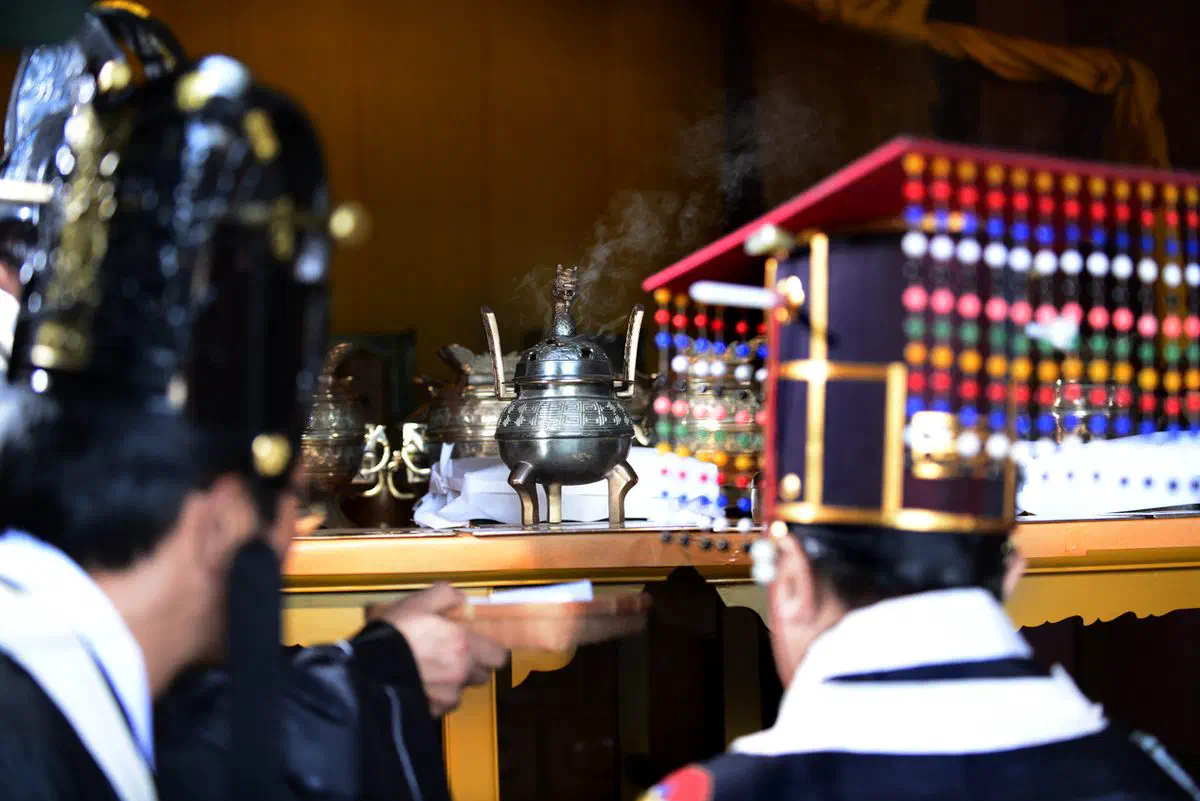
Jongmyo Jerye is the Confucian rite performed for the kings and queens of Joseon at their ancestral shrine in central Seoul. Officiants have carried it out, through one long interruption, for roughly six centuries. Search for it in English and almost every page puts it on the first Sunday of May.
Jongmyo holds the spirit tablets, not the bodies — those are at the royal tombs themselves, scattered across 18 UNESCO-listed sites, one of them a five-minute walk from a Gangnam subway exit.
That is half the schedule.
The rite runs twice a year. The spring one, chunhyang daeje, falls on the first Sunday of May. The autumn one, chuhyang daeje, falls on the first Saturday of November. Both appear on the Korea Heritage Service’s own ritual calendar. Only the May one reliably reaches English-language pages.
For anyone reading this in the second half of the year, that difference is the whole point: you do not have to wait until next May.
The two Jongmyo Jerye dates
- 2026 spring
- Sunday 3 May — already held
- 2026 autumn
- Saturday 7 November — the next one
- 2027 spring
- First Sunday of May
- 2027 autumn
- First Saturday of November
- The rule
- First Sunday in May · first Saturday in November
The 2026 dates are confirmed on the Korea Heritage Service’s published ritual schedule. Later years follow the same rule, but the office announces each one formally a few weeks ahead, and the reservation window opens with it — so treat a future year as the pattern rather than a booking you can make today.
What happens, and in what order
The day is not one ceremony. It is three events staged across the site, and they run to a timetable. This was the shape of the 2026 spring rite:
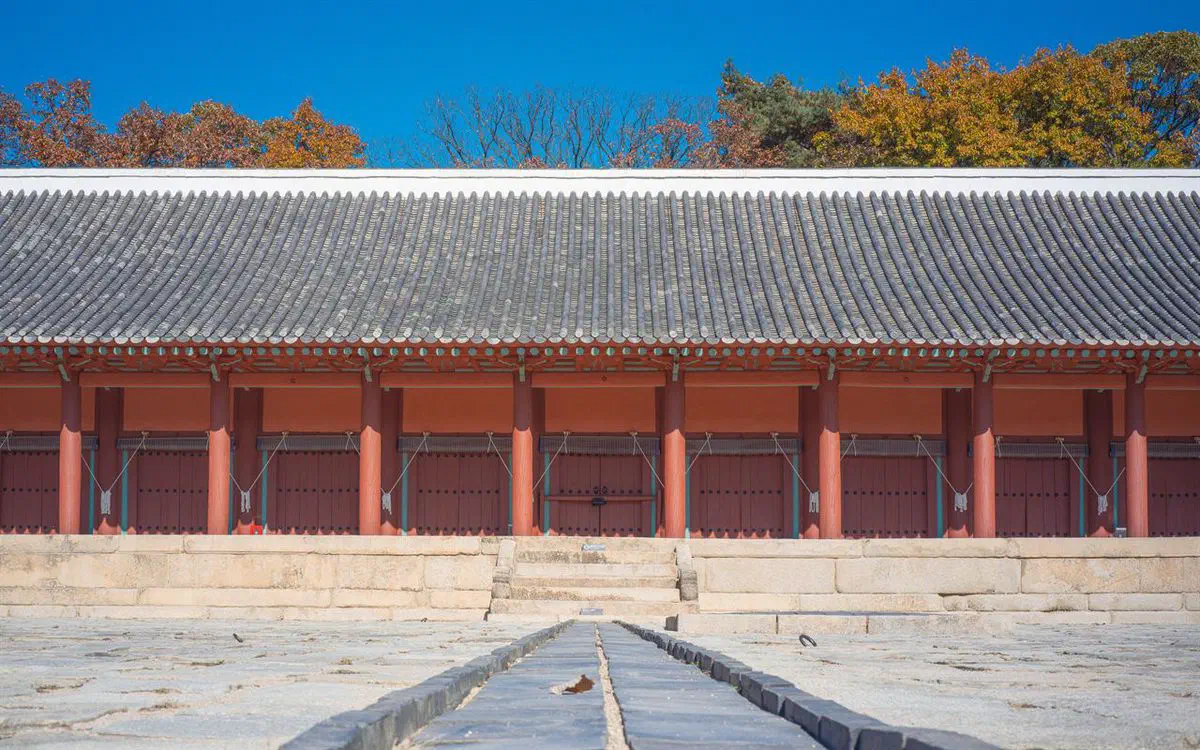
Yeongnyeongjeon is the Hall of Eternal Peace, which holds the kings the main hall passed over. Jeongjeon is the main hall, and its rite is the one people mean by Jongmyo Daeje. Between them, the royal procession leaves Gwanghwamun at Gyeongbokgung and walks east through Jongno to the shrine.
If you only have an hour, take the procession. It is on a public street, needs no ticket, and is the part that most looks like the Joseon court has been put back on the map for a morning.
Why English descriptions of it are out of date
Here is the thing that catches people who read around before going.
Nobody could watch the main hall rite between 2019 and 2025. Jeongjeon went through five years of major structural repair, and while the scaffolding stood the office kept the ceremony closed to general visitors. The Korea Heritage Service announced the 2025 spring ceremony as the first public opening in six years.
So a good deal of English writing about Jongmyo Jerye describes an event as it stood before 2019, or hedges because whoever wrote it could not confirm it was running. Both are now wrong in the same direction. It is running, in the restored hall, twice a year.
Getting in
It is free. There is no ticket price for the rite.
Seats for the main Jeongjeon ceremony go out in advance, online and first-come, through Ticketlink. For the 2026 spring rite the window opened at 14:00 on 17 April, about two weeks ahead, with a limit of two seats per person. Expect the autumn window to work the same way and to open on a similar runway.
Two rules on children are worth knowing before you plan a family day around it:
- Under school age
- Not admitted to the seated ceremony, on safety grounds
- School age and teens
- Admitted, but a guardian has to come too
- The procession
- A street event — none of this applies
If the seats have gone, the day is still worth having. The procession is public, and Jongmyo itself is open.
What you are actually listening to
The rite comes with its own music, Jongmyo Jeryeak, played on court instruments with singing and formal dance. It is not accompaniment. UNESCO lists the music and the ceremony together as one element — Royal ancestral ritual in the Jongmyo shrine and its music. It first proclaimed the element a Masterpiece of the Oral and Intangible Heritage of Humanity in 2001, then moved it onto the Representative List in 2008 when that older program merged into the new one.
That last detail is worth carrying, because English pages still describe it with the retired “Masterpiece” label as though it were the current status. It is the same element; the list it sits on changed.
Korea treats the two halves separately at home: the ritual and the music carry their own national intangible heritage designations. Watching it, the split makes sense. The music is slow to the point of feeling stopped, and it is doing the same job as the offerings — keeping a form intact rather than performing it for an audience.
Practical
Jongmyo is at 157 Jongno, Jongno-gu, a few minutes from Jongno 3-ga station and walking distance from Changdeokgung.
On any ordinary day you cannot wander Jongmyo freely — it is the one royal site in Seoul that requires a timed guided tour on most days of the week, which our guide to free English tours and the Jongmyo rule covers in full. Rite days are not ordinary days, so use that page for a normal visit and this one for the ceremony.
If you are building a Seoul itinerary around it, the shrine sits inside the same Jongno cluster as the palaces in our three days in Seoul route, and palace ticket logic still applies to everything else you will pass that day.
A Korean eSIM earns its keep on a procession morning more than most days — the route closes streets, and Naver Map is what tells you which crossing is still open. Our eSIM comparison covers which one to get.
Quick answers
When is Jongmyo Jerye held?
Do you need a ticket for Jongmyo Jerye?
Can children attend Jongmyo Jerye?
Why do some guides say Jongmyo Jerye is not running?
Is Jongmyo Jerye a UNESCO heritage item?
The short version
- How often
- Twice a year, not once
- Spring
- First Sunday in May
- Autumn
- First Saturday in November — the one English pages miss
- Cost
- Free. Main-hall seats reserved via Ticketlink, two per person
- No reservation
- Watch the procession — public street, no ticket
- Recently changed
- The main-hall rite resumed in 2025 after a six-year gap
Checked 3 September 2026. Ritual dates for 2026, and the first-Sunday-in-May and first-Saturday-in-November rule, from the Korea Heritage Service’s published ritual schedule for the royal palaces and tombs. The 2026 spring running order, reservation window, two-seat limit and age rules from the same office’s event notice and the Ticketlink listing for that ceremony. The six-year gap and the five years of Jeongjeon repair from the Korea Heritage Service’s 2025 press release announcing the reopening. UNESCO status, the 2001 proclamation and the 2008 inscription from UNESCO’s own listing for the element. Reservation dates and windows change each year — confirm on the Korea Heritage Service’s schedule before you plan around one.