Seooreung: Five Joseon Royal Tombs Just Outside Seoul
Last verified: 2026-10-08. Rules and prices change — always confirm on the official site before you travel.
This page contains affiliate links. If you book through them we may earn a commission at no extra cost to you. It never changes what we recommend.
Seoul’s royal tomb that everyone knows, Seolleung, sits among Gangnam’s towers. Seooreung is the opposite: a pine forest in Goyang, just beyond the city’s northwest edge, where five royal tombs lie in separate clearings. It is the second-largest of Joseon’s royal tomb groups, after Donggureung in Guri, and it is part of the same UNESCO listing as the tombs in our guide to the Joseon royal tombs. We walked it this autumn on a clear day.
- What
- Five royal tombs, a crown prince’s tomb and two concubines’ graves in one forested park, Historic Site No. 198
- Where
- 334-32 Seooreung-ro, Deogyang-gu, Goyang — about 10 km northwest of Seoul City Hall in a straight line
- Hours
- Open from 07:00. Last ticket and closing time shift with the season (table below)
- Admission
- 1,000 won for adults 19–64 (the same for foreigners); free for 65 and over, and per the listing for 24 and under
- Closed
- Mondays
- Before you go
- A notice at the ticket booth said the hornbeam path was closed for flood repairs, with the reopening planned for 25 October
Five tombs in a forest of pines
The name is literal: Seo is “west”, oreung is “five tombs”. The five are Gyeongneung, Changneung, Ikneung, Myeongneung and Hongneung. The Korean encyclopedia says the site was chosen in 1457, when the crown prince Uigyeong died and his father King Sejo went looking for a good burial site by the rules of geomancy. A Korean tourism listing dates that first tomb, Gyeongneung, to 1457 and the next, Yejong’s Changneung, to 1470. More tombs followed over the next three centuries.
- Gyeongneung
- Uigyeong, the crown prince later honored as King Deokjong, and Queen Sohye
- Changneung
- King Yejong and his second queen, Ansun
- Ikneung
- Queen Ingyeong, King Sukjong’s first queen. A single tomb
- Myeongneung
- King Sukjong and his second and third queens, Inhyeon and Inwon. The king and Inhyeon share a pair of mounds; Inwon’s is a little apart
- Hongneung
- Queen Jeongseong, the first queen of King Yeongjo. A single tomb
- Sunchangwon
- Crown Prince Sunhoe, the eldest son of King Myeongjong, and his consort. A won, one rank below a neung
- Daebinmyo
- The grave of Jang, Sukjong’s concubine, moved here from Gwangju County in Gyeonggi in 1970
- Sugyeongwon
- Yeongbin Yi, King Yeongjo’s concubine and the mother of Crown Prince Sado, moved here in the 1970s
The tomb names carry rank. A neung is a king’s or queen’s tomb, a won belongs to a crown prince or the parents of a king, and a myo is a lesser grave. Seooreung has all three, which is part of why a visit there reads like a family tree.
Sukjong and his women
If you walk Seooreung with one story in mind, make it the Sukjong one. A Korean travel writer points out that the clearings around Myeongneung, Ikneung and the Daebin grave let you trace four of the king’s consorts: Queen Ingyeong, Queen Inhyeon, the concubine Jang and Queen Inwon.
The history behind them is a short and brutal one. Sukjong took the throne at 14 and reigned 46 years. In his reign the court’s ruling faction changed several times, and each change touched the palace: Jang was raised to queen and Inhyeon was sent away, and then Inhyeon came back and Jang was demoted. Jang was ordered to take her own life. Inhyeon died in 1701, aged 35, after an illness the court’s daily records describe at length. The same writer reads it as likely immune-related and driven by stress. We cannot judge that, and we report it as his reading.
The tombs follow the story. Ikneung, for Ingyeong, was built after her death in 1680 from smallpox. Myeongneung was built for Inhyeon, and Sukjong joined her there in 1720. Inwon was buried in the same grounds, apart, in 1757. Jang, no longer a queen, lies in Daebinmyo, a grave and not a royal tomb, moved here from Gwangju County in Gyeonggi in 1970.
Hours and fares: read from the ticket booth
The booth has a bilingual board and several notices. This is what we read on it, and a Korean tourism listing gives the same figures.
- February–May and September–October
- Visiting 07:00–18:00; last ticket 17:00
- June–August
- Visiting 07:00–18:30; last ticket 17:30
- November–January
- Visiting 07:00–17:30; last ticket 16:30
- Adults (19–64)
- 1,000 won individual, 800 won in a group of ten or more
- Ages 7–18 (foreigners)
- 500 won individual, 400 won in a group, per the Korean listing
- Free
- 65 and over; 24 and under (that is what the listing says, though the board’s English line gives a lower age, so carry ID)
- Passes
- A monthly pass 10,000 won; a one-year pass for early-morning and lunchtime hours 30,000 won; a lunchtime pass 3,000 won for ten visits in three months
- Closed
- Mondays (if Monday is a public holiday it opens, and closes the next weekday)
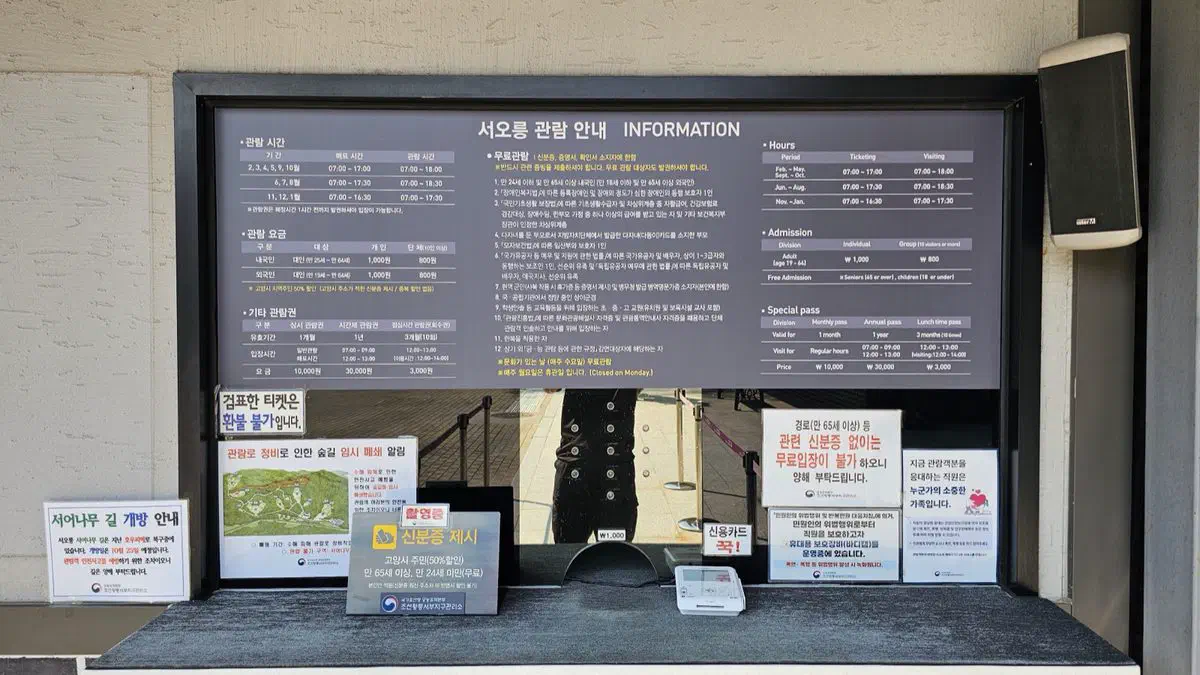
Two notes. A notice beside the window said the hornbeam path (서어나무 길) was closed for repairs after floods and that reopening was planned for 25 October. Check before you go if that path is why you are coming. And one other visitor guide says admission is free on the last Wednesday of the month. We did not see that on the board, so confirm it by phone: 02-359-0090 (the listing’s number).
What we saw on the walk
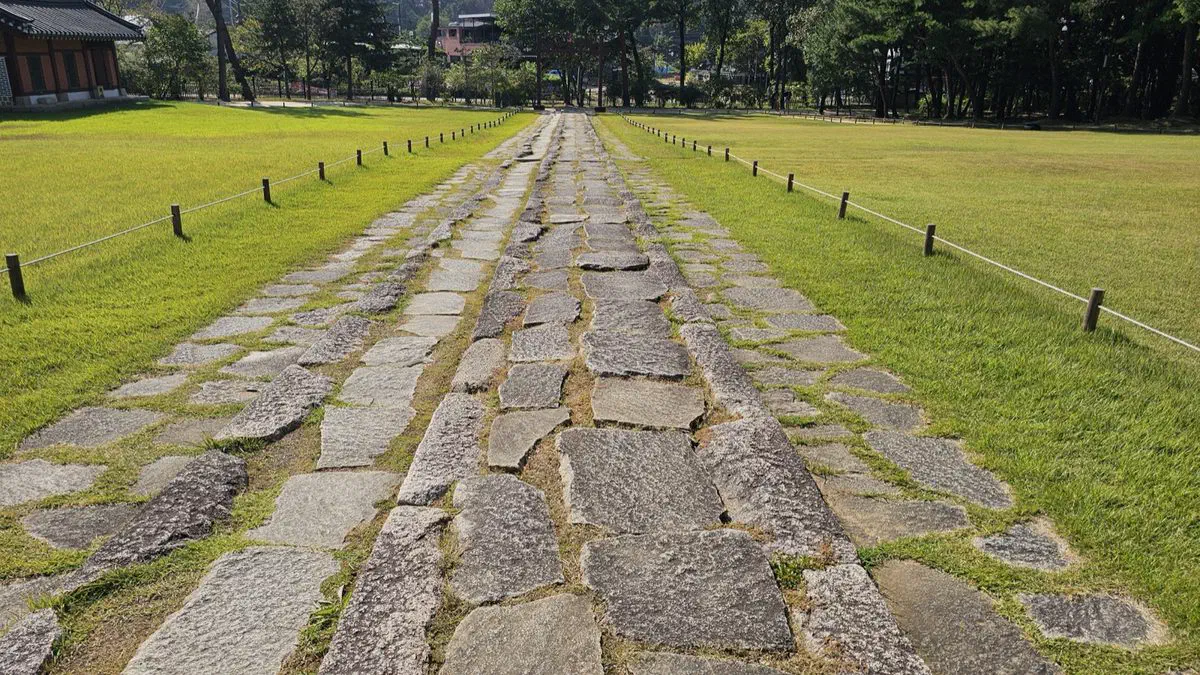
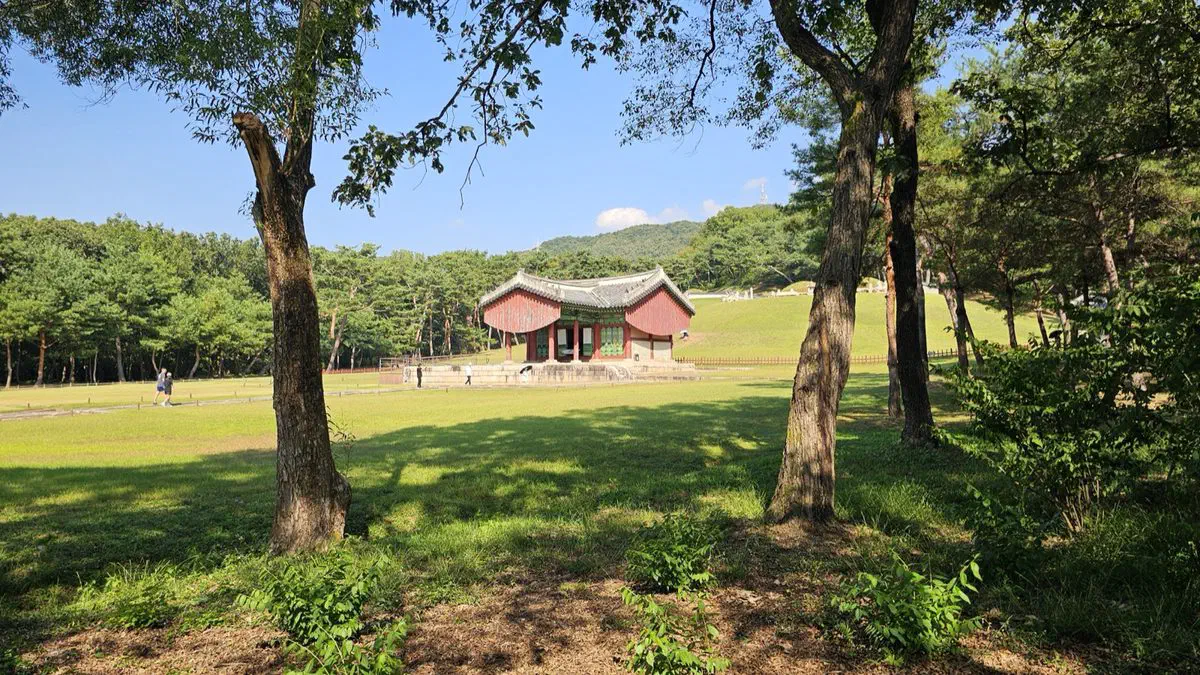
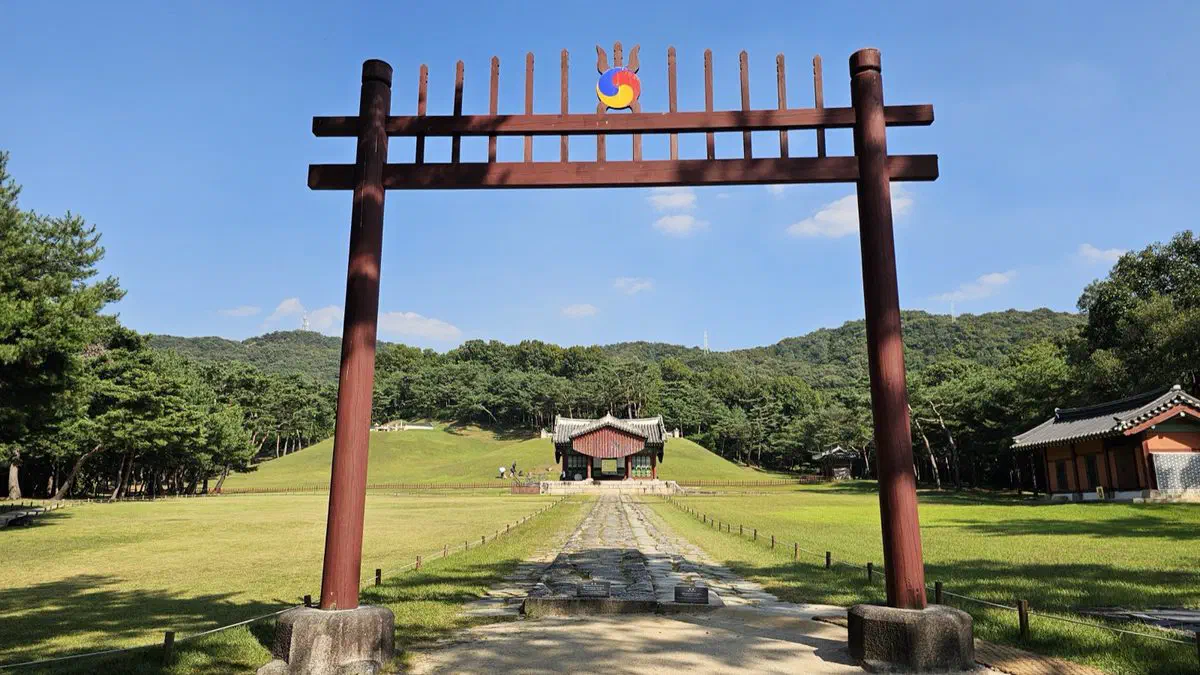
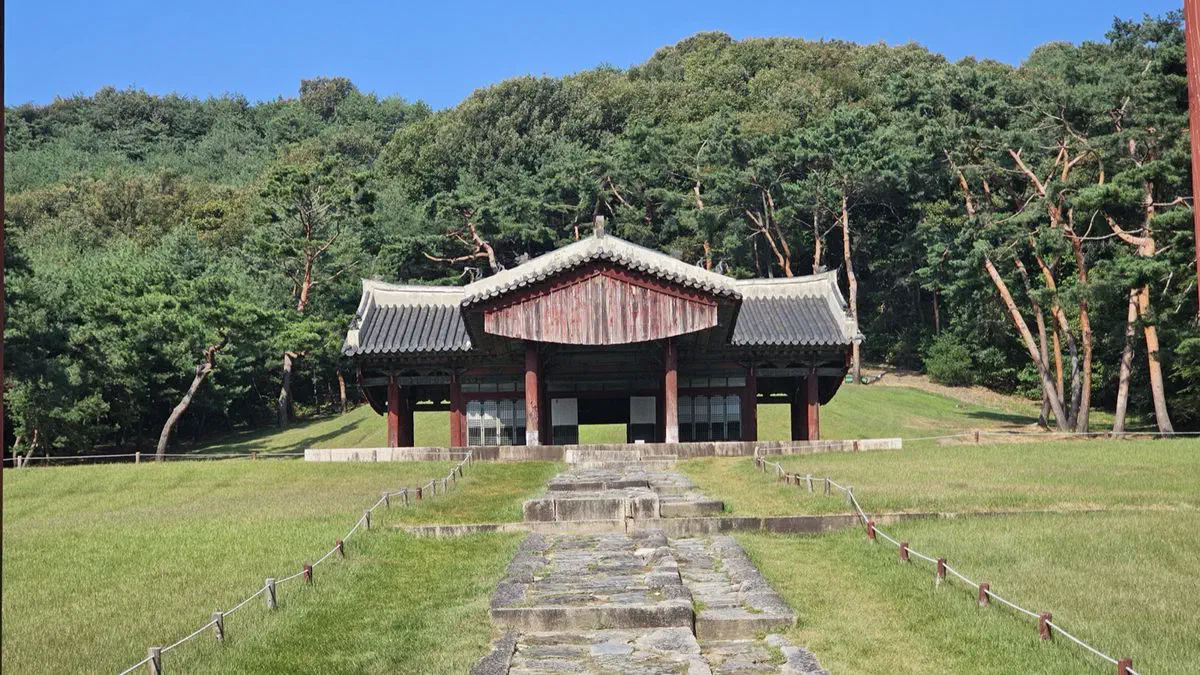
The park is a series of clearings joined by wide gravel paths. At the tombs we passed the pattern repeated, and the photographs below are mostly of that pattern. A red wooden gate, the hongsalmun, marks the start of sacred ground. A stone path runs ahead to a ritual hall shaped like a T, the jeongjagak, and the mound itself sits on the slope behind it. Our layout guide explains why you cannot walk up to the mound itself. We did not label each photograph with its tomb, and some of them show the same layout at different tombs.
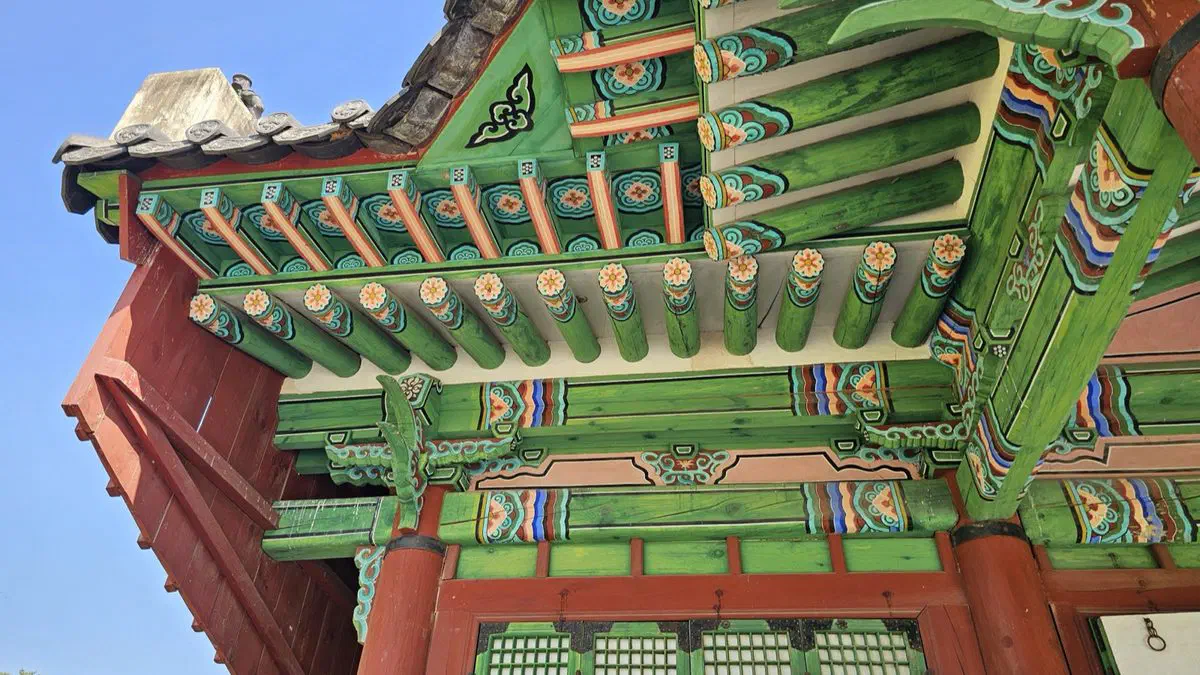
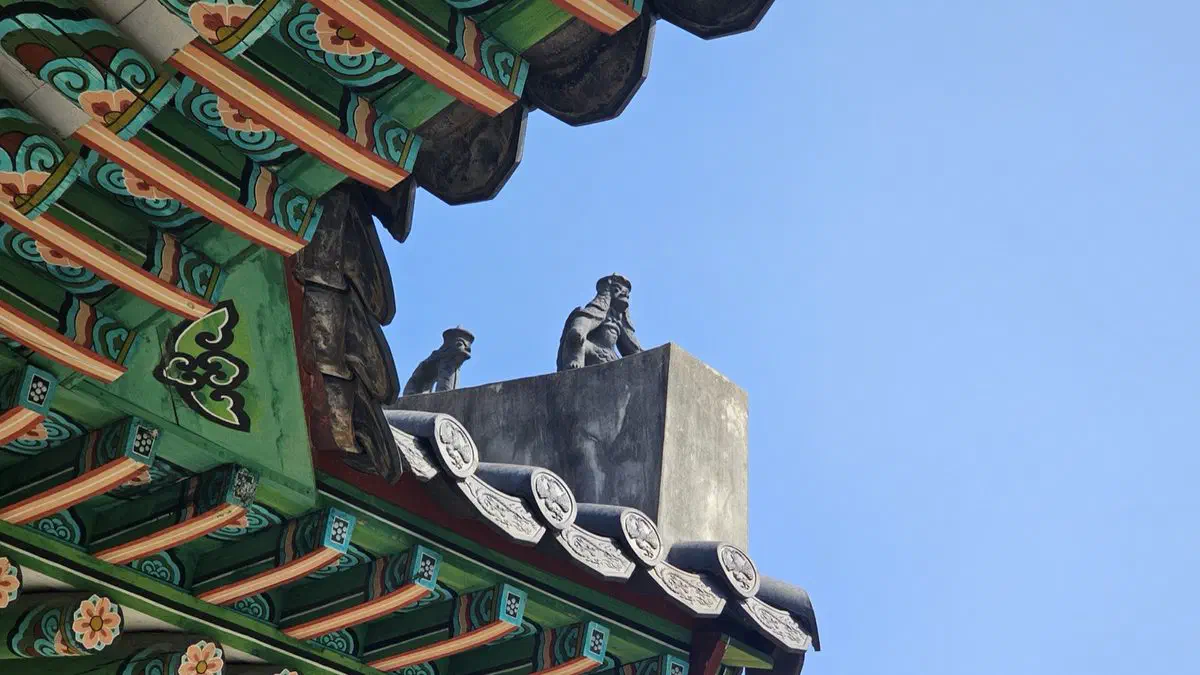
Look up at one of the halls and the painted eaves are worth a minute: green, red and blue patterns on every bracket. That color system is the subject of our dancheong guide. Along the roof ridge sit small stone figures, which look like the japsang that guard Joseon’s palace roofs.
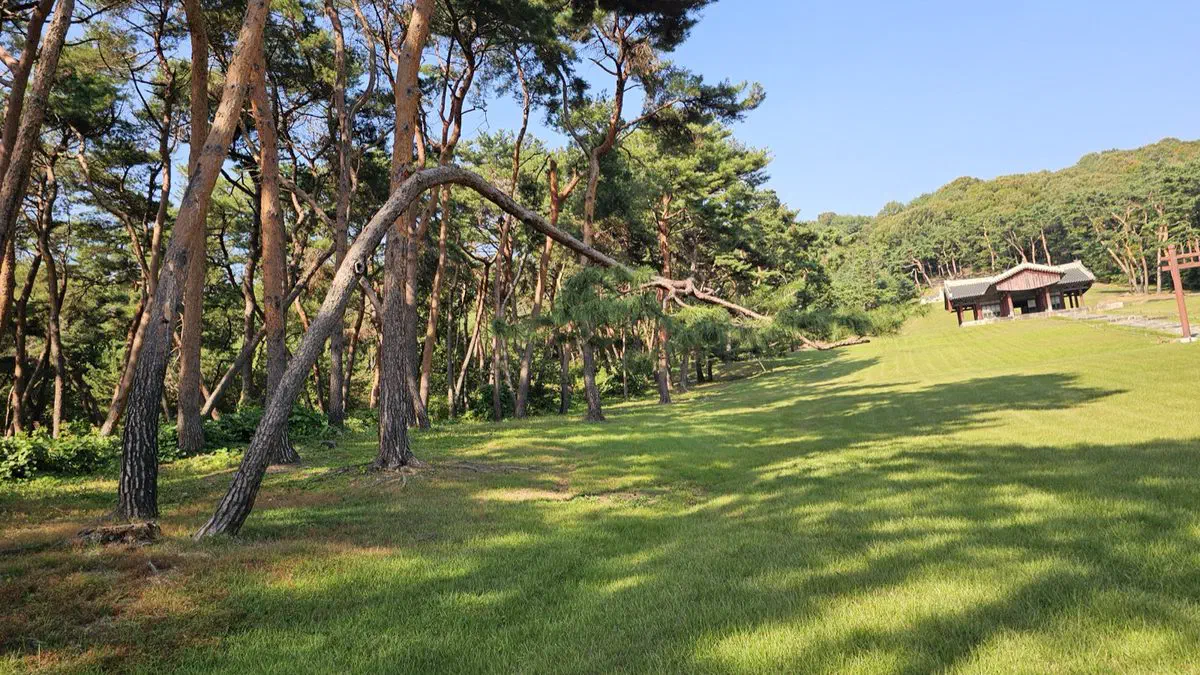
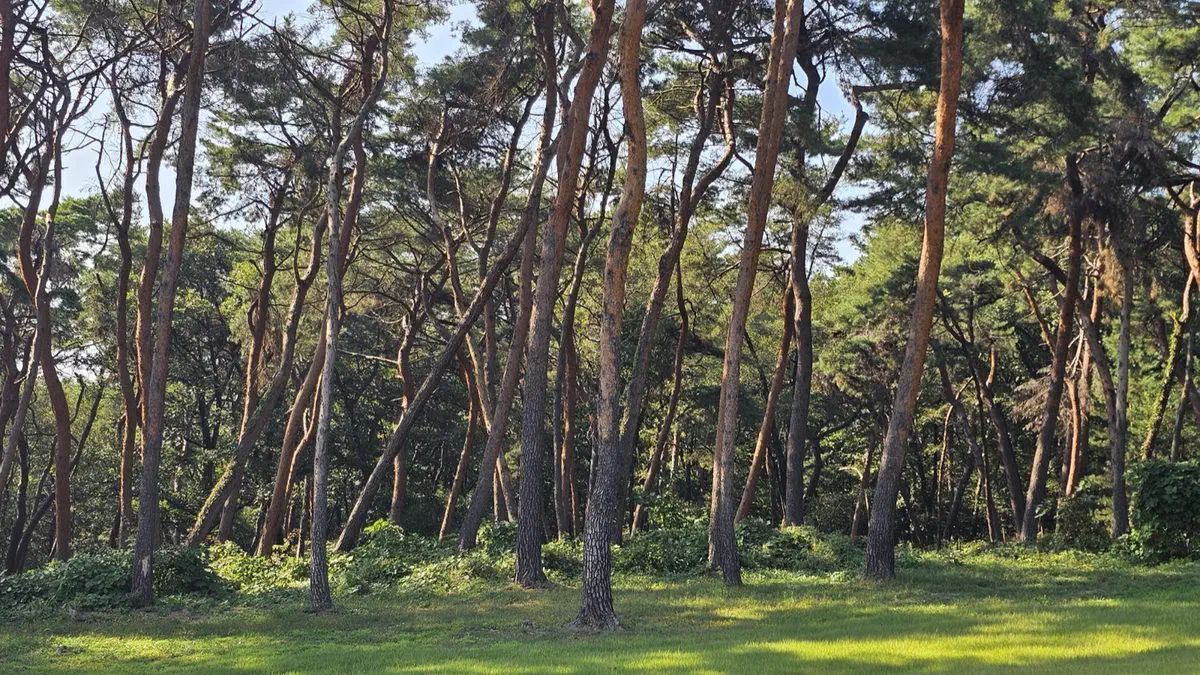
The forest is the other half of the experience. Seooreung’s pines are tall and red-barked, and several lean over the paths. The grass under them was bright in the sun.
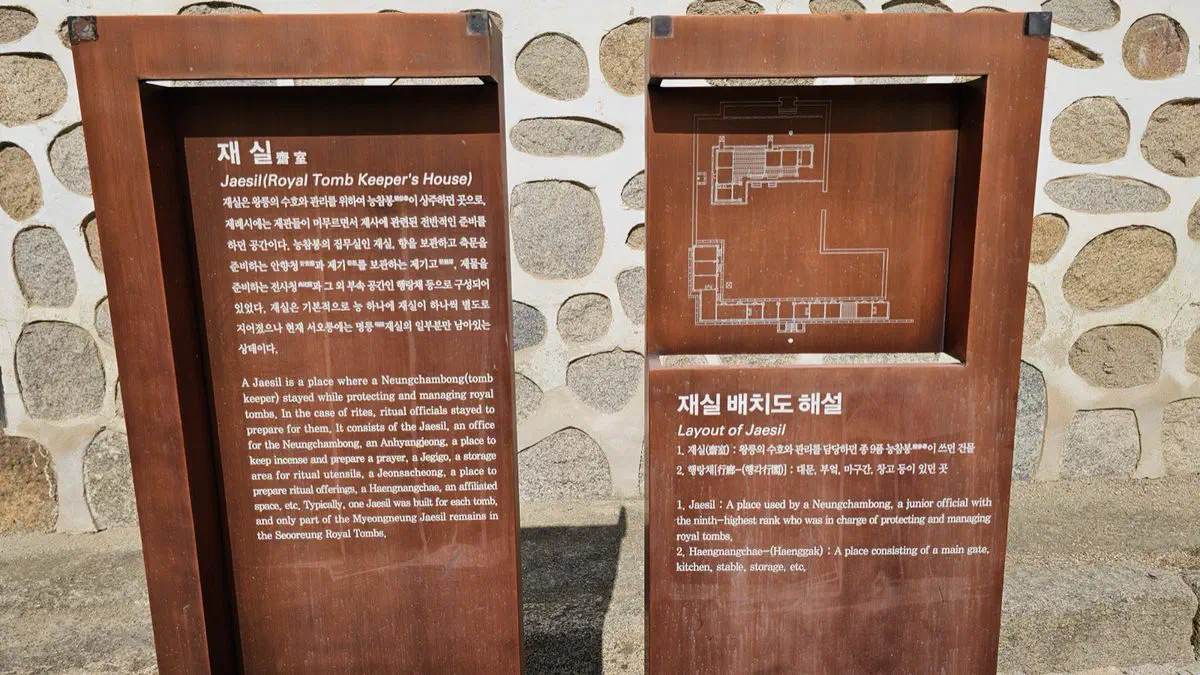
The tomb keeper’s house
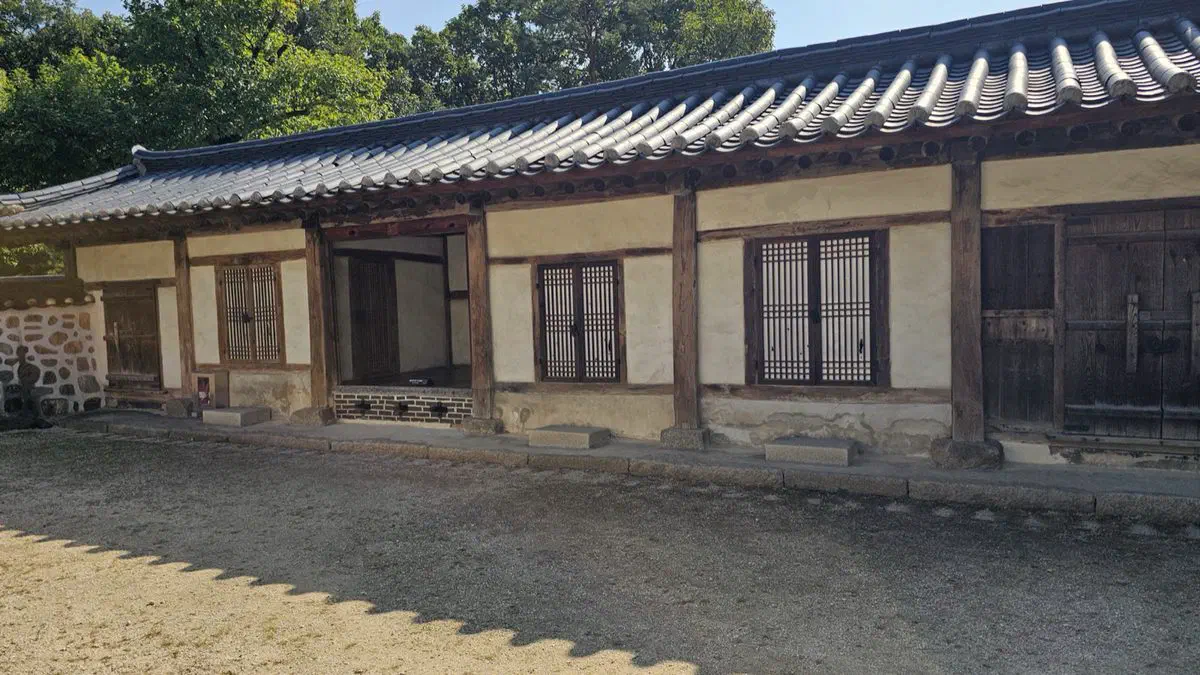
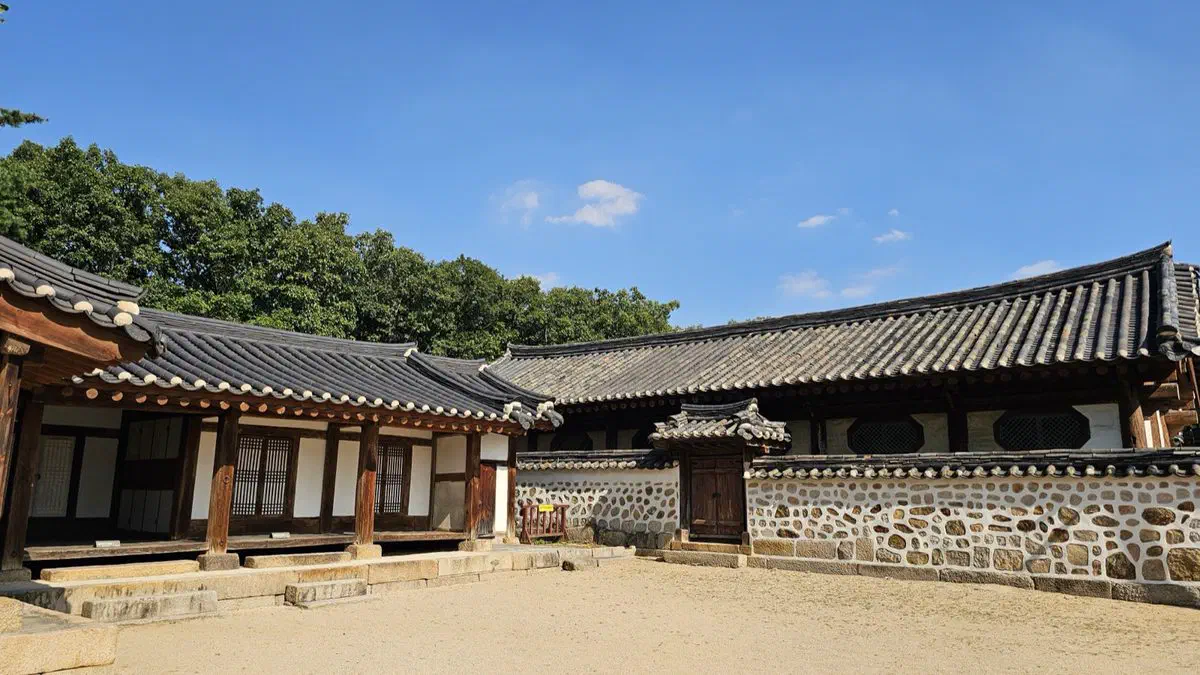
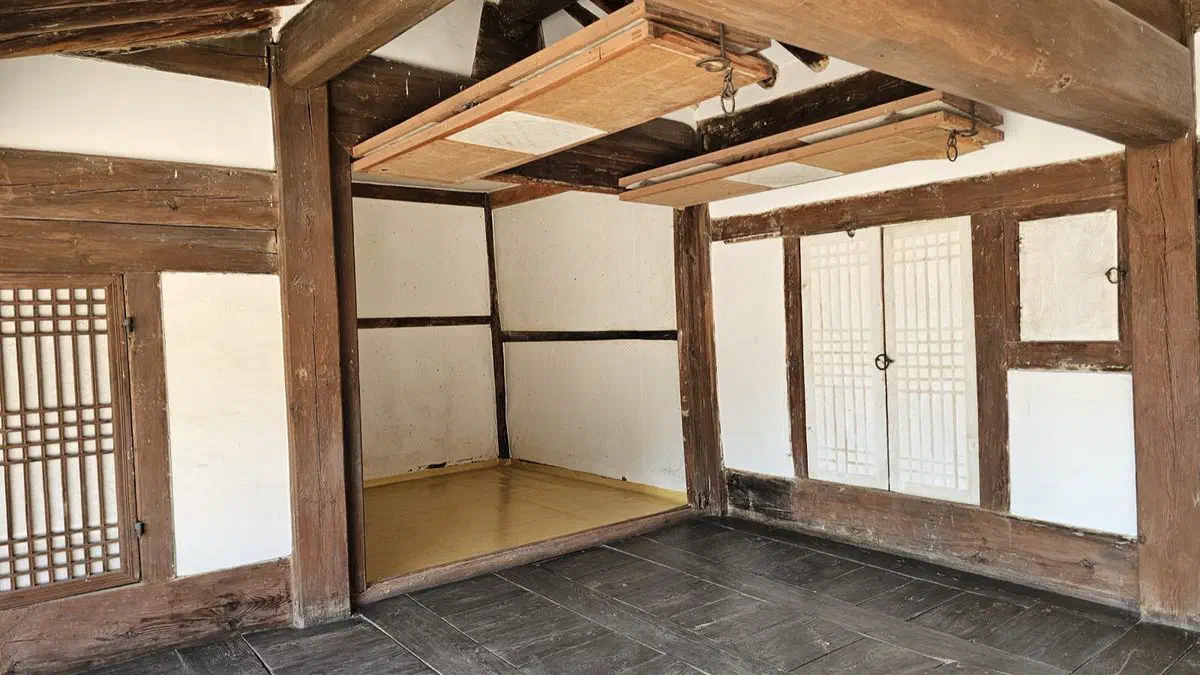
Part of the park holds a low tiled-roof house, the jaesil. The two bilingual boards beside it explain it. A jaesil was where the neungchambong, a junior official of the ninth rank who protected and managed a royal tomb, stayed. On the days of rites, the ritual officials stayed there to prepare. It held an office for the keeper, a place to keep incense and prepare a prayer, a storage area for ritual utensils and a place to prepare the offerings. One jaesil was built for each tomb, and only part of the Myeongneung jaesil survives at Seooreung, according to the board.
Getting there
No subway line stops at the gate. Seoul city’s transit page lists Gusan Station on Line 6, Exit 1, then bus 9701 or 9705. A foreign blogger’s visitor guide instead sends you to Nokbeon Station on Line 3, Exit 4, then bus 702. Bus numbers and stops change, so check your map app on the day. Parking is free, according to the Korean tourism listing.
For time, the same blogger says an hour covers walking the paths and reading the signs, and an hour and a half to two hours if you want to see every tomb. We did not time ours.
Navigation works best with a Korean eSIM , since the bus stops are away from the main roads. If you are building a day around the tombs, our guide to how to ride a Seoul bus covers fares and the transit card, and hanok stays in Seoul make a good end to a quiet day. Our Jongmyo guide covers the shrine where the kings buried here are honored.
Quick answers
What is Seooreung?
How much does it cost?
What are the hours?
Who is buried at Seooreung?
Can I walk up to the tombs?
Is the hornbeam path open?
How long should I allow?
How is it different from Seolleung?
Checked 8 October 2026. We walked the park, and the board, notices and signs described above are as we photographed them at the booth. The history comes from the published sources below. The tomb list, the 1457 and 1470 dates, the hours, fares, passes, free-entry rules and the telephone number are from the Korea Trip Tips listing for Goyang Seooreung, and the booth board matches them. The site’s selection in 1457, the 1970 designation and the moving of Daebinmyo are from the Academy of Korean Studies' Encyclopedia of Korean Culture entry on Seooreung, and Ikneung’s history and Queen Ingyeong’s, Inhyeon’s and Inwon’s dates are from its entry on Ikneung. The Sukjong story and the reading of Inhyeon’s illness are from travel writer Park Gwang-il’s article in Hangyo. The Gusan Station route is from Seoul city’s transit page, the Nokbeon route, the visit times and the last-Wednesday free-entry claim from The Soul of Seoul. The jaesil text is from the boards we photographed. Distances are computed from OpenStreetMap coordinates.