Listing Korean performances by day rather than by month is a decision the data
forced on us. Korea’s festivals have dates, so the
festival calendar puts them on a month grid — a mud
festival happens in July and not otherwise.
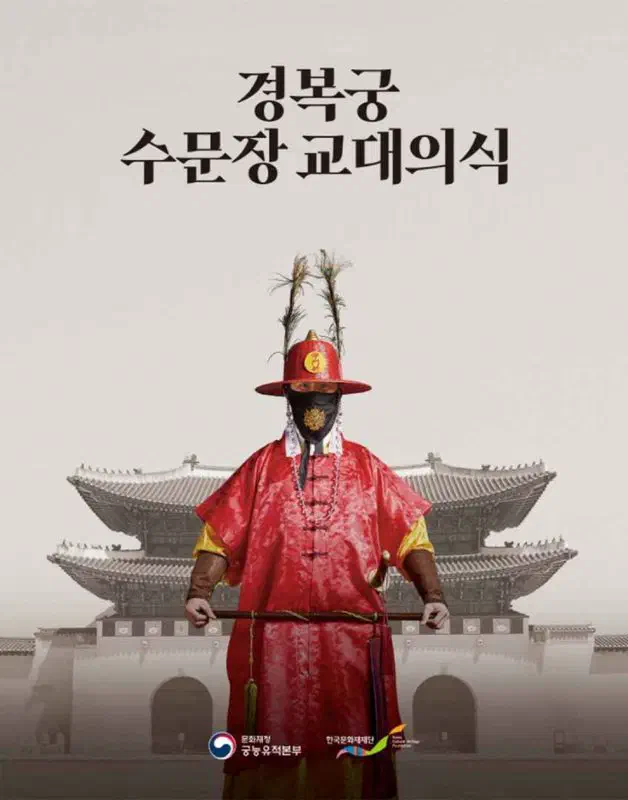
Permanent performances do not work that way. The guard ceremony at Gyeongbokgung
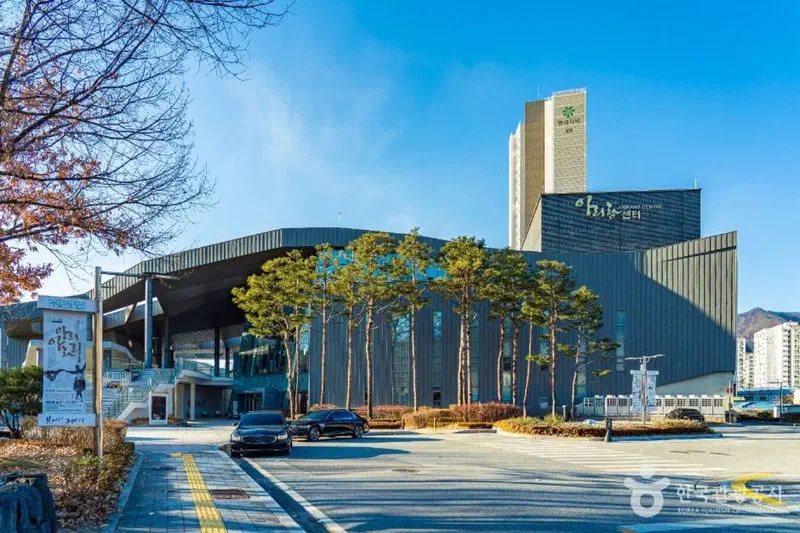
runs twice a day, most days, all year. The National Gugak Center’s Saturday
program runs every Saturday. A month grid would print the same list twelve
times over.
So this page answers the question you actually have once your flights are
booked: I am in Korea on a Saturday — what can I see?
Saturday carries most of it
Give one flexible day to Saturday. Nearly everything weekly in Korean
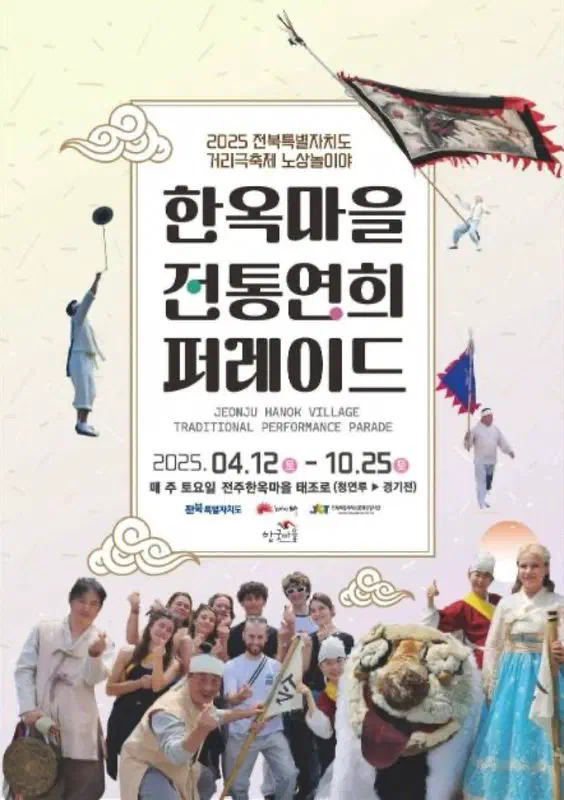
traditional performance lands on it, and most of it costs nothing: the Jeonju
hanok village parade down Taejo-ro, the regional gugak centers’ weekly
programs, and — in season — the mask dance at Hahoe. The National Gugak
Center’s Saturday program is the one paid item on that list and the strongest
of them.
Sunday thins out once you leave Andong. Check Monday and Tuesday before you
commit to either, because those are the days the palaces close. Gyeongbokgung
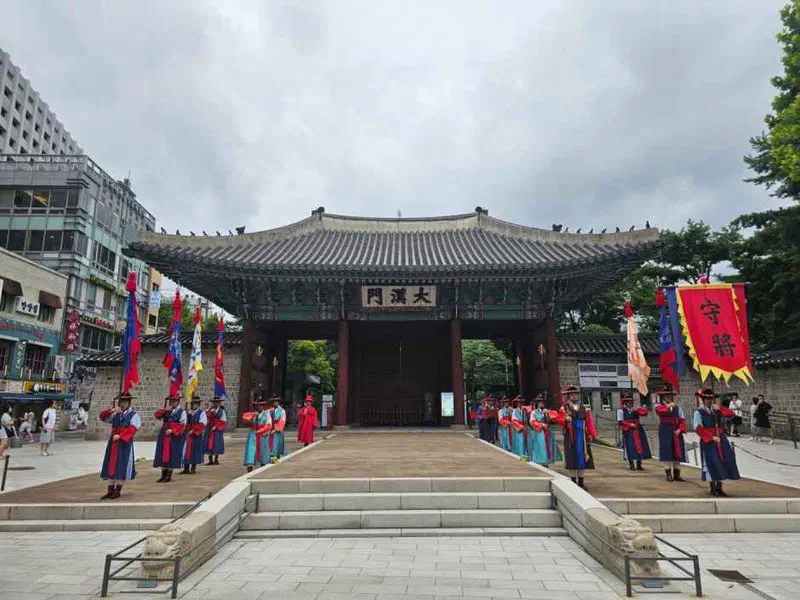
takes Tuesday off and Deoksugung takes Monday, so on any given day one of the
two guard ceremonies still runs.
Free beats paid more often than you would expect
Four of the entries below cost nothing, and two of those are the ones most
first-time visitors remember. The guard ceremony at Gyeongbokgung happens on
the plaza in front of the ticket gate, so you watch it without buying palace
admission at all — a detail that surprises people who assume they need a ticket
to see anything at a palace.
The paid tier splits in two. Traditional music at the national centers runs
₩20,000–30,000, which is close to what it costs a Korean audience. The
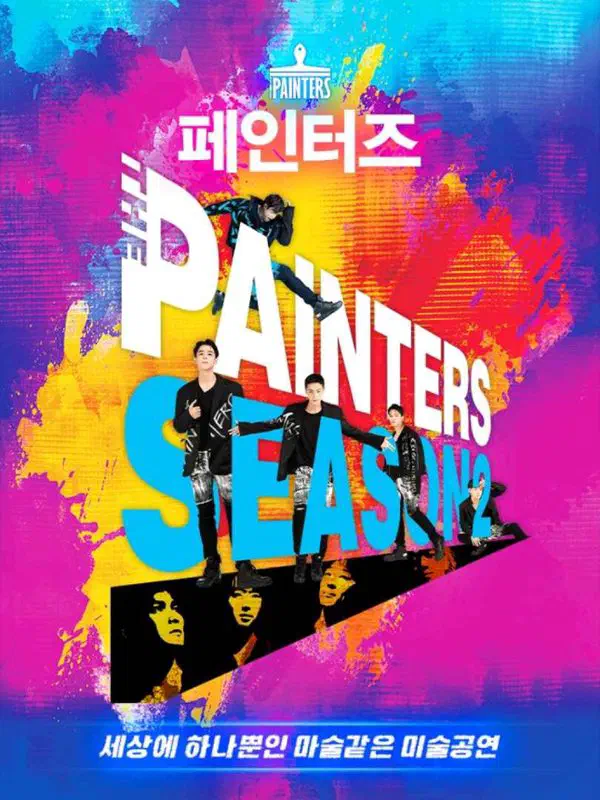
commercial non-verbal shows — NANTA, JUMP, The Painters — carry face values
near ₩50,000–70,000 that almost nobody pays, because they sell through booking
platforms at a discount.
Where these times come from
The Korea Tourism Organization’s tourism data service
lists these performances but stops short of the two facts you need. It gives
the venue, the running time and a photograph, and says nothing about which day
or how much. Every schedule and price below therefore comes from the venue’s
own published listing, checked in August 2026.
That checking earned its keep once. The tourism data carries Silla Ogi at
Gyochon Village as a permanent performance. Gyeongju Cultural Foundation’s own
schedule has it running four Saturdays in April and May and not again for the
rest of the year — so we have said so on the entry rather than sending you to
an empty square in October. Two prices are still not published anywhere, and
those say so instead of carrying a guess.
For Seoul in depth — the full ceremony timetable across a day, NANTA’s
showtimes and face-value prices, Culture Day, and what to skip — read
Korean shows you can enjoy without Korean.
This page indexes the whole country; that one plans a Seoul day.
Bring a
Korean eSIM
if you plan around any of the regional entries. Several of these venues publish
their weekly program only on a Korean-language page or a Naver Map pin, and you
will want to check the day’s bill before you make the trip.
Getting around:
our guide to data and map apps in Korea
covers what public wifi misses and what Kakao Map or Naver Map can tell you that Google Maps still can't.
Quick answers
What can I see in Korea on a Saturday?
Nearly everything weekly in Korean traditional performance — the Jeonju hanok village parade, regional gugak centers’ weekly programs, and in season the Hahoe mask dance. The National Gugak Center’s Saturday program is the one paid highlight.
Do I need a ticket to see the Gyeongbokgung guard ceremony?
No — it happens on the plaza in front of the ticket gate, so you can watch it without buying palace admission at all.
How much do traditional Korean performances cost?
Traditional music at the national centers runs ₩20,000–30,000, close to what a Korean audience pays. Commercial non-verbal shows like NANTA carry face values near ₩50,000–70,000 that almost nobody actually pays, since they sell through booking platforms at a discount.
Which palace guard ceremony runs if Gyeongbokgung is closed?
Deoksugung’s — Gyeongbokgung closes Tuesday and Deoksugung closes Monday, so on any given day at least one of the two guard ceremonies still runs.
Venue, running time and photographs from the Korea Tourism Organization's official tourism data
service (data.go.kr).
That dataset does not carry weekly schedules or prices for permanent performances — those come
from each venue's own published listing, checked in August 2026. Where a price is not published
anywhere, the entry says so rather than carrying a guess, and anything we cannot confirm against
the venue is marked unconfirmed.