Gangdong Prehistoric Culture Festival: Found in a 1925 Flood
Last verified: 2026-09-05. Rules and prices change — always confirm on the official site before you travel.
This page contains affiliate links. If you book through them we may earn a commission at no extra cost to you. It never changes what we recommend.
Nobody was looking for a Neolithic village when they found one. The Amsa-dong Prehistoric Settlement Site, on the Han River inside Seoul’s own city limits, surfaced when the catastrophic Eulchuk flood of 1925 tore open the riverbank and exposed a layer of pottery nobody had known was there. The Gangdong Prehistoric Culture Festival (강동선사문화축제) — Seoul’s only festival built around a Stone Age theme, now in its 30th year — runs on that same ground every October.
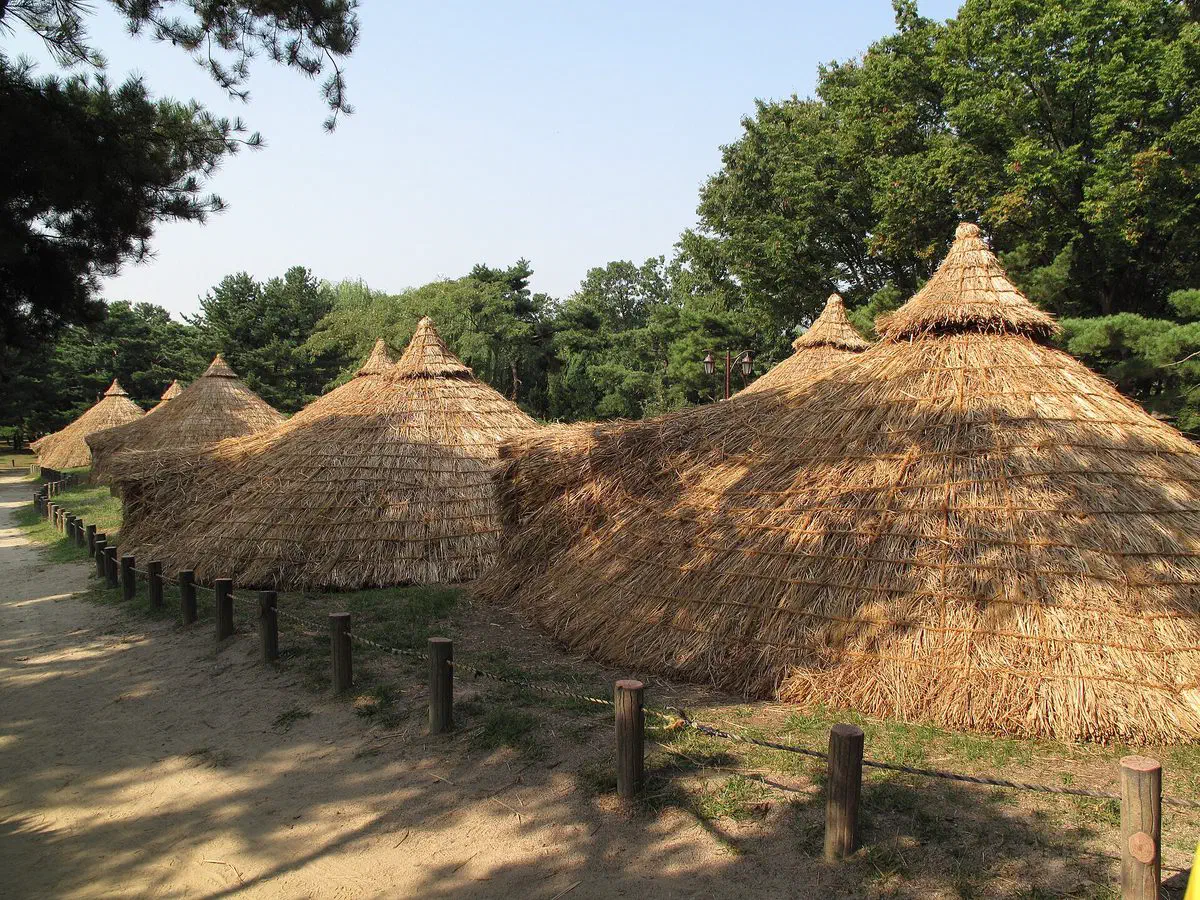
Found by accident, in a disaster
The flood exposed the site in 1925, but nobody actually investigated it until the mid-1960s, and full excavation didn’t start until 1971. What came out of the ground was a village of pit-houses dated to roughly 5000–4000 BCE, along with comb-pattern pottery (Jeulmun, the style that names the whole period), net weights, grinding stones, and — in a later, shallower layer — plain pottery and a half-moon stone knife from a subsequent occupation.
The site was designated Historic Site No. 267 in 1979, and the city has been pursuing UNESCO World Heritage recognition for it since — a bid, not an achieved listing. That inscription has not happened yet.
What’s actually there
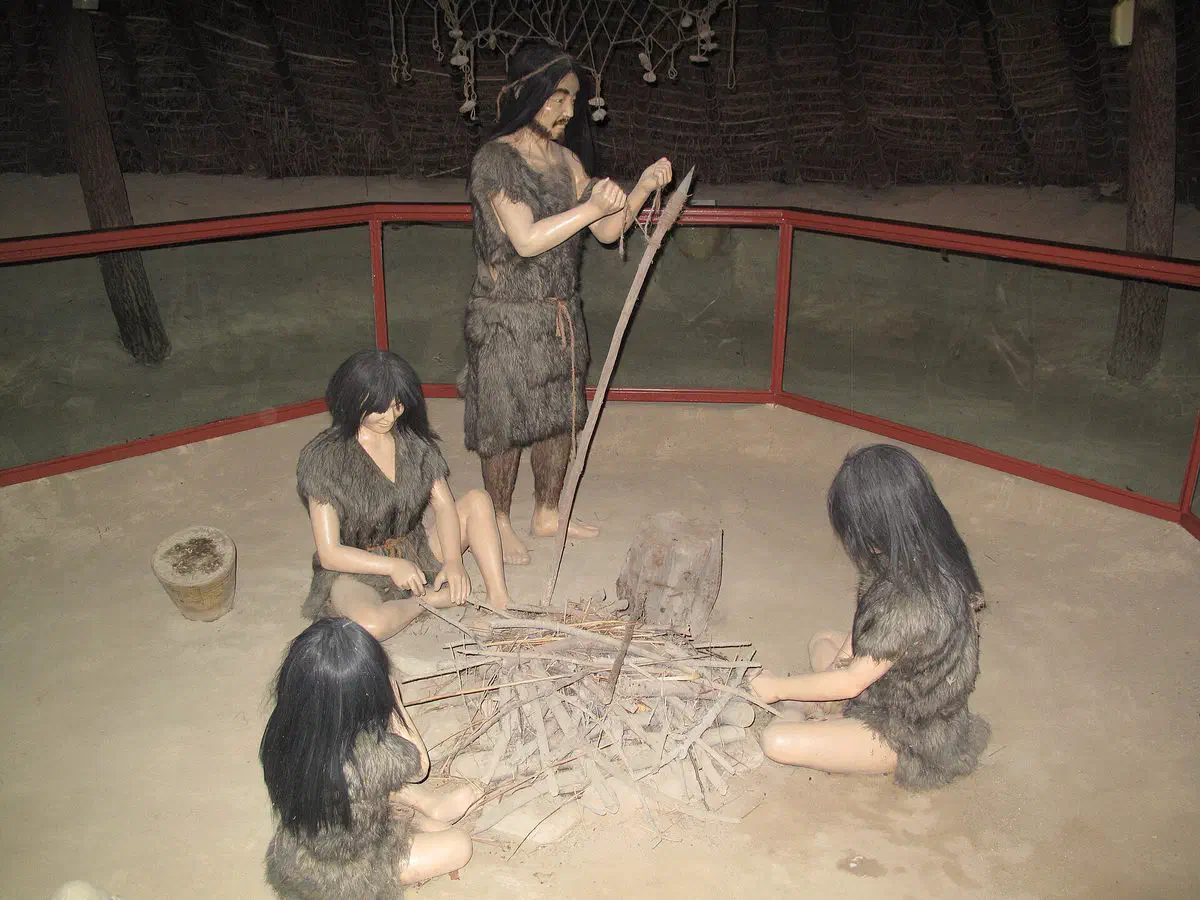
The pit-houses standing on site now are reconstructions, rebuilt over the same footprints the original dwellings left behind — cone-roofed, thatched, and large enough to walk into. A small museum on the grounds holds the actual excavated pottery and tools alongside dioramas of Neolithic daily life.
The Gangdong Prehistoric Culture Festival itself
Programs lean into the hands-on angle harder than a typical Korean heritage festival: a Prehistoric BBQ Experience, a Neolithic Archaeology Experience School for kids, and — the odd one out — a Prehistoric Healing Footbath, which has nothing to do with the Neolithic and everything to do with a modern wellness add-on. Run by the Gangdong district office rather than a private organizer, the festival is free to attend; only the standing on-site museum charges its own separate admission.
- 2026 dates
- 16–18 October, the 30th edition
- Where
- Amsa-dong Historic Site, Gangdong-gu, Seoul
- Discovered
- 1925, by accident, during the Eulchuk flood
- Excavated
- From 1971; designated Historic Site No. 267 in 1979
- Signature programs
- Prehistoric BBQ Experience, Neolithic Archaeology Experience School
- Festival admission
- Free — the on-site museum has its own separate ticket
Getting there — and the station that didn’t exist last year
Most older guides send you to Amsa Station (Line 8), Exit 4, a 15-minute walk, or a local shuttle bus from Exit 1 that drops at the site’s front gate. Both still work. But since August 2024, Line 8 has had a station built specifically for this site: Amsa History Park Station (암사역사공원역), one stop further out, where Exit 3 leads directly to the historic park and the site itself — no bus, no 15-minute walk. If a guide only mentions Amsa Station, it predates the newer stop.
A Korean eSIM makes checking which exit you actually want painless — Naver Map already has Amsa History Park Station indexed correctly. Our subway guide covers fares and how Line 8 fits the wider system.
Visiting outside festival dates
The reconstructed village and museum are open year-round, independent of the festival: 09:30–18:00, last entry 17:30, closed Mondays and January 1st. Admission is a flat ₩500 for adults, ₩300 for students, with free entry for children under 7, seniors 65 and over, and a few other exempt categories — genuinely one of the cheapest sights on this entire site. The grounds themselves open free for morning walks from 6:00 to 9:00 AM, before ticketing starts.
Quick answers
How was the Amsa-dong prehistoric site discovered?
When is the Gangdong Prehistoric Culture Festival in 2026?
What's the easiest way to get to the Amsa-dong site?
How much does the Amsa-dong museum cost to visit outside the festival?
Checked 5 September 2026. The Eulchuk flood’s 1925 discovery of the site, the mid-1960s and 1971 excavation timeline, and the 1979 Historic Site No. 267 designation from Korean Wikipedia’s sourced entry on the Seoul Amsa-dong site and Gangdong-gu’s own site history page. The festival’s 30th 2026 edition and 16–18 October dates from the Korea Tourism Organization’s Cultural Tourism Festival listing and the festival’s own site, gdsunsa.com. Program names (Prehistoric BBQ Experience, Neolithic Archaeology Experience School) from Gangdong-gu’s own festival culture portal. Amsa History Park Station’s August 2024 opening and its position one stop beyond Amsa Station on Line 8’s Byeollae extension, with Exit 3 leading to the historic park, from Korean Wikipedia’s station entry. Museum hours, admission fees and the free-entry exemption categories from Gangdong-gu’s own visitor-information page. Hours, prices and festival programming change — confirm on Gangdong-gu’s own site before you travel.