Gumi Ramyun Festival: The World's Longest Ramyeon Restaurant
Last verified: 2026-09-05. Rules and prices change — always confirm on the official site before you travel.
This page contains affiliate links. If you book through them we may earn a commission at no extra cost to you. It never changes what we recommend.
Gumi, a mid-sized industrial city two hours south of Seoul, makes more instant noodles than anywhere else in Korea — Nongshim’s factory here turns out roughly six million packets a day, most of the country’s Shin Ramyun and nearly all of its Chapagetti. Every November, the Gumi Ramyun Festival (구미라면축제) shuts down the 475-meter street in front of Gumi Station and turns it into what the city itself brands, without much exaggeration, the world’s longest ramyeon restaurant.
The Gumi Ramyun Festival’s ten-page origin
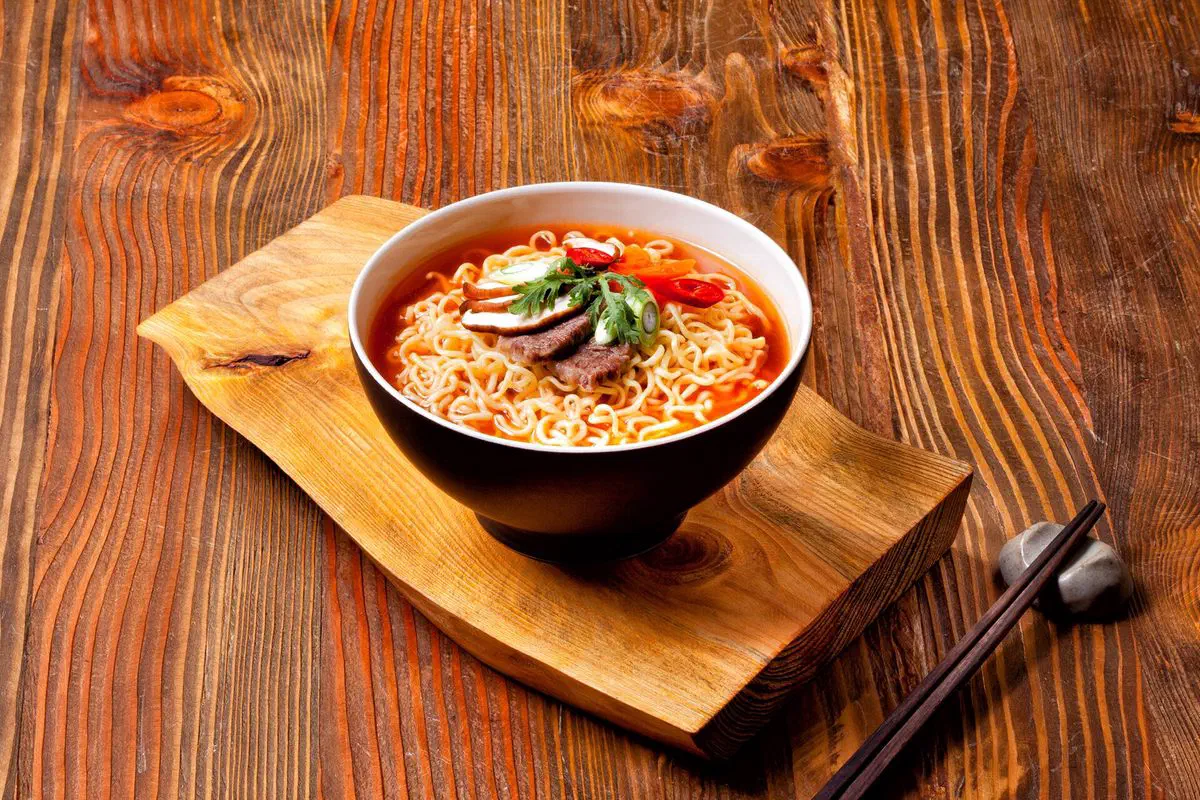
The festival didn’t come from a tourism board — it started as a ten-page pitch from a Gumi city official, built around one idea: let people eat ramyeon fried two or three days ago at the factory down the road, instead of whatever’s been sitting on a shelf for months. The first edition, in August 2022, was actually called the “Gumi Ramyun Camping Festival” and drew about 15,000 people over two days.
It was renamed the Gumi Ramyun Festival in 2023 and moved to November, right after the college entrance exam — attendance jumped to roughly 100,000. By 2024 it had a Gyeongsangbuk-do “excellent festival” designation, a side exhibit of a private collector’s 6,000-plus ramyeon-bag collection, and 120,000 visitors.
The 2025 edition was delayed a week by a scheduling conflict with the APEC summit in nearby Gyeongju. Once it opened, three days pulled in an estimated 350,000 people and 480,000 bowls of freshly fried ramyeon sold, according to Gumi’s own city government.
The factory that makes this possible
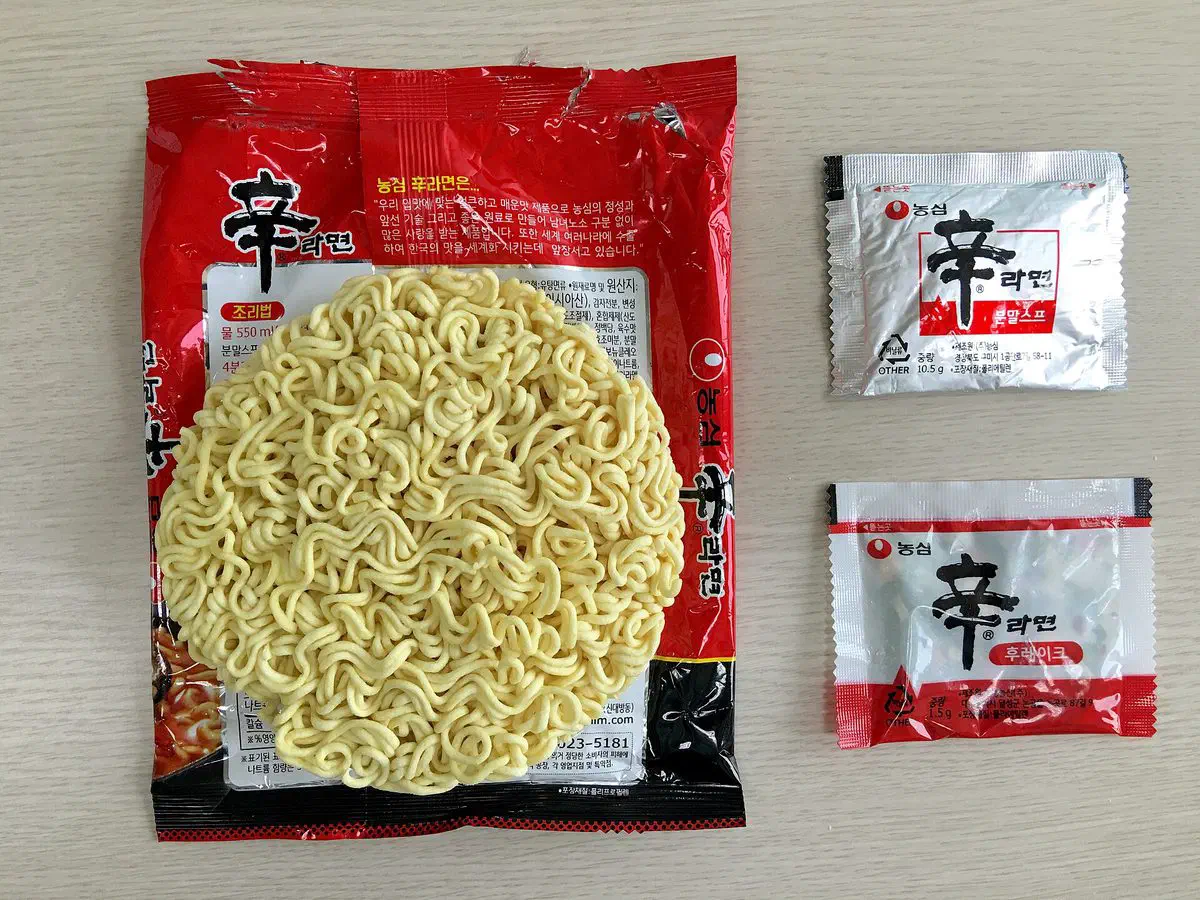
Nongshim’s Gumi plant has been running since 1990 — 35 years as of 2025 — and by the company’s own account produces around ₩800 billion worth of noodles a year, across a 42,000-square-meter site. Local reporting puts its output at roughly 75% of all Shin Ramyun and 95% of all Chapagetti sold in Korea. CNN featured the plant in a May 2026 segment on K-ramyeon’s export boom — Korea’s ramyeon exports passed $1.5 billion that year. Ottogi is now moving in too, committing roughly ₩200 billion through 2029 to build its own export-focused ramyeon plant in Gumi’s second national industrial complex.
What’s actually on the street
The festival’s signature program is literally called the Ramyeon Restaurant — local restaurants set up along the closed-off street, each one running a booth that fries or boils noodles to order. For 2026, the city opened applications for 22 restaurant slots. To keep prices honest, everything sold on site carries a hard cap: ₩8,000 per ramyeon dish, ₩500 for bottled water — a policy the city credits for avoiding the price-gouging complaints that dog most Korean street festivals. A QR-based ordering system, added in 2025 to handle the crowds, lets people order from a phone instead of standing in a line that once ran 40 minutes to an hour.
Past programs have included a long-chopstick eating contest, a soup-blend guessing game, and a robot that cooks the noodles for you; the best-selling dish one year was a beef bulgogi jjajang ramyeon.
- 2026 dates
- 6–8 November
- Where
- Gumi Station and Yeokjeon-ro street, Gumi, Gyeongbuk
- Signature program
- “Ramyeon Restaurant” — fresh-fried noodles from local restaurant booths
- Price caps
- ₩8,000 per ramyeon dish, ₩500 for bottled water
- 2025 attendance
- Roughly 350,000 over three days, per Gumi city figures
Not the festival that fell apart in Busan
If you’ve seen international headlines about a Korean “ramyeon festival” going badly wrong, that wasn’t this one. In May 2025, a private promoter ran a separate “World Ramyeon Festival” at the Osiria tourist complex in Gijang-gun, Busan — advertised as 2,200 noodle products from 15 countries, ₩10,000 admission. Visitors found a handful of domestic cup noodles, no hot water to cook them with, and a site that flooded in the rain. The organizer disappeared without paying vendors and was later arrested; Busan press dubbed it the “ramyeon jamboree,” a jab at the 2023 Saemangeum Jamboree scandal. Gumi’s city-run festival — free entry, price-capped, run by the same municipal office for four straight years — has nothing to do with it. Gumi even leaned into the distinction directly, branding its 2025 edition “Original.”
Getting there
The festival street starts right outside Gumi Station. Since 2025, the new Daegyeong Line (대경선) commuter rail connects Gumi Station straight into the Daegu metro-area rail network — the mayor called it the line that turned into the festival’s biggest “jackpot,” since it visibly boosted foot traffic the moment it opened. KTX service also stops at Gumi Station from Seoul, a little over two hours each way.
A Korean eSIM is worth having before you go — the festival’s zone map and daily program shift by the hour, and Naver Map tracks the street closures better than Google Maps does. Our KTX guide covers rail passes and how to book ahead for a Gyeongbuk trip like this one.
Quick answers
When is the Gumi Ramyun Festival in 2026?
Is the Gumi Ramyun Festival the same as the "World Ramyeon Festival" that went wrong in Busan?
Why does Gumi have a ramyeon festival?
How do I get to the Gumi Ramyun Festival from Seoul?
Checked 5 September 2026. Nongshim’s Gumi plant history, 1990 founding and 2023 production value from Nongshim’s own press release. CNN’s May 2026 feature on the plant and Korea’s ramyeon exports from Yonhap News. Ottogi’s ₩200 billion Gumi investment from JoongAng Ilbo. The festival’s 2022 origin, early attendance figures, price caps, and program history from Korean-language festival community sources, cross-checked against Gumi city government reporting. The 2025 edition’s roughly 350,000 attendance and 480,000 bowls sold from Gumi city’s own press release and corroborating coverage in Yeongnam Ilbo, Daegyeong Ilbo, and News1. The Busan “World Ramyeon Festival” collapse from Kyunghyang Shinmun, Kukinews, and Herald Business coverage of the event and its aftermath. 2026 dates (6–8 November) from the Korea Tourism Organization’s Cultural Tourism Festival listing and Gyeongbuk local press coverage of the 2026 restaurant-vendor call. Prices, dates and vendor lineups change every year — confirm on Gumi city’s own festival page before you travel.