How to Ride a Seoul Bus: Colors, Fares, and the 4 AM Crowd
Last verified: 2026-09-05. Rules and prices change — always confirm on the official site before you travel.
This page contains affiliate links. If you book through them we may earn a commission at no extra cost to you. It never changes what we recommend.
Seoul’s buses look chaotic from outside and are not. Every route’s color tells you what kind of route it is before you read a single number, and once that clicks, the rest of the system — fares, transfers, where to stand — falls into place fast.
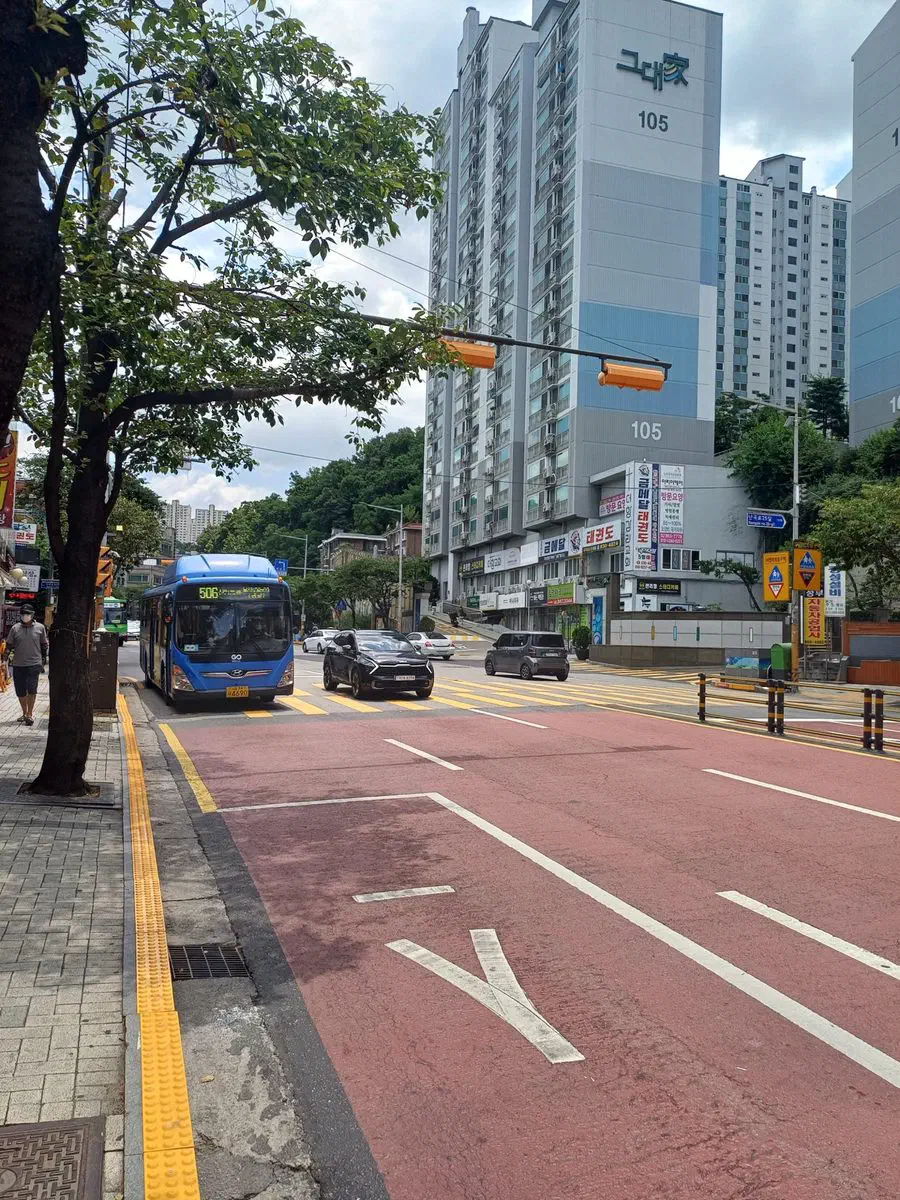
What the colors mean
Blue (간선) buses are the trunk lines — long routes cutting across the city, numbered with 3 digits. Green (지선) buses are shorter feeders, numbered with 4 digits where the first two digits mark the starting district and the last two are a route serial — a 3426 starts in Gangdong or Songpa (zone 3) and ends in Gangnam or Seocho (zone 4). Red (광역) buses run express between Seoul and satellite cities like Bundang, Ilsan or Incheon, and cost a flat ₩3,000 regardless of card or cash. Yellow (순환) buses circle central business districts on short loops. All except red buses use the same distance-based fare as the subway.
Where to catch one
Bus stops display every route that serves them, color-coded, with a digital sign showing live minutes until the next arrival for each one — both Naver Map and Kakao Map show the same countdown before you even leave for the stop, which matters more here than for the subway since a bus you can see coming is still a bus you can miss.
Fares and boarding
Board through the front door, tap your T-money card on the reader by the driver, and exit through the back door — tapping again as you leave. That second tap is not optional if you plan to transfer: skip it and the system charges your next ride from zero. Trunk and branch buses start at ₩1,500 with T-money for the first 10 km, about ₩100 more per 5 km after. Paying cash means feeding the fare into the box beside the driver after boarding through the front door — still front-door only, still exact change help isn’t guaranteed.
Why the 4 AM bus is sometimes the fullest one
It looks backwards until you know who is riding it. Seoul’s very first buses, some rolling before 4 AM toward Gangnam and Yeouido, carry office cleaners, security guards and other early-shift workers whose commute can run over an hour each way — long before regular commuter traffic starts. Seoul’s own transit authority has cited driver shortages in those pre-dawn hours as part of why the service has felt thin against demand, which is part of why the city has been piloting autonomous early-morning buses starting around 3:30 AM on some routes. If your flight lands early or you are heading out before sunrise, do not assume an empty bus.
Transfers with the subway
Buses and subway share the same integrated fare system: tap out within 30 minutes of your last tap (extended to 60 minutes between 9 PM and 7 AM) and the transfer costs nothing extra, for up to five transfers in a row. This is the same system covered in more detail in our subway guide — the tap-out requirement is identical on both, and just as easy to forget on a bus, where there is no gate to remind you.
The night bus, if you’re out late
Nine Owl Bus (올빼미버스) routes, marked with an “N” and an owl on the display, run midnight to 5 AM for a flat ₩2,500 with T-money. Routes are named for their start and end points — N26 connects Hongdae’s nightlife to Sinchon, Jongno and Dongdaemun; N61 runs Gangnam to Yeongdeungpo. It is the one bus category actually designed to beat a taxi’s late-night surcharge, not just avoid it.
The short version
- Blue (간선)
- Long trunk routes, 3-digit numbers, ₩1,500 base
- Green (지선)
- Neighborhood feeder routes, 4-digit numbers, ₩1,500 base
- Red (광역)
- Seoul to satellite cities, flat ₩3,000
- Yellow (순환)
- Short loops through central districts
- N-routes
- Owl Bus, midnight–5 AM, flat ₩2,500
- Board / exit
- Front door in, tap; back door out, tap again
- Transfer window
- 30 min (60 min, 9 PM–7 AM), up to 5 transfers, free
Getting there
A Korean eSIM is what makes the live arrival countdown work before you have even left for the stop — our guide to Korea’s map apps covers which one to install first. If a taxi ends up being the better call for where you are going, our taxi guide covers fares and when it actually beats the bus.
Quick answers
What do the bus colors mean in Seoul?
Do I need to tap my card twice on a Seoul bus?
Why is the first bus of the morning so crowded in Seoul?
How much is the Owl Bus in Seoul?
Checked 5 September 2026. Bus color categories, route numbering and base fares from Seoul Metropolitan Government’s own fare page and current 2026 fare summaries — trunk and branch buses at ₩1,500 for the first 10 km, express buses at a flat ₩3,000 since the August 2023 fare change. Front-door boarding and back-door tap-out procedure, and the 30/60-minute integrated transfer window, are consistent across Seoul’s own transit guidance. Early-morning bus crowding among shift workers, the driver shortage in pre-dawn hours, and the autonomous early-morning bus pilot from Seoul Metropolitan Government’s own announcements. Owl Bus route count, fare and naming convention (N + origin + destination) from Seoul’s night bus program materials. Fares and schedules change — confirm on Seoul’s own transit site before you travel.