Jeonju Bibimbap Festival: The Dates Everyone Has Wrong
Last verified: 2026-08-31. Rules and prices change — always confirm on the official site before you travel.
This page contains affiliate links. If you book through them we may earn a commission at no extra cost to you. It never changes what we recommend.
The Jeonju Bibimbap Festival in 2026 runs 2–4 October, at Deokjin Park. If you have read almost any English-language listing for it, you have seen a different date and a different place — late October, at a stadium. Those listings are describing a festival that is not happening.
Both things changed this year, and the change was announced in Korean in August. English coverage has not caught up, which matters more than usual here: the old date and the new one are three weeks apart, so planning from a stale listing does not make you early or late. It makes you absent.
What changed for 2026
The festival left Jeonju World Cup Stadium for Deokjin Park, and the reason given is not logistics — it is a deliberate change of format. Jeonju’s own announcement describes moving away from the stadium’s large built stages toward the park’s lake and waterfront, and rebuilding the program around people taking part rather than watching.
It is also the 20th edition under this name. The event traces back to 2007, when it ran as Jeonju Cheonnyeon-ui Mat Janchi — “Jeonju’s thousand-year taste banquet” — before becoming the bibimbap festival.
Deokjin Park is a better venue than a stadium, and that is the point
Deokjin Park is built around Deokjin Lake, and the lake is filled with lotus — a red-lotus colony planted in 1974 that is the park’s own draw regardless of what festival is on. There is a musical fountain, and Yeonhwajeong, a hanok-style library sitting at the water’s edge beside an arched stone bridge.
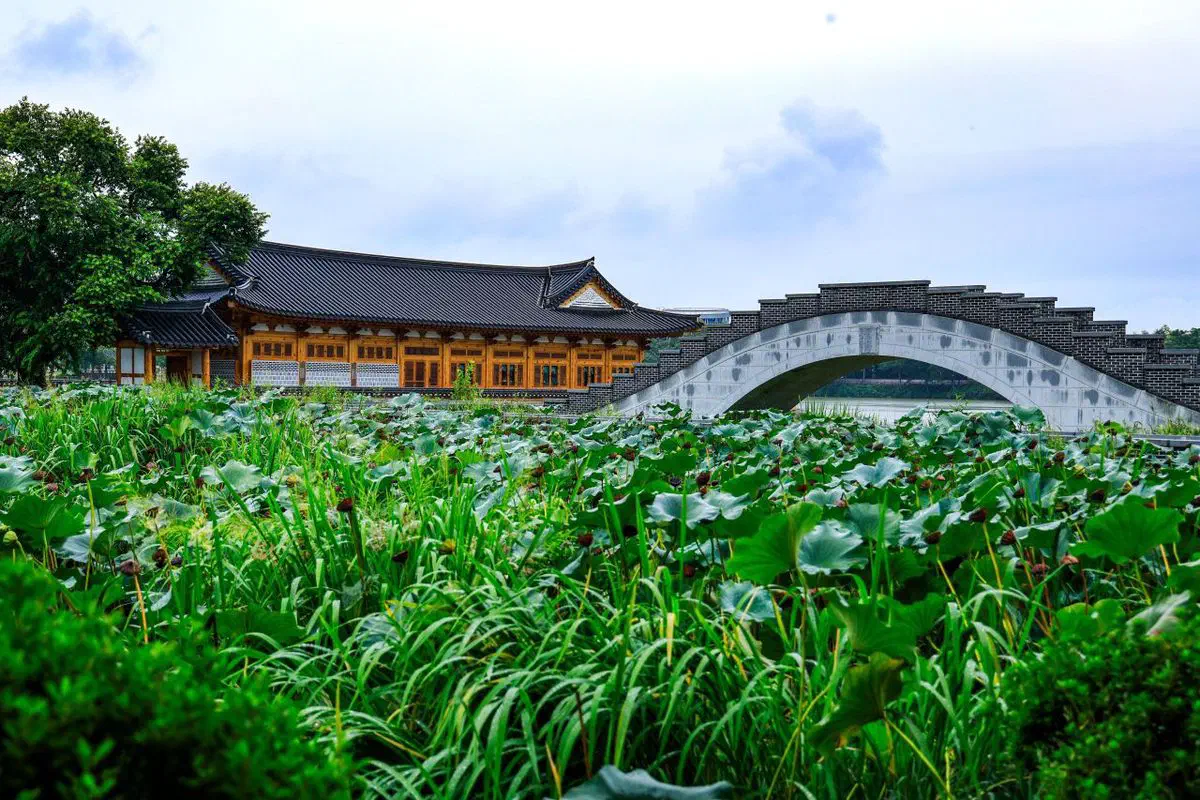
A festival held here is a different proposition from one held on a stadium concourse, which is precisely the argument the organizers made.
What actually runs at the Jeonju Bibimbap Festival
The program is built around participation rather than a main stage:
- The big mix
- A mass bibimbap performance — everyone mixes and eats together
- Bibimbap parade
- The procession through the festival grounds
- Paldo bibimbap
- Regional bibimbap from all eight historic provinces, not just Jeonju’s version
- Taste classes
- Cooking sessions rather than demonstrations
- Children's mixing
- A hands-on version for kids
- Jeonju Market
- Local produce and makers
- UNESCO zone
- Jeonju’s standing as a UNESCO Creative City of Gastronomy
Paldo bibimbap is the one worth going for. Jeonju’s bibimbap is the famous one, but the dish is regional across the whole country, and having the eight provincial versions in one place is a comparison you cannot easily make anywhere else.
Why Jeonju’s version is the one with the name
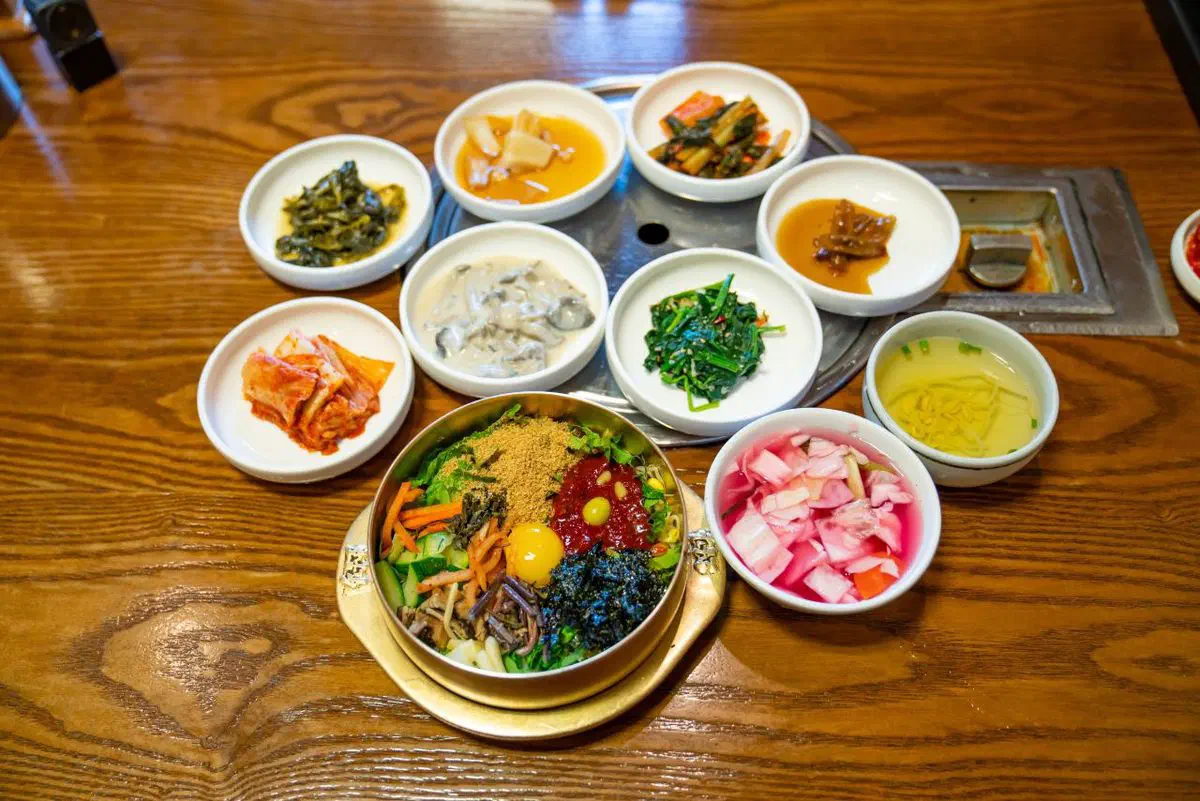
Jeonju bibimbap is not simply bibimbap made in Jeonju. It is built on five colors and five tastes, assembled from around thirty ingredients — ginkgo, pine nut, chestnut, walnut, and whatever the season is doing — with the rice traditionally cooked in beef stock rather than water.
Those five colors are obangsaek, the same five-direction system that governs the paintwork on every palace roof and, for that matter, gives this site its name. The bowl is a cosmology arranged as lunch, which is a very Korean thing for a bowl to be.
Where to stay, and the thing to know about it
Jeonju has 735 hanok in one village and 203 places to sleep among them — the highest density in the country, and the reason to sleep in Jeonju rather than Seoul if a hanok stay is the point of the trip.
Deokjin Park is not in the hanok village. It is about 3 km north, closer to Jeonju Station, reachable on city buses 101 and 119 from the station forecourt. You can comfortably stay in the hanok village and go to the festival; you just should not expect to walk between them.
Hanok stays in Jeonju fill for festival weekends earlier than an ordinary October, and October is already Jeonju’s busiest month.
Getting there
Jeonju is about 195 km south of Seoul. The detail that catches people is which station the train leaves from: the Jeolla line KTX runs from Yongsan, not Seoul Station, and getting that wrong adds a subway ride and half an hour to a ninety-minute journey. Our Jeonju guide has the full comparison against the bus.
Whether a rail pass beats individual tickets depends on how many cities you are stringing together — for Seoul and Jeonju alone it does not.
A Korean eSIM is worth having for this one specifically, because the festival’s own program and any schedule changes are posted in Korean, on the day. Our guide to getting around Korea covers the map apps that actually work once you are there.
The short version
- 2026 dates
- 2–4 October — three weeks earlier than most English listings say
- Venue
- Deokjin Park, not the World Cup Stadium — it moved this year
- Getting to the venue
- ~3 km north of the hanok village · buses 101, 119 from Jeonju Station
- Go for
- Paldo bibimbap — the eight provincial versions side by side
- From Seoul
- ~195 km · KTX from Yongsan, not Seoul Station
- Book early
- October is Jeonju’s busiest month before you add a festival
If you take one thing from this page, make it the date. Everything else about this festival is forgiving, and the calendar is not.
Quick answers
When is the Jeonju Bibimbap Festival in 2026?
Where is the Jeonju Bibimbap Festival held?
Is the festival inside Jeonju Hanok Village?
What makes Jeonju bibimbap different?
Checked 31 August 2026. The 2–4 October 2026 dates and the move to Deokjin Park from Jeonju World Cup Stadium, the stated shift from stage-led to participation-led programming, the 20th-edition milestone and the festival’s origin in 2007 as Jeonju Cheonnyeon-ui Mat Janchi, from Korean press coverage of Jeonju City’s August 2026 announcement — Newsis and Naewoe Ilbo, which agree on both the dates and the venue. Jeonju city’s own English and Korean tourism pages were still showing the previous edition when we checked, which is part of why the English-language listings are wrong; confirm against the city’s pages again closer to the date, since they should update. Program names — the mass mixing performance, the parade, paldo bibimbap, taste classes, the children’s program, Jeonju Market and the UNESCO Creative City zone — from the same announcements. Deokjin Park’s location relative to Jeonju Station, the 1974 red-lotus planting and the 101 and 119 bus routes from Korean regional tourism sources. Jeonju bibimbap’s five colors, five tastes and roughly thirty ingredients from Korea.net’s own description of the dish. Hanok counts and the Yongsan KTX detail are sourced in our Jeonju guide. Festival dates move — this one just did.