Korean Addresses, and Why Google Maps Can't Find You
Last verified: 2026-08-15. Rules and prices change — always confirm on the official site before you travel.
This page contains affiliate links. If you book through them we may earn a commission at no extra cost to you. It never changes what we recommend.
Every guide tells you to install Naver Map because Korean addresses defeat Google Maps. That advice holds today and it is about to need a footnote, so here is the whole situation — including the part that changed six months ago and has not reached English-language guides yet.
What actually happened with Google Maps
Google has asked the Korean government three times for permission to export high-precision national map data. The government refused in 2007 and again in 2016, both times on national security grounds.
A third request went in during 2025 and won conditional approval on 27 February 2026 — eighteen years after the first, and after several extensions and rounds of revision.
The conditions are specific. Imagery gets security processing, coordinate display stays restricted, and the data has to live on domestic servers. The permission covers the base map and the road and transport network — enough for navigation. Contour lines and other militarily sensitive layers stay out.
Nobody has announced a launch date. Google is expected to extend its directions from transit-only to walking and driving, but as of this check the service has not shipped.
So: use Naver Map. But understand that you are working around a restriction that is being lifted, not a permanent fact about Korea.
Korean addresses are a separate problem from Google Maps
Here is what will not change when Google catches up. Korea replaced its address system, and the new one is logical in a way that helps you once you can read it.
Since 1 January 2014, road name addresses have been the legal standard. The province, city and district stay as they were. Only the last part changed: instead of a neighborhood plus a lot number, you get a road name and a building number.
The road name itself tells you how big the road is.
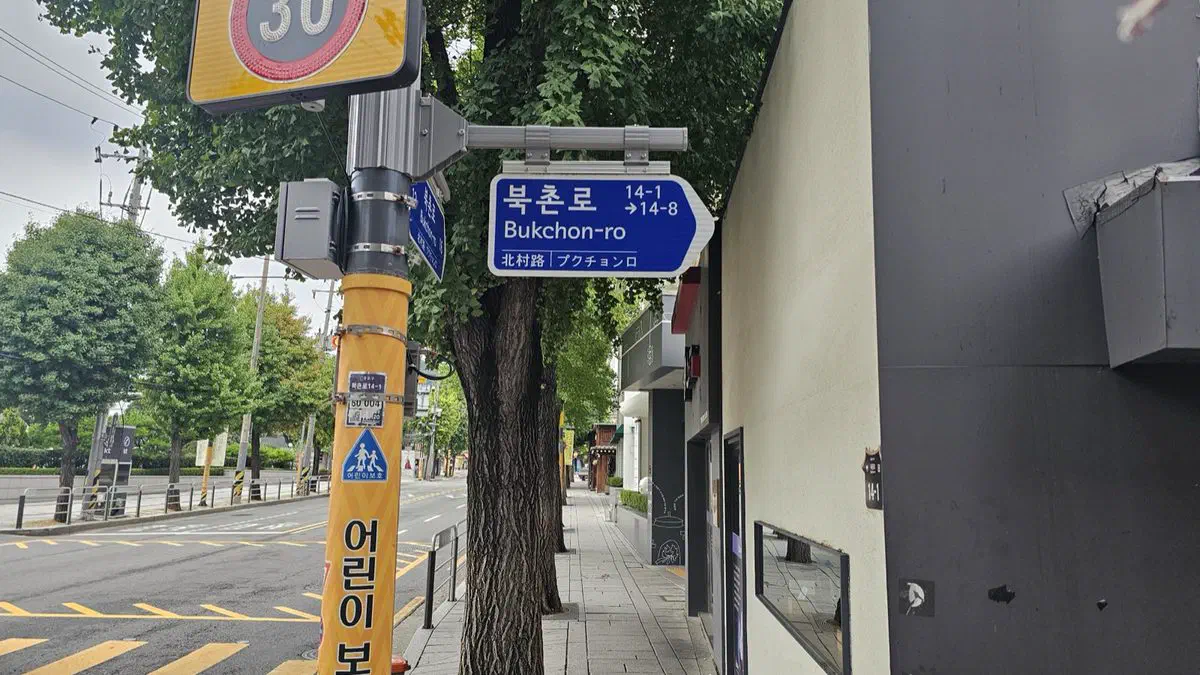
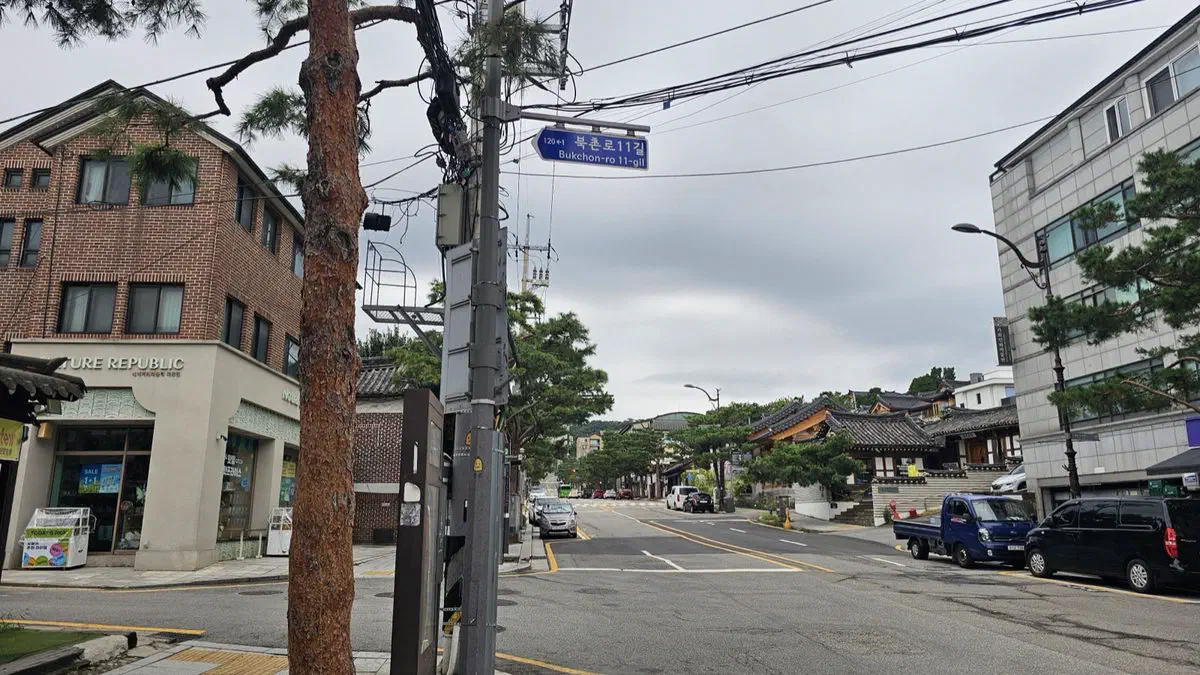
Two things follow that are worth knowing at a junction with a suitcase.
The suffix predicts the difficulty. An address ending in daero or ro is on a road with a name, signage and taxi recognition. One ending in gil is a lane, often narrow, sometimes unnamed on foreign maps, and frequently the last hundred meters of your journey.
Odd and even split by side. Numbers run up the left of the road in odds and the right in evens. Standing at number 17 and looking for 18, you cross.
Recognizing 대로, 로 and 길 on a sign does not require reading Korean — an hour with Hangul is enough to spot those three characters and a handful of others on sight, which covers more signage than you would expect.
The old addresses are still around
Land lot addresses — the older dong plus lot-number form — lost legal standing in 2014 but never left everyday use. Older signage, some business listings and plenty of people still reach for them.
You will meet both. Naver Map accepts either, which is one more reason to use it.

What to actually install
Naver Map is the default answer. It has the full dataset, accepts both address systems, does transit, walking and driving, and has an English interface. Kakao Map is the other one, comparable in coverage, and some people prefer its interface.
Google Maps still handles public transport, which the rules always permitted, and English reviews. Fares and transfer rules are their own subject. It is not useless — it is partial.
Two practical notes. Korean map apps want a data connection to be much use, so sort out a Korean eSIM before you land rather than after — our comparison covers which one, and the arrival sequence covers where it fits in your first hour. What the apps actually do once they are installed — live bus and subway arrivals, last-train times, reviews Koreans trust — is its own guide. If you want to check an address yourself, the government runs juso.go.kr as the official lookup.
And screenshot your accommodation’s address in Korean before you travel. A taxi driver reading Hangul beats any amount of pointing at a phone map, and it works when your data does not.
When a search comes up empty, paste rather than type. Naver Map’s English mode searches an English-language index, and a hand-typed Romanization of a Korean name — Gyeongbokgung against Kyung Bok Gung against half a dozen other spellings — frequently misses it. Copy the Korean name straight out of a map pin, a blog post or Google Translate and paste it into the search box instead. The Korean-script search index is the complete one; the Romanized index is the partial one, and matching a Romanization is a guess the app is making on your behalf.
Where this bites hardest
Predictably, the places worth going.
The hanok districts are almost entirely gil addresses, on hills, with gates that look like walls. Craft workshops and the studios behind the master designations are in the same lanes. So is the Sool Gallery, at Bukchon-ro 18 — a ro, and therefore one of the easy ones.
Jeonju’s hanok village is the same shape at a smaller scale.
The short version
- Install
- Naver Map, or Kakao Map
- Keep Google for
- Public transport and English reviews
- Read the suffix
- daero big · ro medium · gil lane — expect trouble at gil
- Numbers
- Odd on the left, even on the right
- Before you fly
- Screenshot the address in Korean
Check back on this one. The February approval means the advice above has a shelf life, and when Google’s directions go live in Korea the first half of this article stops being true. The addresses will not change.
Quick answers
Does Google Maps work well in Korea?
What do the daero, ro, and gil suffixes mean in Korean addresses?
Should I use Naver Map or Google Maps in Korea?
Are old Korean addresses (dong plus lot number) still used?
Checked 10 August 2026. Google’s export requests, the 2007 and 2016 refusals, the 2025 filing and the conditional approval of 27 February 2026 — including the conditions on imagery, coordinates, domestic servers and excluded layers — from the Korean government’s policy briefing and contemporaneous Korean reporting. Road name address structure, the 1 January 2014 mandate, the daero/ro/gil width definitions and the odd-left/even-right rule from Ministry of the Interior and Safety guidance. No launch date had been announced at the time of this check.