When to Visit Korea: Spring Goes North, Autumn Goes South
Last verified: 2026-08-13. Rules and prices change — always confirm on the official site before you travel.
This page contains affiliate links. If you book through them we may earn a commission at no extra cost to you. It never changes what we recommend.
Deciding when to visit Korea usually gets treated as picking a month. It is really about picking a direction. Korea is small enough that people assume the seasons arrive everywhere at once — they do not. Spring works up from the south over about two weeks, autumn comes down from the north at a measurable speed, and the difference decides whether you see anything.
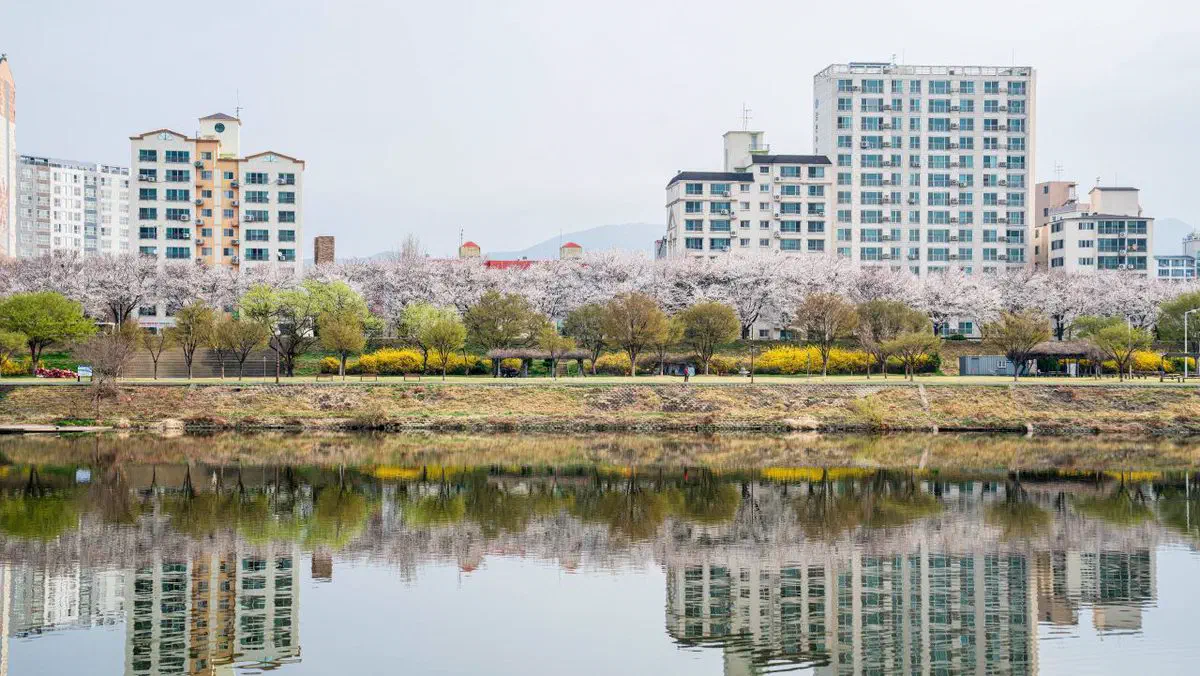
When to visit Korea depends on which direction you are chasing
The two seasons people come for move in opposite directions, and both take roughly a fortnight to cross the country.
Spring. Cherry blossom opens in Jeju around 20–22 March, reaches the southern cities — Busan, Jinhae, Gwangju — by 23–27 March, the central belt around 29 March–2 April, and Seoul about 1–4 April. Full bloom follows first flower by roughly a week, so Seoul peaks around 10 April.
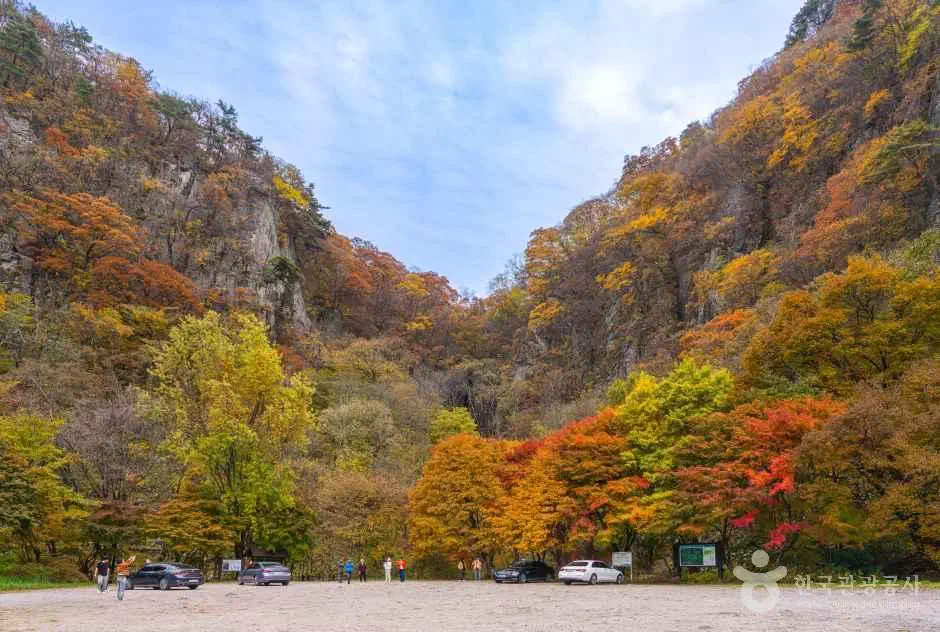
Autumn. First color appears on Seoraksan around 28 September — that is the 1991–2020 normal — and moves south at 20 to 25 km a day. Central Korea sees it between late September and 18 October, the south between 12 and 21 October.
The weather service defines these precisely: “first color” means the top fifth of the mountain has turned, “peak” means four fifths. Peak arrives about 20 days after the start.
The rainy season is short and locatable
Korea’s monsoon is a defined period, not a vague wet spell.
- Jeju
- 19 June – 20 July
- South
- 23 June – 24 July
- Central, including Seoul
- 25 June – 26 July
Those are the 1991–2020 normals. It moves north the same way spring does, which means late June in Seoul can still be dry while Jeju is already under it.
Rain here is not drizzle. It arrives in volume, and the second half of the period usually brings the heaviest days.
Air quality has a season, and it is measurable
This is the part most guides handle badly, either ignoring it or exaggerating it.
Korea runs a Seasonal Fine Dust Management Period from 1 December to 31 March — a formal policy window with tightened emissions controls. It exists because the concentration data clusters: over the last three years, 91% of days exceeding 50 µg/m³ fell inside those four months.
That number is the useful one. Air quality is a winter and early-spring problem, not a year-round one, and it overlaps the start of cherry blossom season in March.
Putting it together
- **Late Mar – mid Apr**
- Blossom. Follow it north or fly south to meet it. Air still improving
- **May – mid Jun**
- The quiet best. Warm, dry, clear, before the rain
- **Late Jun – late Jul**
- Monsoon. Heavy rain, high humidity
- **Aug**
- Hot, humid, typhoon season
- **Late Sep – Oct**
- Foliage. Follow it south. Widely the best month
- **Nov**
- Cold and clear, color finishing in the far south
- **Dec – Mar**
- Cold, dry, and the air quality window
May and October are the two months without an asterisk. If your dates are flexible and you have no attachment to blossom or snow, take October.
What this means for a fixed date
Most people cannot choose freely, so the useful move is to choose where instead.
Arriving late March? Seoul will be bare. Busan, Gwangju or Jeju will not. Two days in Busan works as a blossom trip in a week when Seoul does not.
Arriving early October? The mountains north and east of Seoul are turning while the south is still green. Reverse it in late October.
Arriving in July? Plan indoor anchors — museums, palace tours, craft workshops — and treat outdoor days as bonuses rather than the plan.
Cycling? The cross-country route is miserable in the monsoon and superb in October. Spring works too, though you will be riding into the blossom rather than with it.
Checking before you go
The weather service publishes live seasonal observation maps — blossom progress in spring, foliage across 21 named mountains in autumn — with photographs at each stage, on weather.go.kr. That is the thing to check in the week before you fly, because normals are averages and any given year runs a few days off.
You will want data to check it on the road, which is the eSIM question, and a Korean eSIM sorted before you land rather than after.
Quick answers
When is cherry blossom season in Korea?
When is the best time to see autumn foliage in Korea?
When is Korea's rainy season?
Is air pollution a problem year-round in Korea?
Checked 13 August 2026. Cherry blossom timing by region and the week-to-full-bloom interval from Korea Meteorological Administration seasonal observation announcements. Foliage normals for Seoraksan, the 20–25 km per day southward rate, the definitions of first color and peak, and the 20-day interval from the same body. Monsoon normals for Jeju, the south and central Korea are the 1991–2020 averages. The Seasonal Fine Dust Management Period dates and the 91% concentration figure from Ministry of Environment policy announcements. Normals are averages — check the live maps in the week before you travel.