Gangneung Drama Filming Locations: The Real Spots
Last verified: 2026-08-27. Rules and prices change — always confirm on the official site before you travel.
This page contains affiliate links. If you book through them we may earn a commission at no extra cost to you. It never changes what we recommend.
Gangneung drama filming locations cluster more thickly here than in any other Korean coastal city, and they span three decades rather than one hit show. Goblin’s most-quoted scene, The Glory’s finale, a BTS album cover, and the drama that started Korea’s whole tradition of shooting on this coast in 1995 are all within a short drive of each other — and not all of what visitors photograph is the original.
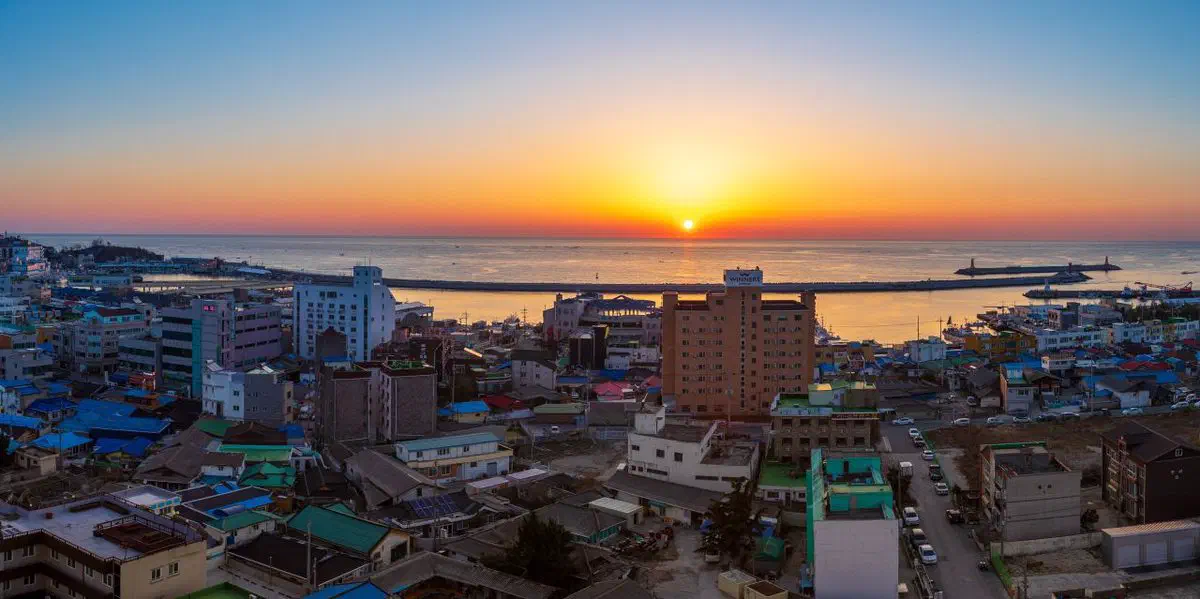
Goblin’s breakwater is a real, working harbor — not a set
The scene most people mean when they say “the Goblin spot” — Ji Eun-tak in a red scarf meeting Kim Shin by the sea — happened at Jumunjin Breakwater, the pier at the edge of Jumunjin’s actual fishing harbor. It was a real harbor before the drama and still is one now: boats dock there, the red lighthouse marking the pier’s end is a working navigation light, not a prop. What changed is everything around it — Gangneung’s own tourism office now promotes the spot directly, and the surrounding Yeongjin Beach area has picked up Goblin-themed cafés and photo signage since the show aired in 2016.
The Glory’s final scene was filmed a short drive further up the coast
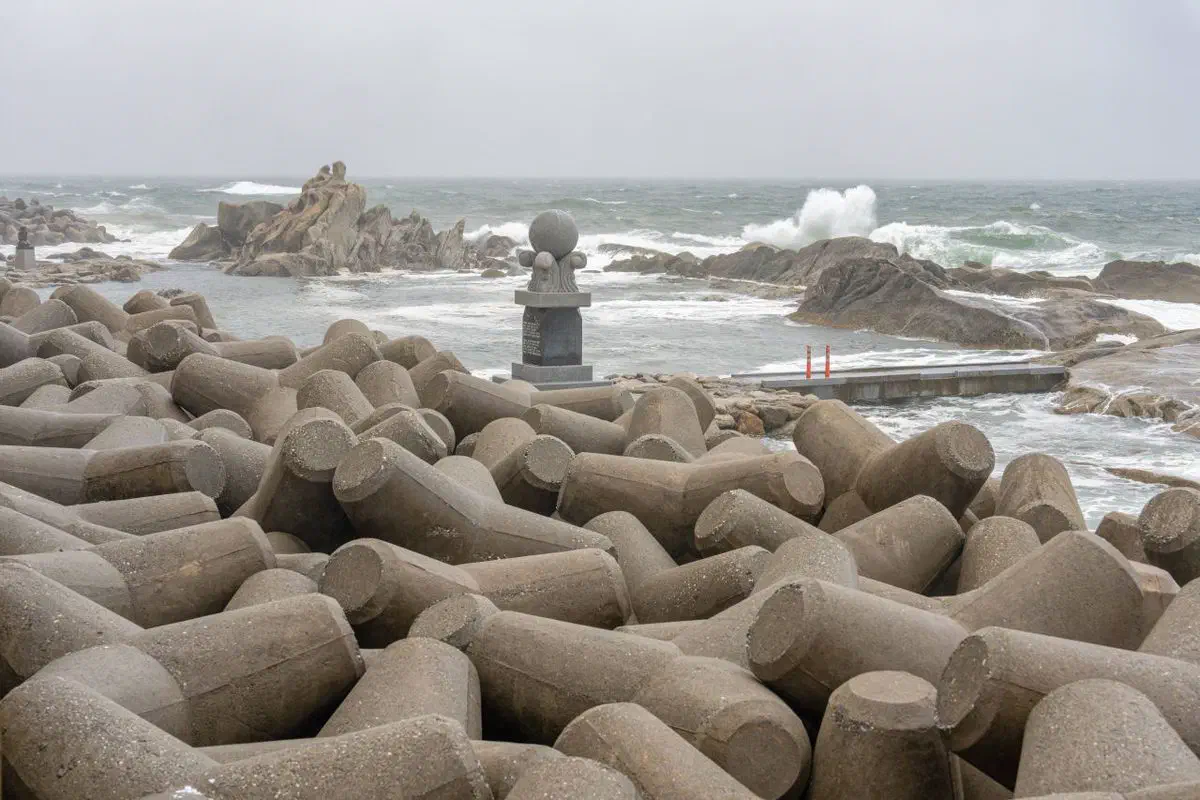
Sodol Adeulbawi Park, a breakwater and rock-formation park a few kilometers from Jumunjin, — Netflix’s The Glory shot its final-episode beach scene there — Moon Dong-eun and Ju Yeo-jeong sharing a drink in the snow as the show closes. The park’s actual draw predates the show by a fair distance: adeulbawi means “son rock,” named for a formation locals have prayed at for sons for generations, long before a Netflix crew ever showed up.
The BTS bus stop everyone photographs is a rebuilt replica
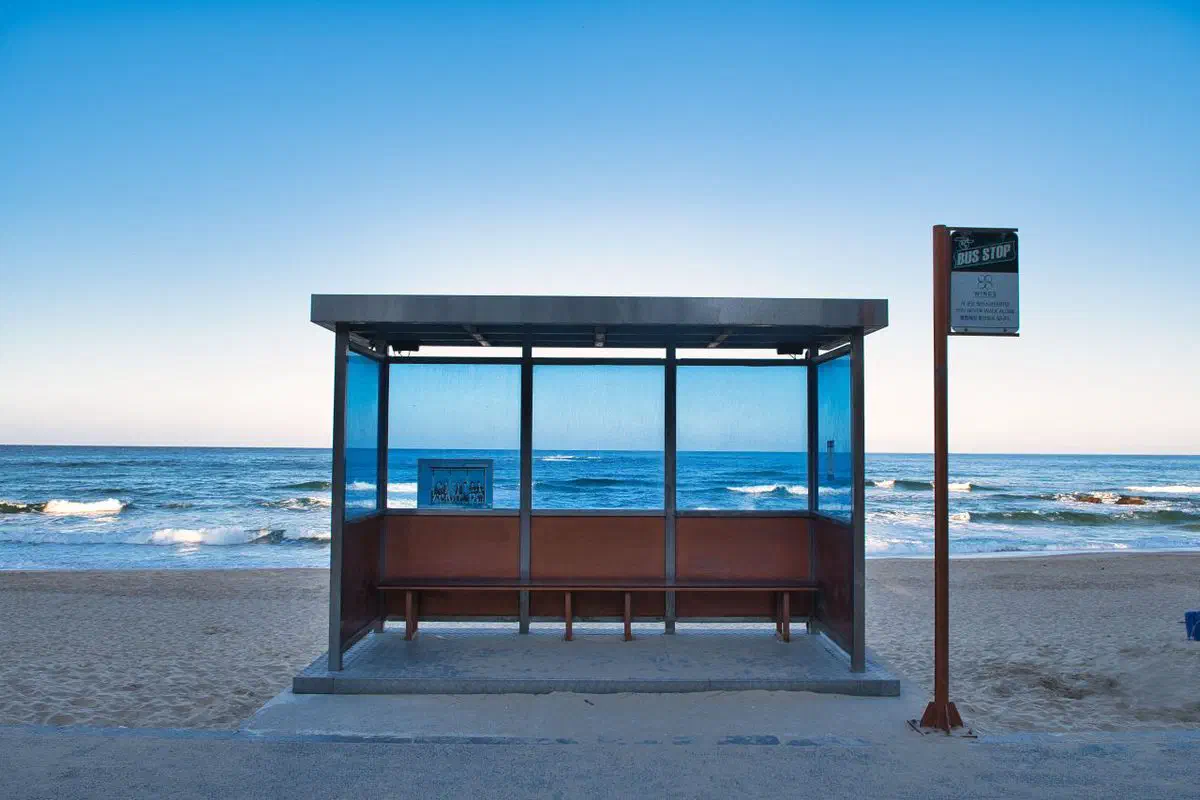
BTS’s You Never Walk Alone album — the repackage carrying “Spring Day” — used a small glass bus shelter on Hyangho Beach, right next to Jumunjin, for its cover shoot. Crews built the shelter for that one shoot and tore it down afterward. What stands there now, and what every fan photo since has captured, is a replica, rebuilt specifically as a photo zone once the original set came down. It reads as the real thing in every photo — the sign still says “YOU NEVER WALK ALONE” — and it is, just not the original glass and steel.
Jeongdongjin has been drama tourism’s answer since before the term existed
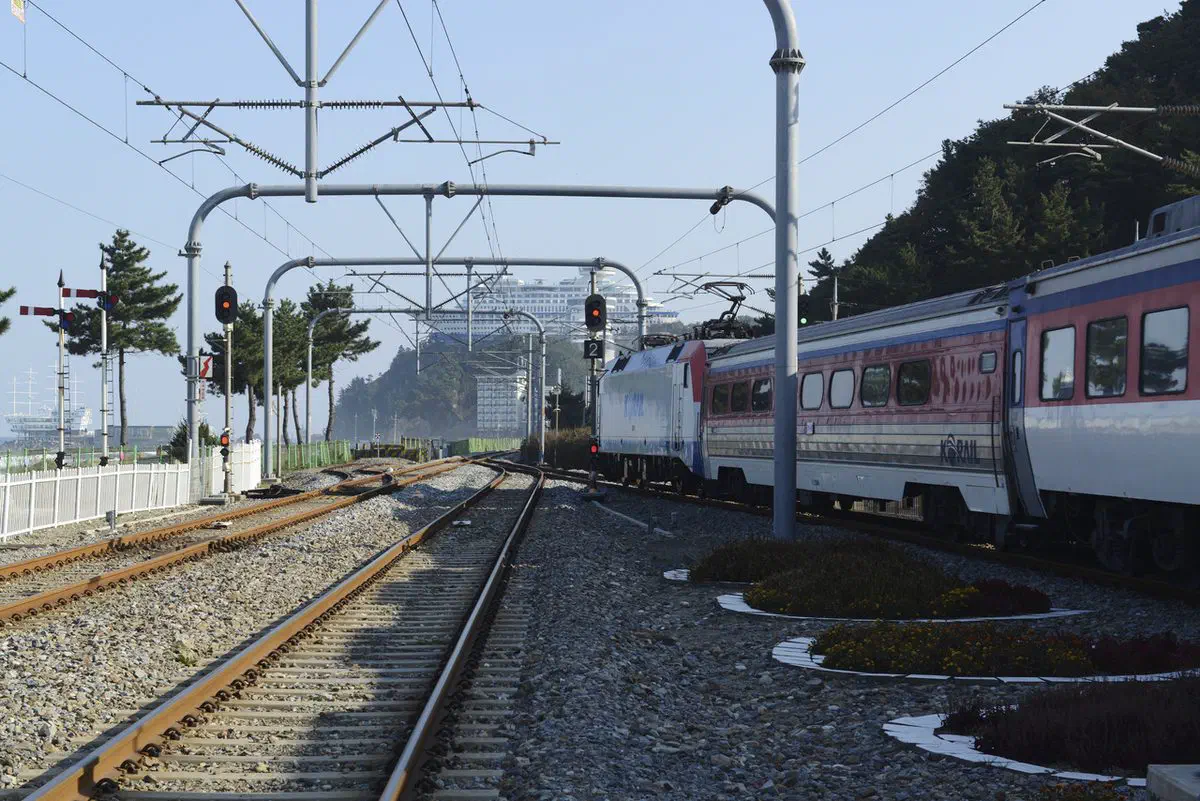
Thirty years before Goblin, Jeongdongjin Station is where 1995’s Hourglass filmed Yoon Hye-rin’s arrest scene — one of Korean television’s most-watched dramas at the time, and the reason Jeongdongjin still pulls a crowd for the January 1st sunrise every single year, long after most viewers who watched it live have stopped counting. It is a useful reminder that Gangneung’s relationship with television did not start with Goblin — it just got a lot more visible because of it.
What these Gangneung drama filming locations don’t include, on purpose
No stills from any of these shows appear on this page. Every photo here is a real photograph of the real, current location, not a frame from the broadcast — the shows themselves are still under copyright, and a fan standing at Jumunjin today sees the harbor, not the show. If a site shows you a screenshot from Goblin and calls it a “location guide,” it is showing you something it does not have the right to show you.
Getting there, and what else is nearby
All four spots sit on or near the same stretch of coast north of central Gangneung, within a short drive or the Sea Tea bus route already covered in our main Gangneung guide — which also has the coffee street, KTX times and where to stay. Jumunjin itself is a genuine fishing town with its own seafood market, not just a film set, worth an hour beyond the photo stops.
A Korean eSIM is worth having before you go — these spots are spread along a rural coast road, not walkable from each other, and our guide to getting around Korea covers why data matters before the map app choice does. If you would rather not work out the driving route yourself, a Gangneung filming-location day tour from Seoul covers the BTS bus stop and other spots with an English-speaking guide already booked.
The short version
- Goblin
- Jumunjin Breakwater — a real, working harbor, still a working harbor
- The Glory
- Sodol Adeulbawi Park, a few km up the coast — also a much older fertility-prayer site
- BTS
- Hyangho Beach bus stop — a rebuilt replica of the original 2017 album-cover set
- Hourglass (1995)
- Jeongdongjin Station — Korea’s drama-tourism tradition, three decades running
- On this page
- Original location photos only — no drama stills, ever
None of these need a ticket or a booking — they are open coastline and a train station, not attractions with gates. The only planning that matters is transport, and the main Gangneung guide covers that part.
Quick answers
Is Goblin's Jumunjin Breakwater a real place?
Is the BTS bus stop at Hyangho Beach the original one from the album cover?
What was filmed at Jeongdongjin Station?
Are there drama stills or screenshots on this page?
Checked 27 August 2026. Jumunjin Breakwater as Goblin’s filming location, Gangneung’s own tourism promotion of the site, and the Goblin-themed cafés and signage that followed, from Korean travel journalism covering the show’s 10th anniversary in 2026. Sodol Adeulbawi Park as The Glory’s final-episode location, and the site’s older fertility-rock history, from the same reporting. The BTS bus stop’s status as a rebuilt replica of the 2017 “You Never Walk Alone” album-cover shoot location, and its exact site on Hyangho Beach, from Korean local-news and tourism-board coverage of the spot. Jeongdongjin Station’s role in 1995’s Hourglass from Korean entertainment-history reporting. Signage, cafés and opening hours change — confirm on the ground before you build a day around any one stop.