Buying Glasses in Korea: What the 30 Minutes Skips
Last verified: 2026-08-27. Rules and prices change — always confirm on the official site before you travel.
This page contains affiliate links. If you book through them we may earn a commission at no extra cost to you. It never changes what we recommend.
Buying glasses in Korea has become one of the country’s more unlikely tourism exports — bookings for eyewear shops on one Korean travel platform jumped roughly 16-fold between summer and autumn last year, with American travelers alone accounting for about half of them. The 30-minute walk-in process in the viral videos is real. What most of those videos skip is what that 30-minute “eye exam” is actually checking, and what it isn’t.
The “eye exam” is a refraction test, not a medical exam
Korea’s optical shops are staffed by 안경사 (gwangyeongsa), licensed opticians — not ophthalmologists. By law, an optician can run the auto-refractor test that measures your prescription and fit you for glasses. What an optician cannot legally do is anything requiring a medical doctor: no dilating drops, no glaucoma screening, no retinal exam. That side of eye care — actual eye health rather than a corrective-lens number — stays with an 안과 (ophthalmology clinic or hospital eye department) in Korea, same as most countries.
Practically, this means the free 30-minute test is genuinely good at what it is built for — a fast, accurate prescription number — and tells you nothing about whether your eyes are otherwise healthy. If it has been years since an actual medical eye exam, that is still worth doing at home before or after the trip. It is a different appointment from the one the shop is offering.
What the 30 minutes actually covers
None of the four steps needs an appointment at most shops — walk in, and a member of staff starts the process. The one variable worth asking about up front is your own prescription: strong astigmatism, a high correction, or progressive (varifocal) lenses all take the lab longer to grind, and a shop that promises 30 minutes for a simple prescription may need closer to an hour or two for a complicated one.
What buying glasses in Korea actually costs
A basic pair — simple frames plus standard single-vision lenses — runs roughly ₩40,000–70,000 all in. Add blue-light coating, UV protection, or a thinner high-index lens for a stronger prescription, and a fuller package lands closer to ₩60,000–100,000. Designer or licensed-brand frames (Gentle Monster and similar Korean eyewear labels) cost more on top of any lens work, the same way a designer frame costs more anywhere.
Contact lenses, if that is the plan instead, are a separate purchase — most shops that fit glasses also sell contacts, but fitting one does not include the other.
Where to go
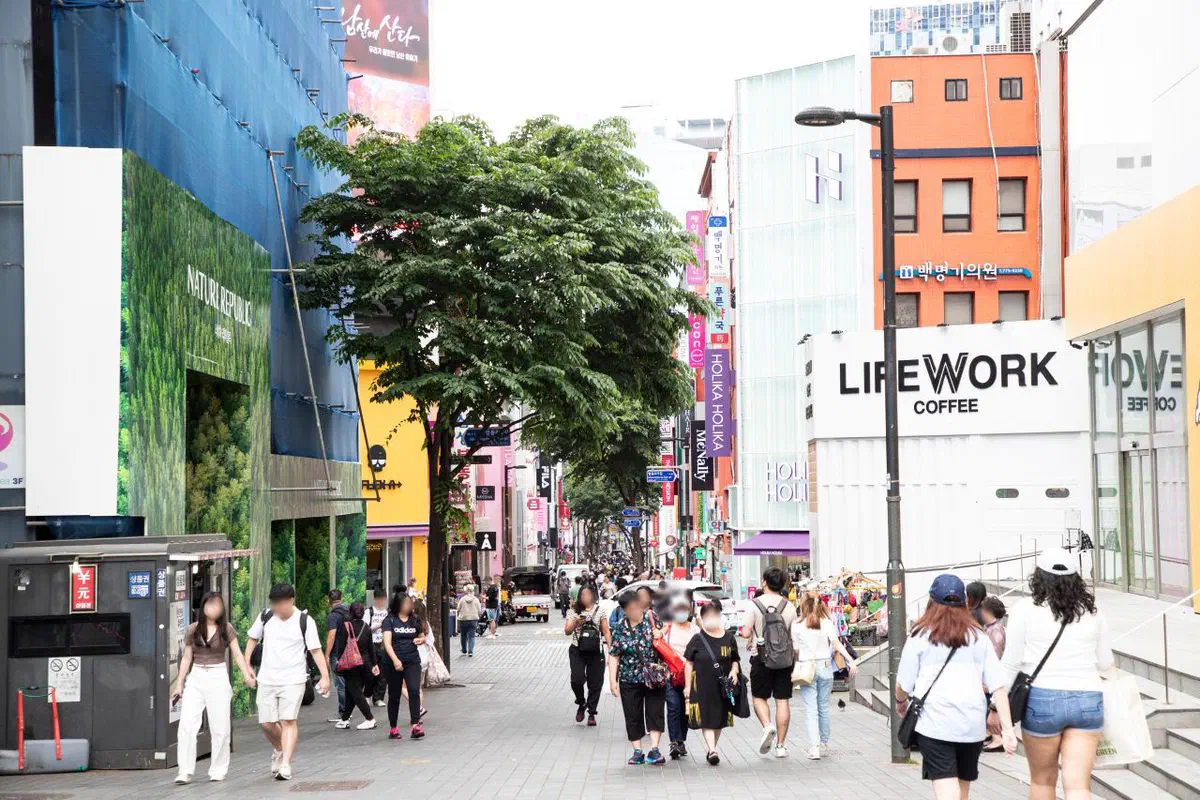
Myeongdong has the highest density of shops used to foreign customers, with staff who commonly work in English, Japanese or Chinese — a reasonable default if this is the only stop on the trip, and the same neighborhood covers most of what else ships home well from a Seoul trip. Hongdae carries a younger, more fashion-forward frame selection if the look matters as much as the prescription.
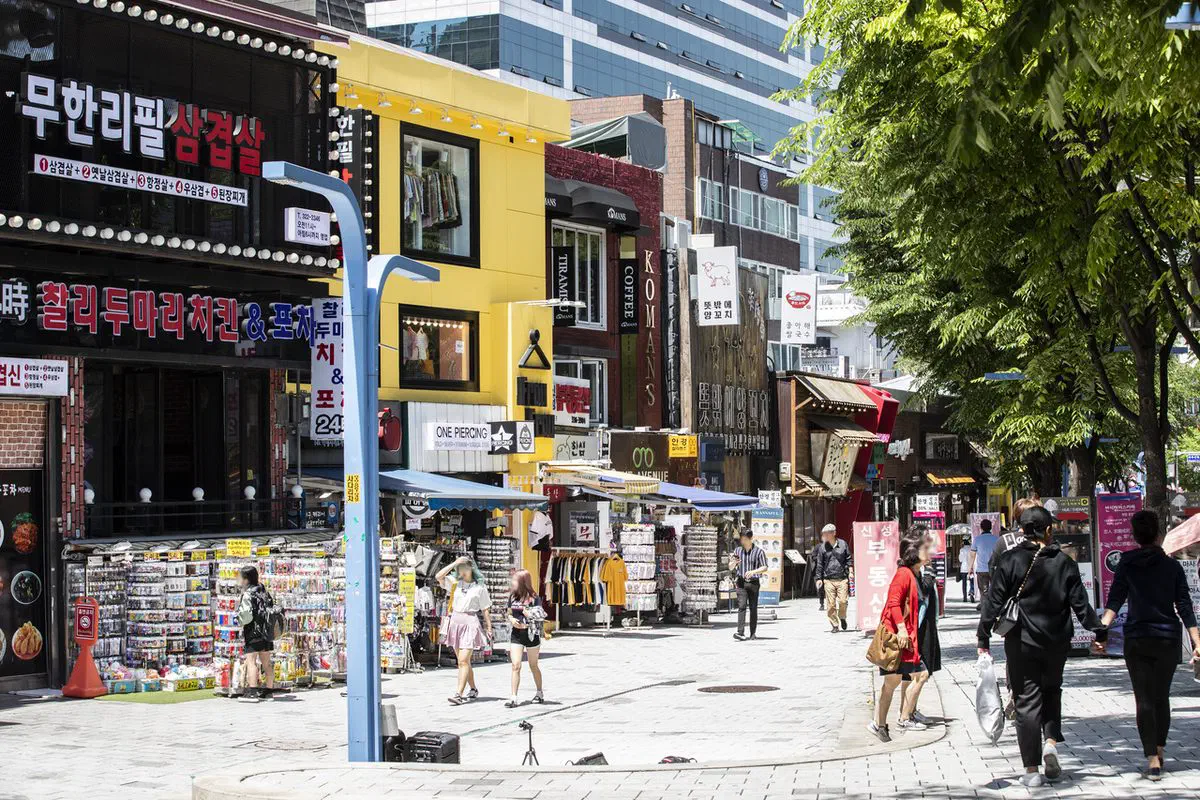
A prepaid Optic Life voucher covers branches in Myeongdong, Hongdae, Seongsu and Gangnam, and locks in a discount plus the free vision screening before you land — useful mainly because it removes any question of whether a given shop will take a walk-in tourist, rather than because walk-in pricing is bad.
What to bring
Your passport, for two reasons — it is standard ID at checkout, and it is what the shop scans if the purchase qualifies for a tax refund. Korea’s official tax-free program refunds a share of the VAT (roughly 7–10%, depending on the scheme) on a single receipt above a threshold that varies by store, usually somewhere in the ₩15,000–30,000 range — ask the shop directly rather than assuming a number.
Take contact lenses out before the vision test if you wear them — the auto-refractor reads your eye’s actual shape, and lenses sitting on the cornea distort the number. Bringing an old prescription or pair of glasses is not required and most shops will not ask for one, but it gives the optician something to double-check the new reading against if the numbers seem to be moving a lot from what you remember.
Before you go
A Korean eSIM is worth having before the shop hunt starts — comparing two or three Myeongdong storefronts on a map, or checking a shop’s operating hours before walking over, is the kind of small task that eats a surprising amount of a trip without data. Our guide to getting around Korea covers the basics of Naver Map and Kakao Map if this is the first stop where you need either.
The short version
- The "eye exam"
- A free refraction test by a licensed optician — not a medical eye exam
- Time
- 30 minutes for a simple prescription, longer for progressives or strong astigmatism
- Cost
- ~₩40,000–70,000 basic · ~₩60,000–100,000 with coatings · more for designer frames
- Where
- Myeongdong for the most tourist-used shops · Hongdae for younger frame styles
- Bring
- Passport (ID + tax refund) · contacts out before the test · old prescription optional
- Tax refund
- Roughly 7–10% VAT back on qualifying receipts — threshold varies by store
The speed is genuine and the savings are usually real — glasses that would take a week and cost more at home are common souvenirs for exactly that reason. The only thing worth correcting going in is what “eye exam” means on the sign: a prescription number, not a health check.
Quick answers
Is the eye exam at a Korean optical shop a real medical exam?
How much does it cost to buy glasses in Korea?
How long does it take to get glasses in Korea?
Where's the best place to buy glasses in Seoul?
Checked 27 August 2026. Booking growth and nationality share (roughly 49% United States, 26% Taiwan, 9% Germany) from Korean travel-platform booking data reported in Korean business-press coverage of the trend — one platform’s bookings, not a market-wide census. Opticians’ legal scope (auto-refractor vision tests permitted, pharmacological and instrument-free refractive tests reserved for ophthalmologists) from Korean legal and professional-body sources on the optician/ophthalmologist distinction. Pricing ranges and neighborhood patterns from multiple English- and Korean-language shopping guides aimed at foreign visitors, cross-checked against each other given how much individual shops vary. Tax refund mechanics from Korea’s own tax-free program guidance. Prices, thresholds and shop offerings change — confirm at the counter before you commit to a frame.