Gwangjang Market Bedding: What to Know Before You Buy
Last verified: 2026-08-28. Rules and prices change — always confirm on the official site before you travel.
This page contains affiliate links. If you book through them we may earn a commission at no extra cost to you. It never changes what we recommend.
Gwangjang Market bedding is an odd thing to travel for — this is a century-old food and textile market, not a homeware store — and yet its bedding stalls now report that roughly 70% of their customers are foreign visitors, mostly from Taiwan, Hong Kong, Singapore and Thailand. The reason is not mysterious once you hear the price comparison: in Taiwan, equivalent bedding runs about three times what it costs here.
Gwangjang runs every single day — for the older, five-day version of a Korean market, see oiljang.
Why a food market became a bedding destination
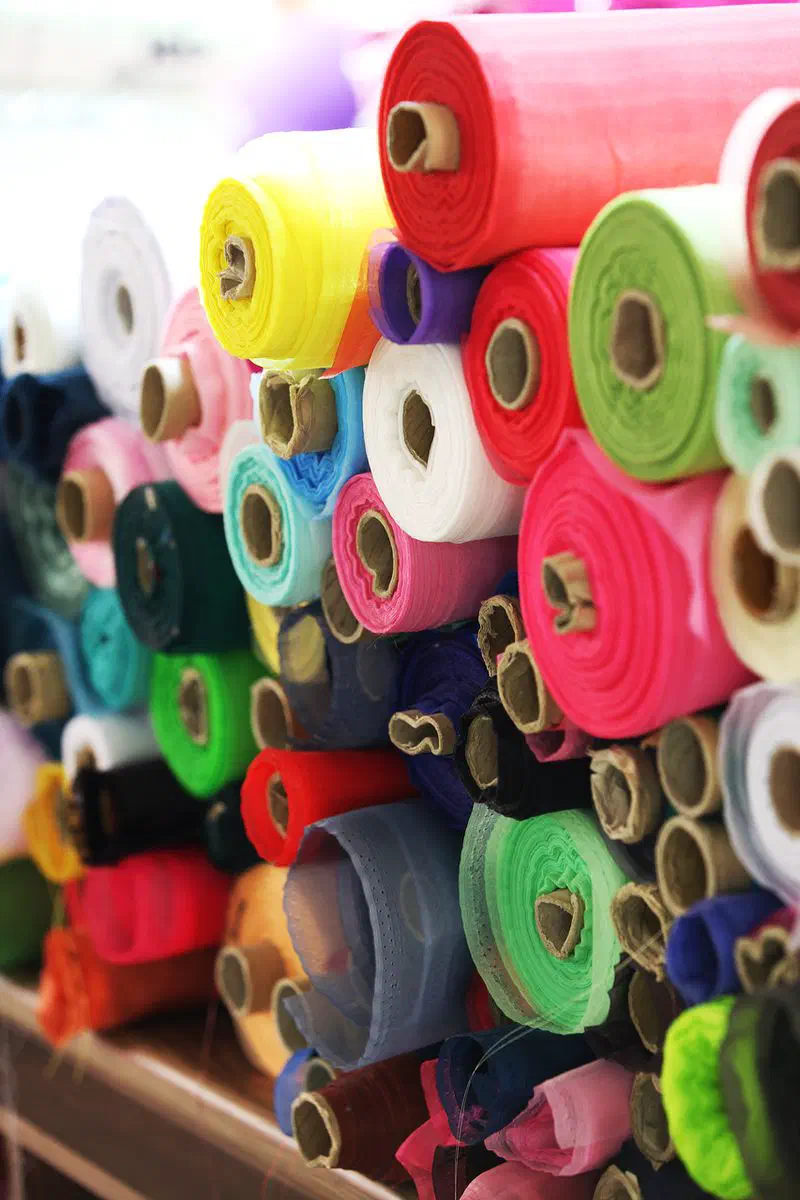
Gwangjang Market has sold fabric and textiles since before it sold street food — the bedding stalls grew out of that trade, not alongside it. Most shoppers who show up now say they first saw Korean bedding on a drama or on social media, then found out it was a fraction of home-country prices once they looked into it. Single tourists buying a dozen or more comforters at once, as gifts, is common enough that it barely raises an eyebrow among the shop owners.
What Gwangjang Market bedding actually is
The stalls sell a few distinct products, not one generic “Korean blanket”:
- Modal blankets — made from beech-tree pulp fiber, prized for a soft, silky feel.
- Punggi ingyeon — rayon woven from wood pulp, named for Punggi, the town that has produced it for decades.
- Lightweight cooling comforters — cool-to-the-touch fabric for summer use, a different product from the winter weight entirely.
- Microfiber quilts — the everyday, machine-washable option most visitor-facing stores default to.
Prices vary by shop, but Assibang — one of the better-known foreign-visitor stalls — is a fair reference point:
| Single | Queen | |
|---|---|---|
| Winter weight | ~₩48,000–50,000 | ~₩58,000–60,000 |
| Summer weight | ~₩29,000–30,000 | ~₩39,000–40,000 |
Winter and summer bedding are genuinely different products, not the same comforter in a lighter color — buying winter weight for a warm-climate home defeats the point of the lighter fabrics above.
The size label is not a universal size
“Single” and “Queen” here do not necessarily match those words on a mattress at home. Korean bedding is measured in centimeters, and even Korean retailers do not fully agree with each other — a “super single” comforter shows up listed as both roughly 120×195cm and 110×200cm depending on the manufacturer. Ask for the exact centimeter measurement and compare it to your own bed, rather than trusting that “Queen” means the same thing it does at home.
Cash, card, and getting a receipt
Card payments at some bedding stalls carry a roughly 10% surcharge over the cash price, and Korean tax authorities have been publicly looking into the market’s bedding trade over cash transactions that go undocumented — this is a real, reported story in Korean business press, not a rumor. None of that is really your problem to solve, but it does mean two practical things worth doing: confirm the price before you commit, since the number on display may assume cash, and ask for a receipt regardless of what’s easier for the shop — it is your only record if something arrives damaged or wrong.
Vacuum packing and getting it home
This is the part that makes the whole trend logistically possible. Shop staff compress a full-size winter comforter down to something close to carry-on size with a vacuum sealer, right at the counter. Most stalls also offer international shipping for an extra ₩10,000–20,000, useful if vacuum-packing several comforters still leaves more bulk than checked luggage can absorb — the same trade-off covered in more general terms in our guide to what actually ships home well.
Getting there
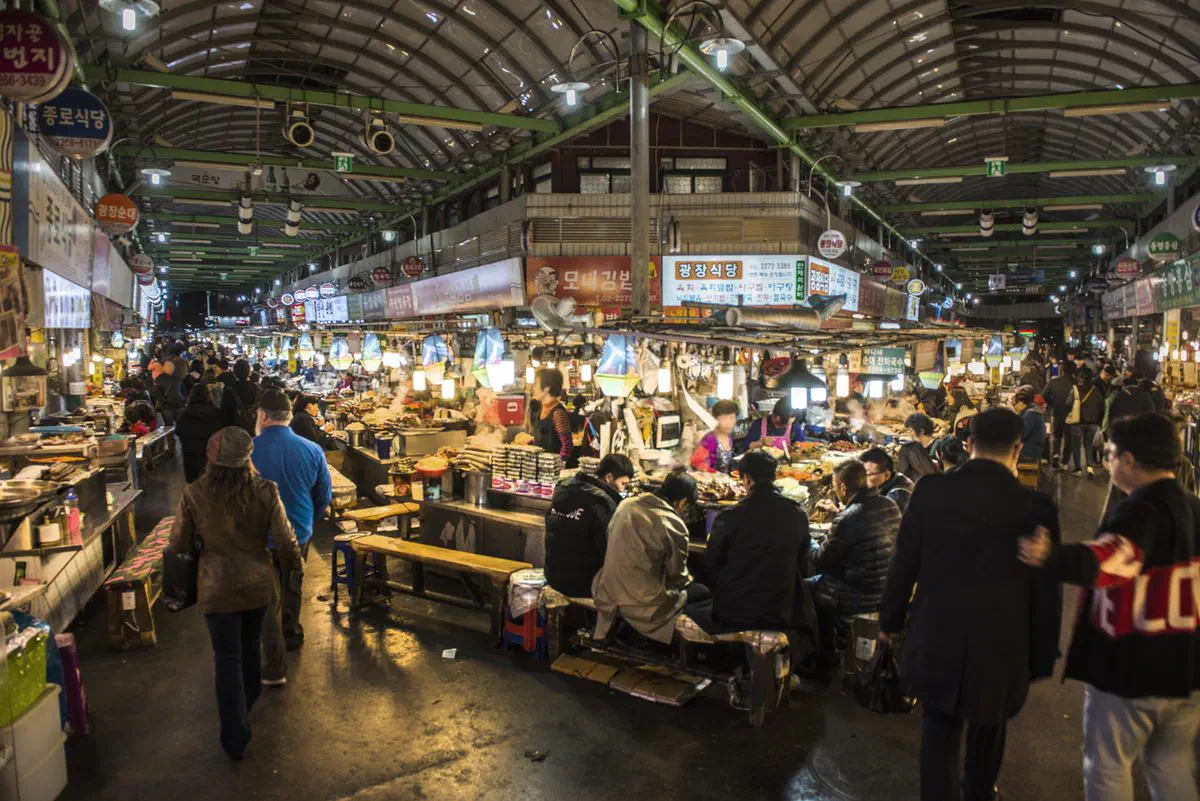
Gwangjang Market sits at Jongno 5(o)-ga, reachable from Jongno 5-ga Station (Line 1) Exit 8 directly, or Euljiro 4-ga Station (Lines 2 and 5) Exit 4, about 100 meters further — either is easy to find with the subway-app basics in our guide to getting around Korea. The bedding and fabric stalls sit apart from the famous food alley — worth allowing time to find them rather than assuming they’re inside the same covered row as the bindaetteok stands.
Speaking of which — the food alley is the market’s other reason to visit, and doing both in one trip is the obvious move:
A guided Gwangjang Market food tour covers the street-food side in about two hours with an English-speaking guide, bite-sized tastings and a food-challenge format — the bedding stalls are a short walk from wherever it ends. A Korean eSIM is worth having before either — pulling up a translator to confirm a fabric name, or a map to find the right alley, both need data on the spot.
The short version
- Why foreigners buy here
- Roughly 70% of bedding-stall customers are visitors — Taiwan prices run about 3x this
- What's for sale
- Modal blankets · punggi ingyeon rayon · cooling summer comforters · microfiber quilts
- Price reference
- ~₩48–60k winter, ~₩29–40k summer (single/queen, one well-known stall)
- Sizing
- Ask for centimeters — “Queen” here doesn’t reliably match “Queen” at home
- Payment
- Cash often ~10% cheaper than card — get a receipt either way
- Shipping
- Vacuum-packed on the spot; international shipping runs ~₩10,000–20,000 extra
- Getting there
- Jongno 5-ga Station Exit 8, or Euljiro 4-ga Station Exit 4
The bedding stalls and the food alley are close enough to do in one visit, and most people who make the trip for one end up spending real time at the other. Neither needs a booking — just cash, a rough sense of what size you actually need in centimeters, and enough time to let a shop owner vacuum-pack whatever you decide on.
Quick answers
Why do so many tourists buy bedding at Gwangjang Market?
Is Korean "Queen" size bedding the same as Queen size at home?
Is it cheaper to pay cash at Gwangjang Market?
Can I ship Gwangjang Market bedding home?
Checked 28 August 2026. The roughly 70% foreign-customer share, nationality breakdown, price-comparison figures and the drama/social-media discovery pattern from Korean and regional business press covering the trend, including The Korea Herald. Assibang’s pricing from the shop’s own listing via Creatrip. Card-payment surcharges and the tax authority’s public scrutiny of cash transactions in the bedding trade from Korea JoongAng Daily. Korean bedding size measurements and the inconsistency between manufacturers from mattress-industry reference sources. Subway access from the market’s own published directions. Prices, exchange rates and shipping fees change — confirm at the stall before you buy.