Hanji Souvenirs: What to Actually Buy Beyond the Workshop
Last verified: 2026-09-04. Rules and prices change — always confirm on the official site before you travel.
This page contains affiliate links. If you book through them we may earn a commission at no extra cost to you. It never changes what we recommend.
Our piece on hanji itself is about the paper — what makes it last a thousand years, and the hand motion that makes it different from the machine-made kind. This one is about hanji souvenirs specifically: you are not taking a workshop, you just want to know what to buy.
Hanji stopped being only paper a long time ago. It gets pressed, layered and lacquered into objects — lamps, fans, boxes, stationery — sold finished, in shops that have nothing to do with a craft class.
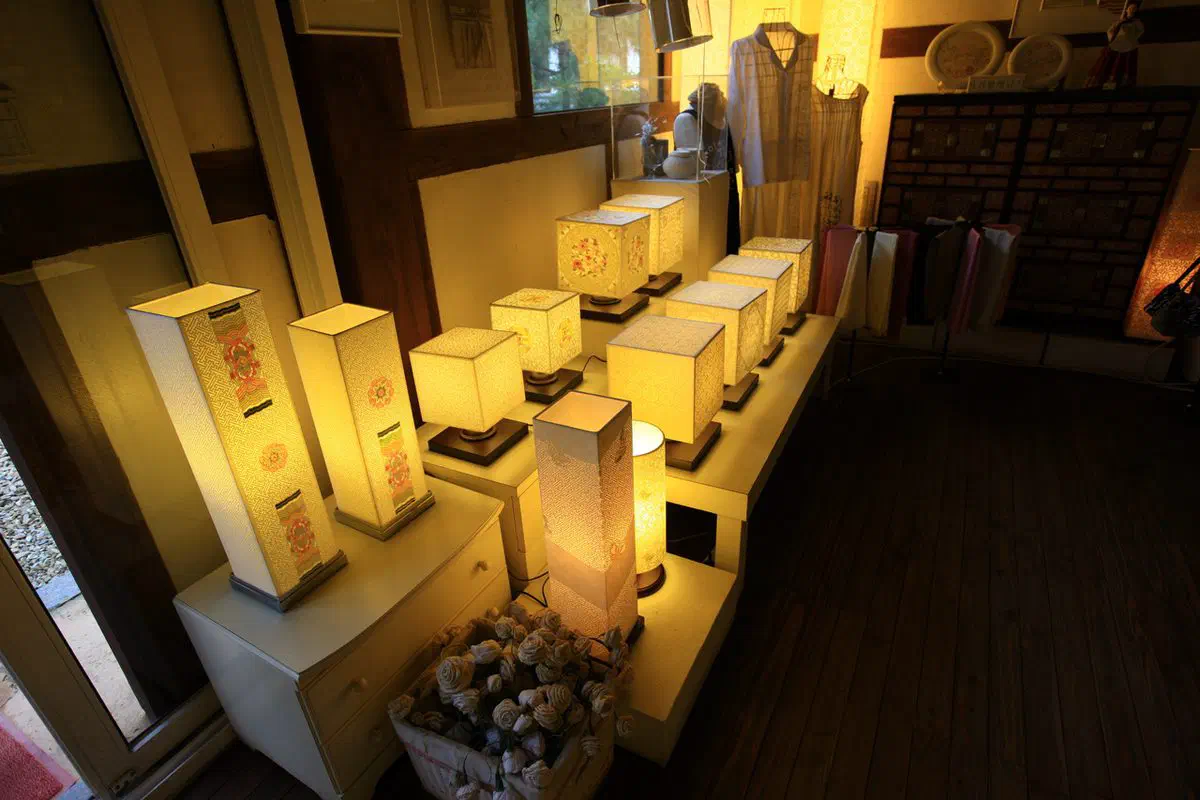
What hanji souvenirs actually are
Four categories cover most of what you will find on a shelf:
- 한지등 Hanji lamps
- Paper-shaded lamps and stand lights, patterned or plain — the most photographed hanji product
- 한지부채 Hanji fans
- Folding and flat fans, hand-painted or printed, some signed by a named maker
- 한지공예함 Hanji boxes
- Jewelry boxes and cases, often combined with najeon mother-of-pearl inlay
- 한지 문구 Hanji stationery
- Pen holders, cards and notebooks — the cheapest entry point
None of this is what the paper piece covers — raw oebal sheets bound for conservation work. These are finished consumer goods, made from hanji rather than being hanji.
What it actually costs
A real shelf, read across two Insadong retailers on 4 September 2026:
The spread is wide. A pen holder and a fine stand lamp are not the same purchase. But the shape of it holds: lamps cost the most because they combine the most labor — a wooden or wire frame built and papered by hand — while a fan or a pen holder is closer to pure paperwork.
Boxes are a special case. The najeon-inlaid ones sit in the same price band as a mid-range lamp because you are buying two crafts at once — the paper box and the mother-of-pearl set into it. If najeon on its own interests you, a hanji-najeon box is where the two crafts actually meet on one shelf.
Where to actually buy it
Seoul: Insadong. The Korea Craft Center (한국공예관) and the Central Craft Hall (중앙공예관) are the two shops worth naming — both carry lamps, fans and boxes as their actual stock rather than tourist overflow, and both are a short walk from the craft workshops covered elsewhere on this site. If you are already in Insadong for a class, the finished goods are on the same street.
Jeonju: two different stops, not one. Jeonju Jeontong Hanjiwon (전주전통한지원), in the hanok village, sells hanji directly — calligraphy and craft paper plus specialty variants like ochre-infused and charcoal paper, sold as material rather than finished objects. The Jeonju Hanji Museum (전주한지박물관), separately, runs a Hanji Living Hall (한지생활관) built specifically around finished household goods — this is where the lamps and boxes are, not at the paper shop. Conflating the two on a short Jeonju visit is the easy mistake to make.
If you are choosing between the two cities for this specifically: Seoul is faster if hanji is one stop among several, and Jeonju is worth it if you want to see the range in one place — the Jeonju hanok village puts the museum, the paper shop and several workshops within the same afternoon.
Buying from home
If a Korea trip is not on the calendar, hanji goods on Etsy covers lamps, fans and stationery from Korea-based sellers, though listings rarely name a specific maker or region the way an Insadong shop clerk will if you ask.
Check what you’re actually buying. A printed-pattern lamp shade and a hand-layered one look similar in a photo and are not the same object — ask, or look for a listing that says which.
What travels, and what does not
Hanji goods are, almost across the board, the safest category in this entire site’s souvenir shipping guide: flat or foldable, light, and hard to break even carried loose in a bag.
Lamps are the one exception worth flagging. A rigid frame under paper shading does not fold the way a fan does, and a stand lamp bought in Jeonju means either checked luggage with real padding or accepting it will not be this trip’s souvenir. Fans, boxes and stationery all pack flat without the problem.
A Korean eSIM is worth sorting before an Insadong or Jeonju shopping afternoon — alley addresses defeat Google Maps in both districts, and our eSIM comparison covers which one to buy.
Quick answers
What's the cheapest real hanji souvenir?
Why are hanji lamps more expensive than hanji fans?
Where in Jeonju do I buy finished hanji goods, not just paper?
Do hanji lamps survive being packed in a suitcase?
Checked 4 September 2026. Hanji goods and pricing read directly from two Insadong retailers’ own listings — the Korea Craft Center (korea-craft.com) and listings at insadong27.com. Jeonju Jeontong Hanjiwon’s product range and the Jeonju Hanji Museum’s Hanji Living Hall from the venues’ own materials and Korean-language visitor reporting. Prices and stock at small retailers change — confirm before you travel or order.