Korea House: A Heritage Shop Inside Seoul's Old Guesthouse
Last verified: 2026-10-08. Rules and prices change — always confirm on the official site before you travel.
This page contains affiliate links. If you book through them we may earn a commission at no extra cost to you. It never changes what we recommend.
Most museum gift shops sell you a reproduction and send you out the door. The shop at Korea House is the way into a hanok compound, and after it you can keep walking: past a long tiled hall, a courtyard with a pavilion, and a terrace of dark clay jars. It stands in Pil-dong, up the slope from Chungmuro Station and beside Namsangol Hanok Village.
The compound began in 1957 as a state reception house for foreign and domestic guests, an old diplomatic space of sorts. It was reopened in March 2026 after a renovation. We went this autumn, stopped at the shop and then walked through the grounds.
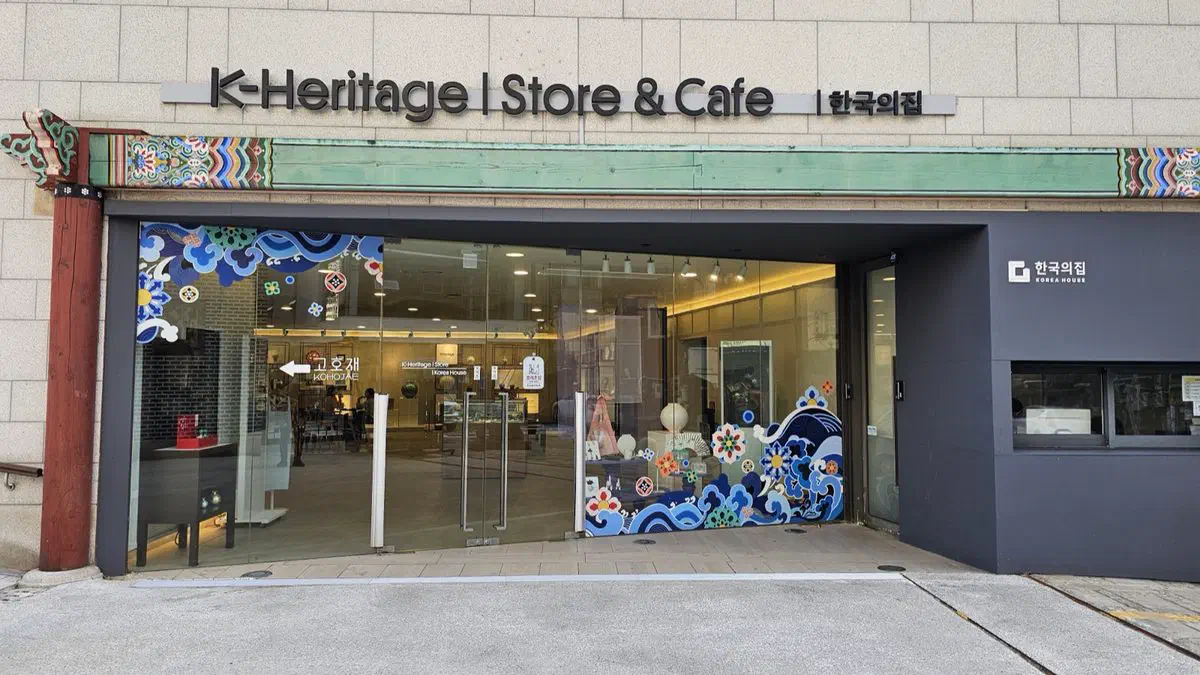
- What
- A heritage-craft shop and tea room, in front of a hanok compound that was Korea’s state guesthouse
- Where
- 10 Toegye-ro 36-gil, Pil-dong, Jung-gu, Seoul — beside Namsangol Hanok Village
- Shop hours
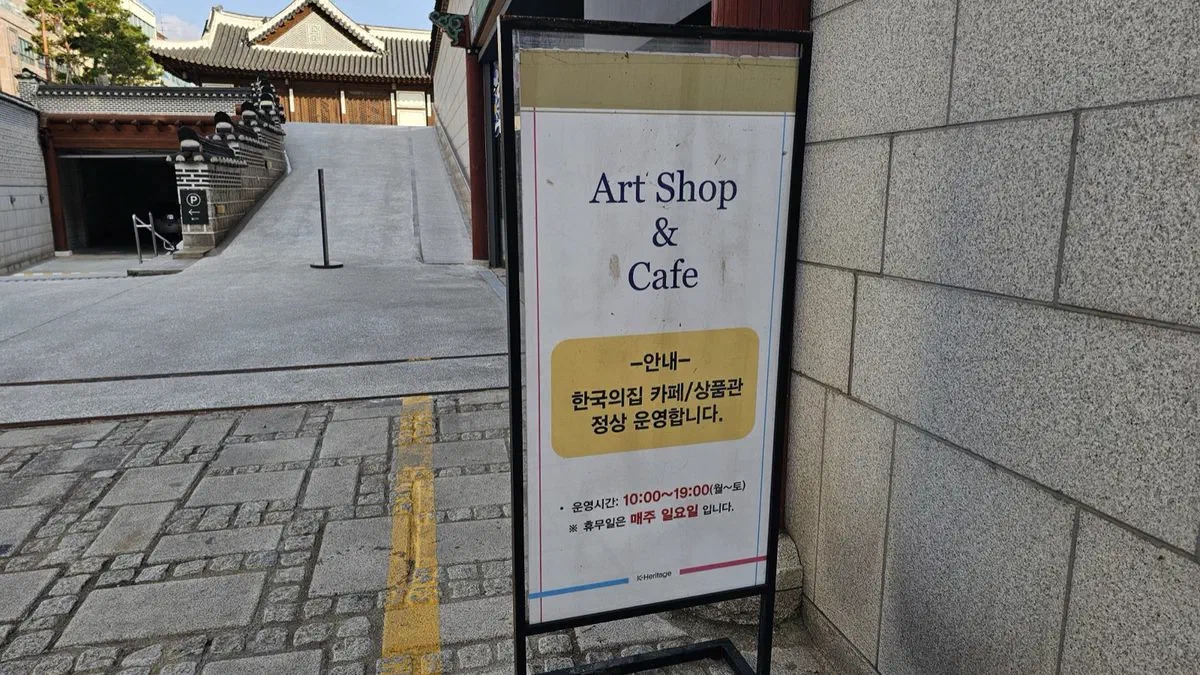
- 10:00–19:00, Monday to Saturday, closed Sundays (from the sign at the door)
- Before you go
- The shop’s number is 02-2270-1190. We did not find a published rule on walking the grounds without a meal
- Prices
- We did not photograph or note any, so this page gives none
What Korea House is
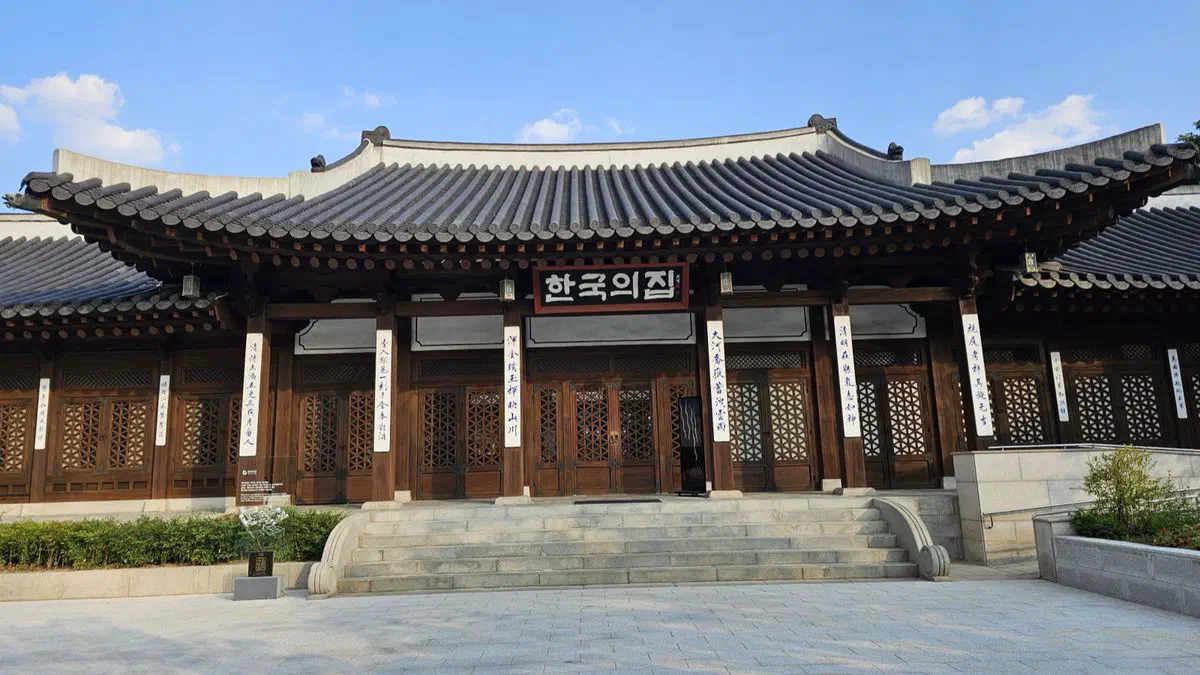
A glass plaque in front of the main hall tells the story in two lines, in Korean and English. Korea House was established in 1957 as a government reception for distinguished domestic and international guests visiting Korea, and it is now one of the country’s representative cultural venues where visitors can experience traditional Korean culture.
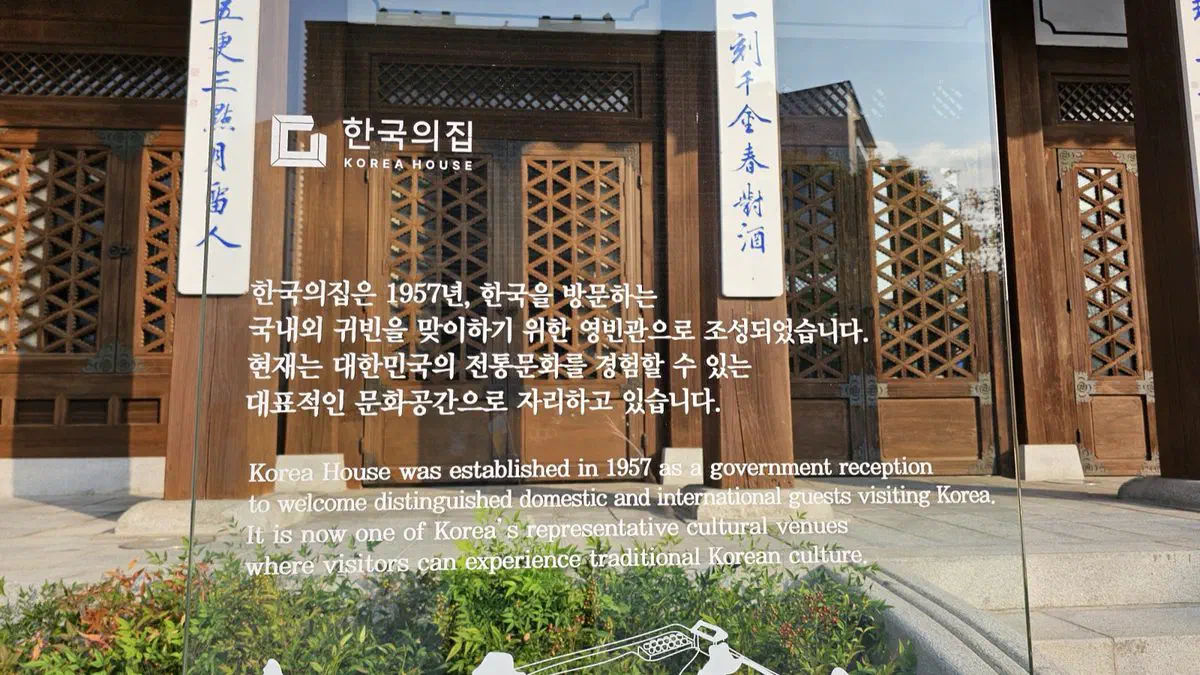
A few more facts, from the published sources listed at the foot of the page.
- The buildings date mainly from 1981. A history blog quoting the house’s own English text says it was modeled on Gyeongbokgung’s Jagyeongjeon, renovated between 1978 and 1980, and reopened in 1981 under the Korea Cultural Assets Preservation Foundation (now the Korea Cultural Heritage Foundation). Korean Wikipedia says the master carpenter Shin Eung-su built it in 1980. We found that carpenter’s name in no other source, so treat it as a lead.
- The ground has an older owner. The same Korean Wikipedia entry says the site was once the house of Park Paeng-nyeon, one of the Joseon scholars of the Hall of Worthies executed in 1456 (the “six martyred ministers”). We did not see a marker for him at the shop.
- Today it is run by a state heritage body. Korean reports on the March 2026 reopening name the National Heritage Promotion Agency (국가유산진흥원), under the Korea Heritage Service, as operator since 1981.
- The March 2026 reopening was the first big renovation in 45 years. The house shut for about eight months. The main hall, the annex houses and the garden were redone, and kitchen routes were separated from guest routes. The reopening also brought new branding based on the hanok layout.
The shop
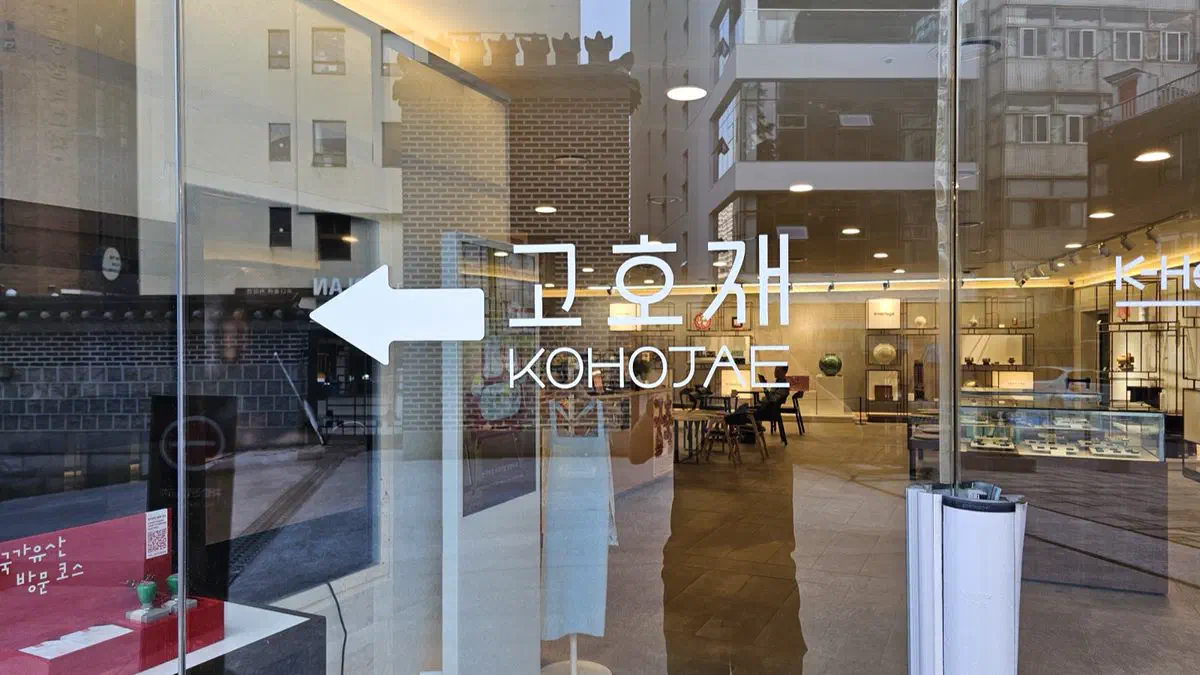
The shop is the part you can walk into without booking. Its sign, a sandwich board on the slope outside, reads Art Shop & Cafe, and tells visitors that the cafe and goods hall are “operating as normal”, with hours of 10:00 to 19:00 Monday to Saturday and Sundays closed. The board is the only hours source we have for the shop.
Through the glass, the front of the shop is a single bright room with display cases and a few tables. The Korea Trip Tips tourism listing names the shop under its older title, Korea House Sarang Cafe & Art Shop, and describes what it sells: traditional-culture goods the heritage agency develops itself, using traditional motifs and craft techniques. The categories it names are ceramics, najeon lacquer, hwagak (horn-painted) craft, hanji craft, textile craft, jade, ottchil lacquer and woodwork, and metalwork.
What we could see in the window on the day:
- a painted folding fan with a green-and-gray pattern
- a white moon jar (dal-hangari) on a plinth, and a smaller white vase or cup beside it
- ceramic tiger figures, a lucky motif in Korean folk painting
- tassel charms hung from card, in the norigae style
- small painted boxes with plants drawn on them, and a dark beaded bag
- a pink cloth bag, and a mug
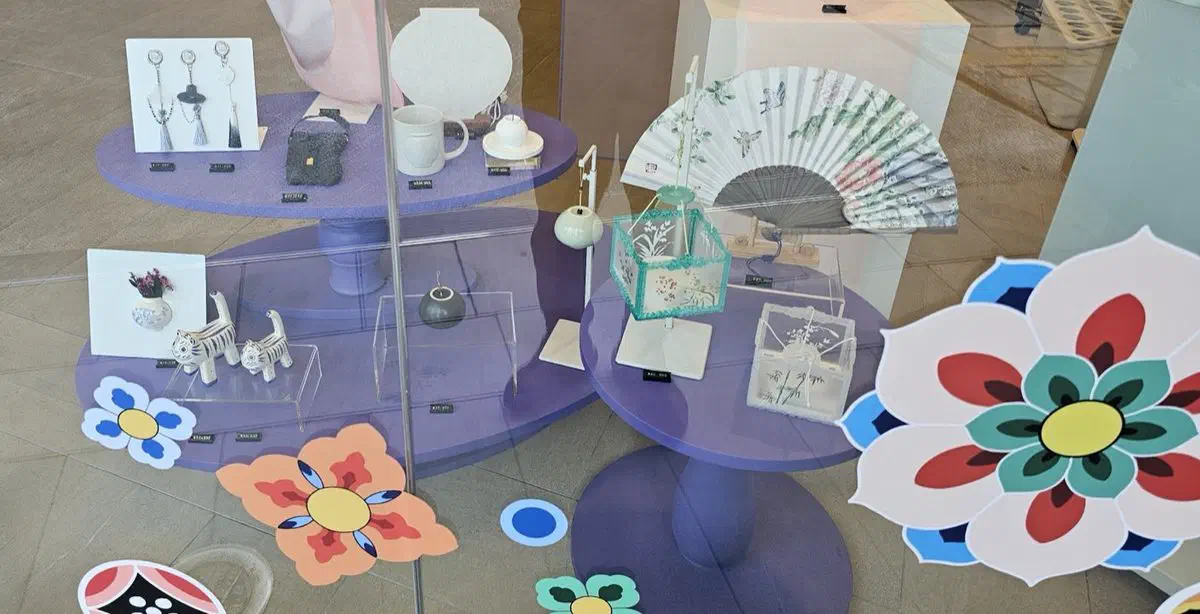
We did not note prices, and the small tags in the window are not legible in our photograph. If cost matters, ask at the counter before you plan around it.
Kohojae, the tea room
An arrow on the glass door points to Kohojae (고호재), the tea and confectionery room. The same listing explains the name: it is Korea House’s premium court-sweets brand, and the name means roughly “the house of people who love old things”. The listing describes a tea set on a single-person tray, with rice cakes and hangwa (traditional sweets) made from seasonal ingredients. We did not sit down, so we cannot tell you how it tastes or what it costs. The March 2026 reports say the house plans to expand Kohojae and develop more tea products and to-go items.
How it compares to the museum shops
If you read our guide to Seoul’s souvenir districts, this shop sits in the “one stop that isn’t a neighborhood” slot next to the National Museum’s MU:DS shop. The difference we saw is the setting. MU:DS sells pieces inspired by the museum’s own collection, inside a museum. This shop sells goods the heritage agency develops itself, in front of a working hanok compound. Both share the same constraint, and our guide to what ships abroad explains it: we did not find an overseas storefront for this shop, so if something catches your eye, that is the moment to buy it.
The walk through the grounds
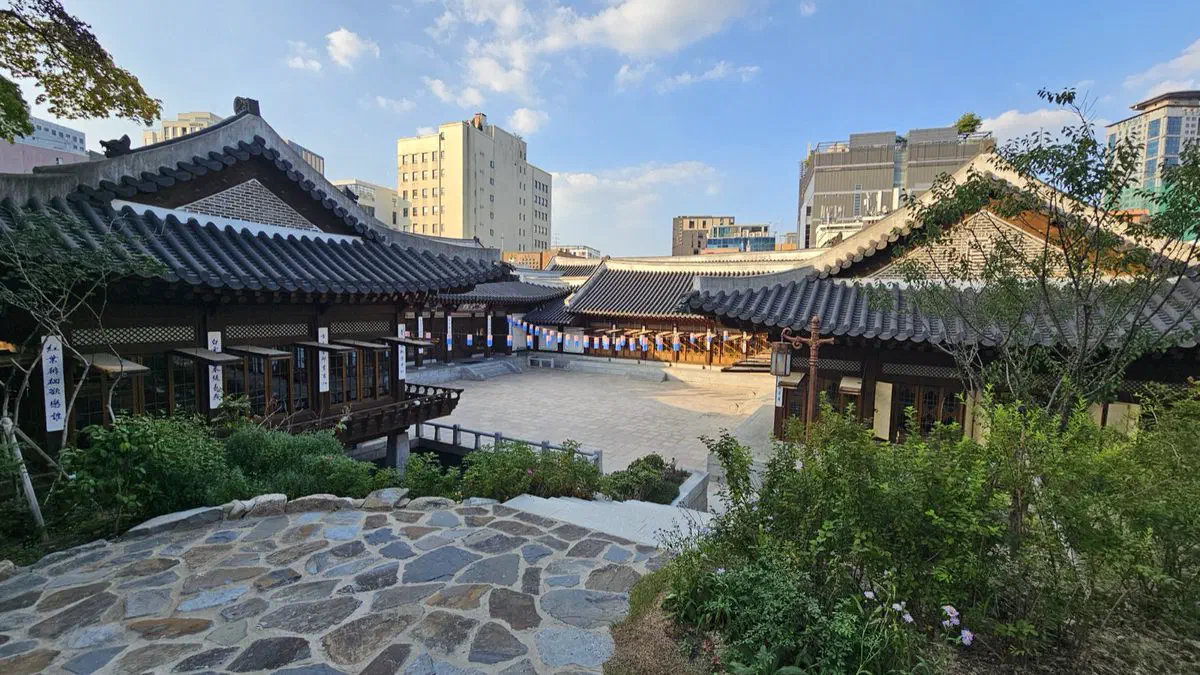
After the shop we walked on through the grounds. This is the photograph from the courtyard, looking down on the roofs.
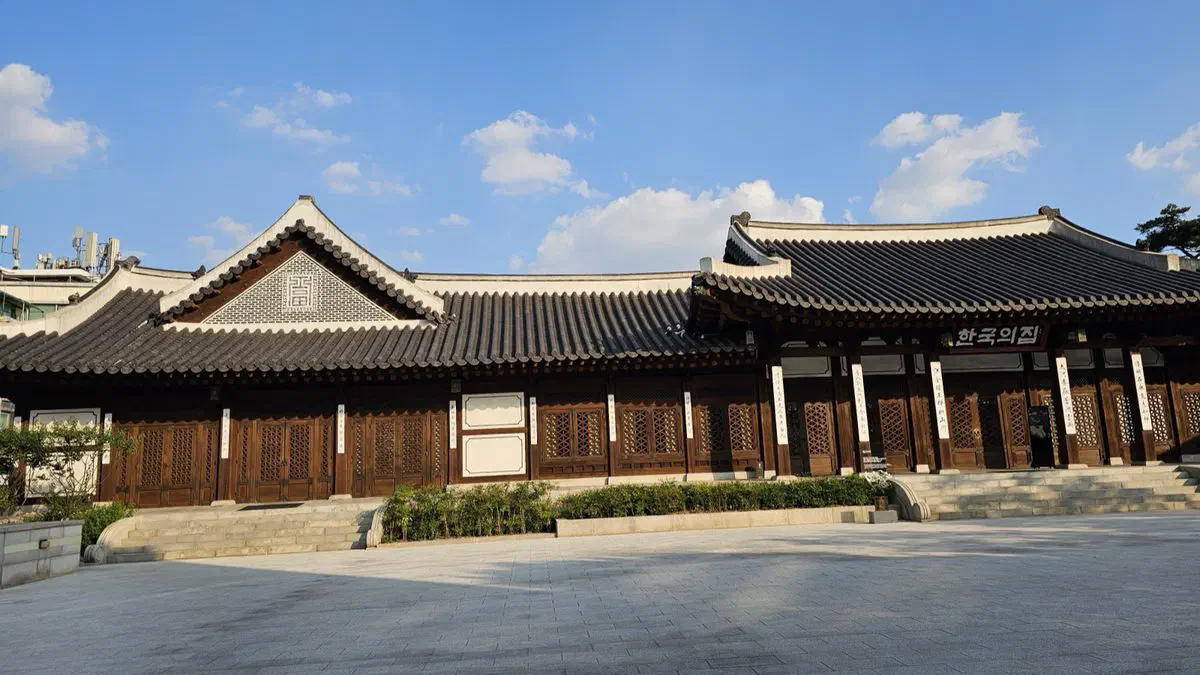
The main hall runs long and low. Its lattice doors are dark wood, and white couplets in ink hang on its pillars, as in a house meant for receiving guests.
Up the slope, a raised wooden pavilion stands among trees. Its plaque appears to read Cheongujeong (聽雨亭), “listen-to-the-rain pavilion”, which matches the name of a ten-person annex in the March 2026 reopening report. We read it from a photograph, so check it on site.
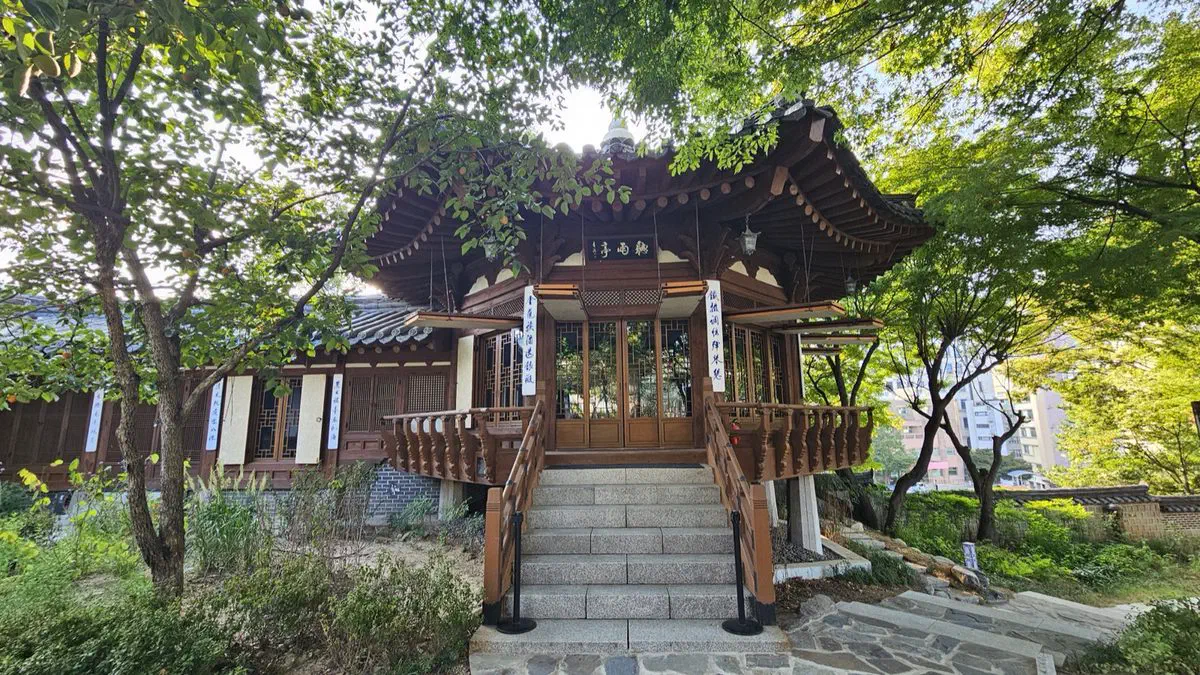
Lower down, the smaller houses have paper-covered shutters hooked open. They look like the dining annexes the reopening report describes: a ten-person Cheongujeong, a ten-person Nogeumjeong, and Ugeumheon, with rooms for six and for two. We cannot match each photograph to a name.
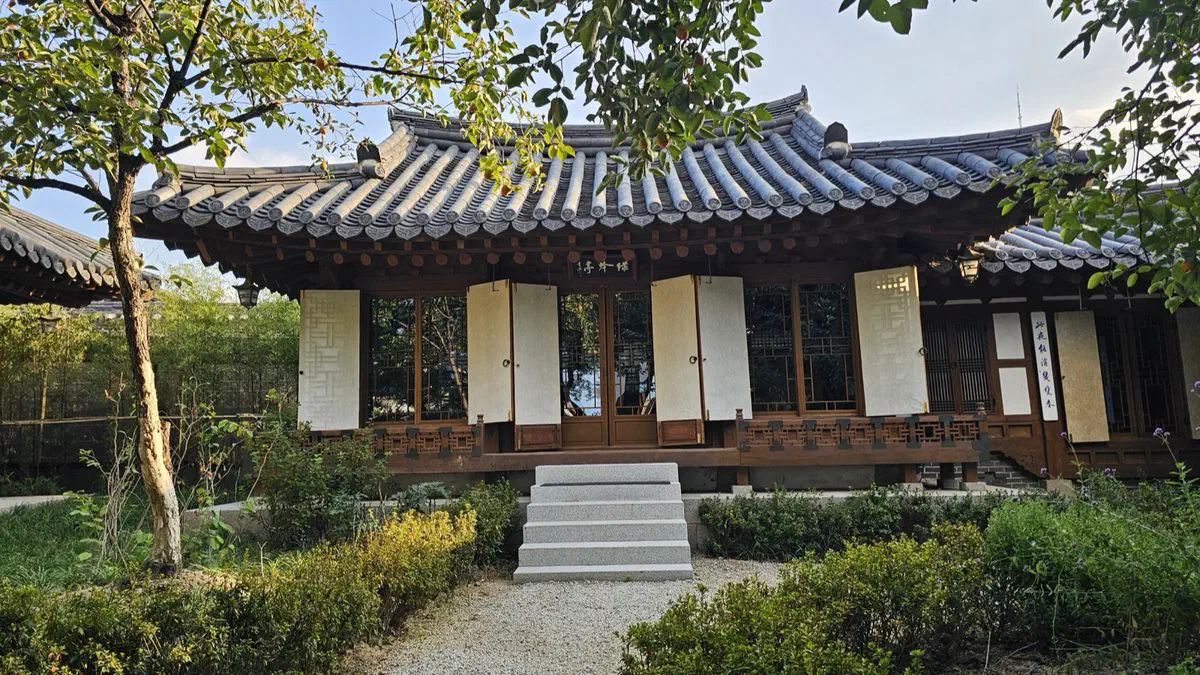
The details were what stayed with us.
- A terrace of clay jars. Dark onggi jars stand on a stone platform beside a gate, the kind used for soy sauce and pastes. It is a hanok-garden fixture; see our guide to onggi for how they work.
- A fish-shaped wind chime. A small metal fish hangs from the corner of an eave, a common ornament on Korean temple roofs.
- Small gates in gray brick walls, each with a tiled roof.
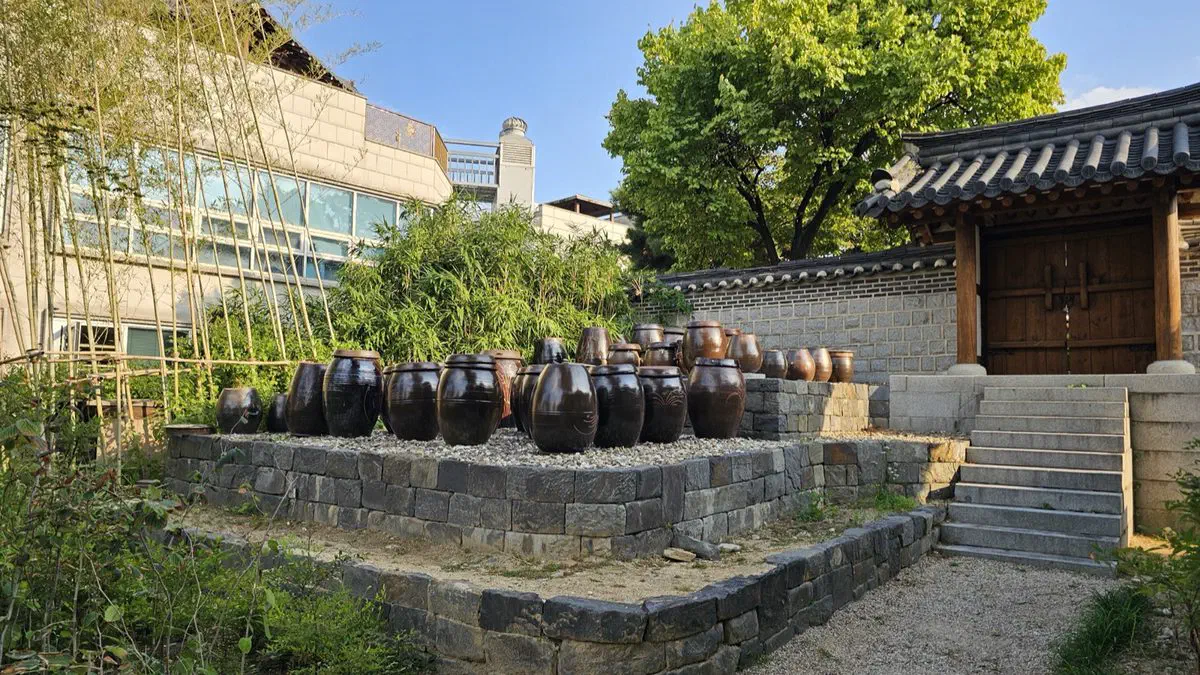
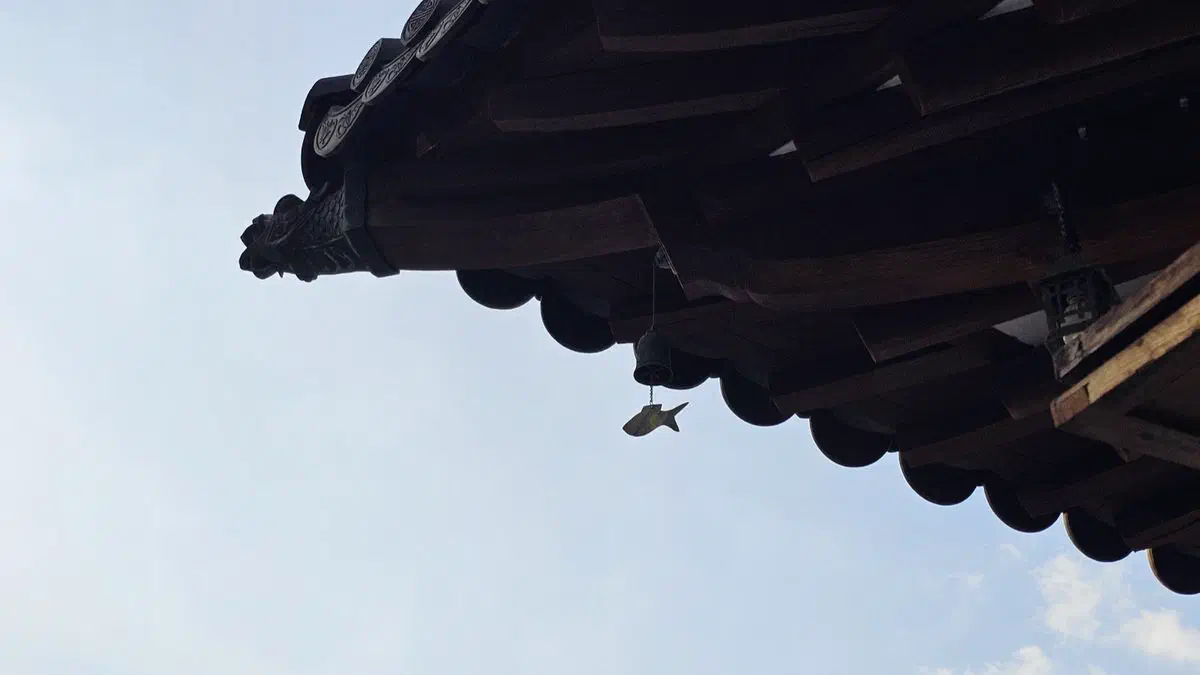
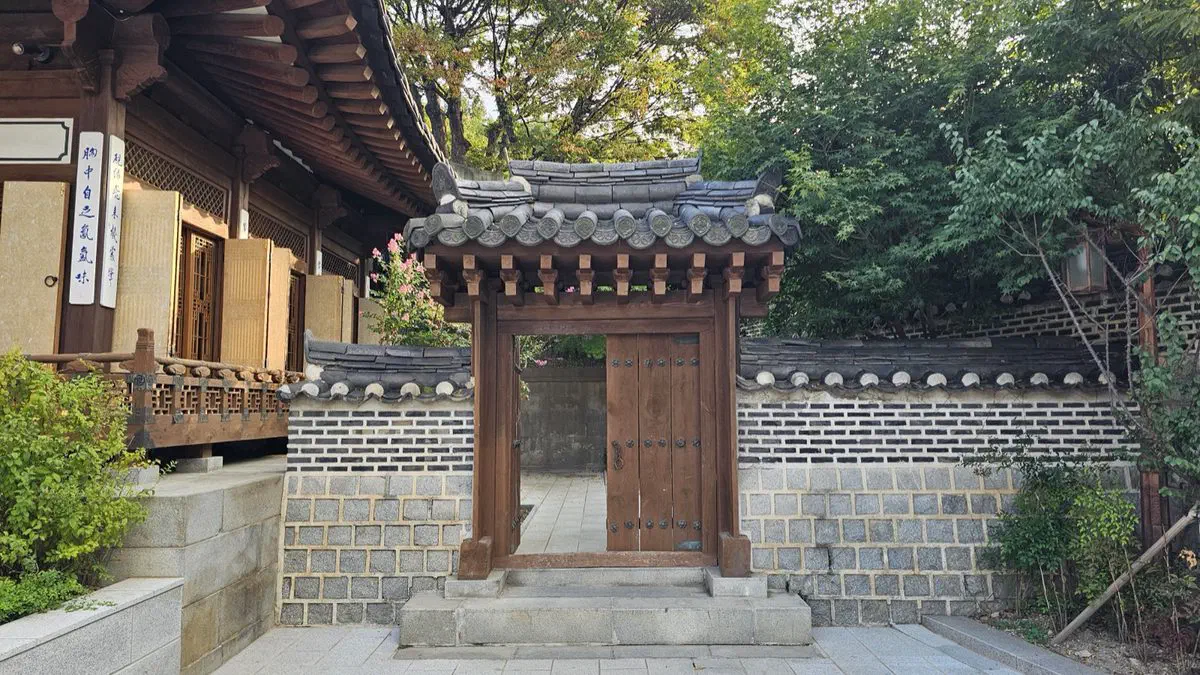
One caution. Parts of this compound are dining rooms and a venue for weddings and private events. We did not find a published rule on whether people who are not dining may walk the grounds, or when. We walked through after visiting the shop. Check at the counter, keep to the paths, and do not step into the annexes.
The restaurant and the performances
Korea House is better known as a restaurant. The Korea Trip Tips listing describes a court-cuisine tasting course based on Joseon palace and gentry food, and the March 2026 reopening report adds a spring menu built around jongeo, a native freshwater fish once served at the royal table. The same report says the restaurant earned the top Blue Ribbon Survey rating last year and has been on the Seoul Mishik 100 list for two years running.
The listing also describes a traditional dance troupe, founded in 1981, attached to the house. We saw neither a meal nor a performance, and we found no published prices. The listing gives reservation numbers: 02-3011-9200 for the restaurant and Kohojae, and 02-3011-9270 for performances. It also gives hours for the house of 10:00 to 22:00 and says it is closed Sundays and Mondays and over Seollal and Chuseok. That differs from the shop’s own sign, so phone before you plan a meal.
Getting there
- Train: Chungmuro Station, Lines 3 and 4. Seoul city’s tourism pages give exits 3 and 4 for the neighboring Namsangol Hanok Village, about a five-minute walk. Korea House is 0.1 km from Namsangol by OpenStreetMap coordinates, so expect a similar walk, uphill. We did not time ours.
- Next door: Namsangol Hanok Village is a free park of five relocated hanok. Check its hours before you go; Seoul’s pages give different ones.
- Also close (the same listing’s places within about 120 m): Namsan Gugakdang, a traditional-music hall, and the Seoul Millennium Time Capsule plaza.
A Korean eSIM keeps your map app working on the slope, where the lanes are narrow and the address is easy to overshoot. Our Seoul three-day plan fits a morning here before the palaces, and hanok stays in Seoul are the next step if the compound makes you want to sleep in one. Hanok stays in Seoul
Quick answers
Is Korea House open to visitors without a meal?
What does the Korea House shop sell?
What was Korea House originally?
Is there a ticket to walk around?
Can I ship what I buy?
How do I get to Korea House?
What is Kohojae?
Checked 8 October 2026. We visited the shop and walked through the grounds. Signs, plaques and the shop display described above are as we photographed them on the day. The history and facts around them come from published sources. The 1957 founding is from the plaque itself and from the Korea Trip Tips page on Korea House, which also gives the restaurant, Kohojae, performance and nearby-place information and the reservation numbers. The shop’s hours, address, telephone number and the list of goods are from its Korea House Sarang Cafe & Art Shop page, and match the sign at the door. The March 2026 reopening, the annex houses, the spring menu and the awards are from Newsis. The 1978–1981 renovation, the Jagyeongjeon model and the foundation’s takeover are from a history blog quoting the house’s English text. The Park Paeng-nyeon site and the Shin Eung-su detail are from the Korean Wikipedia entry, which is short and not sourced. The Namsangol station exits and five relocated hanok come from Seoul city’s tourism media pages and a second one. Distances are computed from OpenStreetMap coordinates.