Korean Ceramics: Why the Best Pieces Are Hardest to Carry
Last verified: 2026-08-14. Rules and prices change — always confirm on the official site before you travel.
This page contains affiliate links. If you book through them we may earn a commission at no extra cost to you. It never changes what we recommend.
Our shipping guide already warned that Korean ceramics are the category most likely to arrive home in pieces, without explaining why. Here is the why: the finest examples of Korean ceramics are built in a way that makes them large, thin-walled and occasionally seamed down the middle — and that is not a flaw. It is the same construction that makes them worth owning.
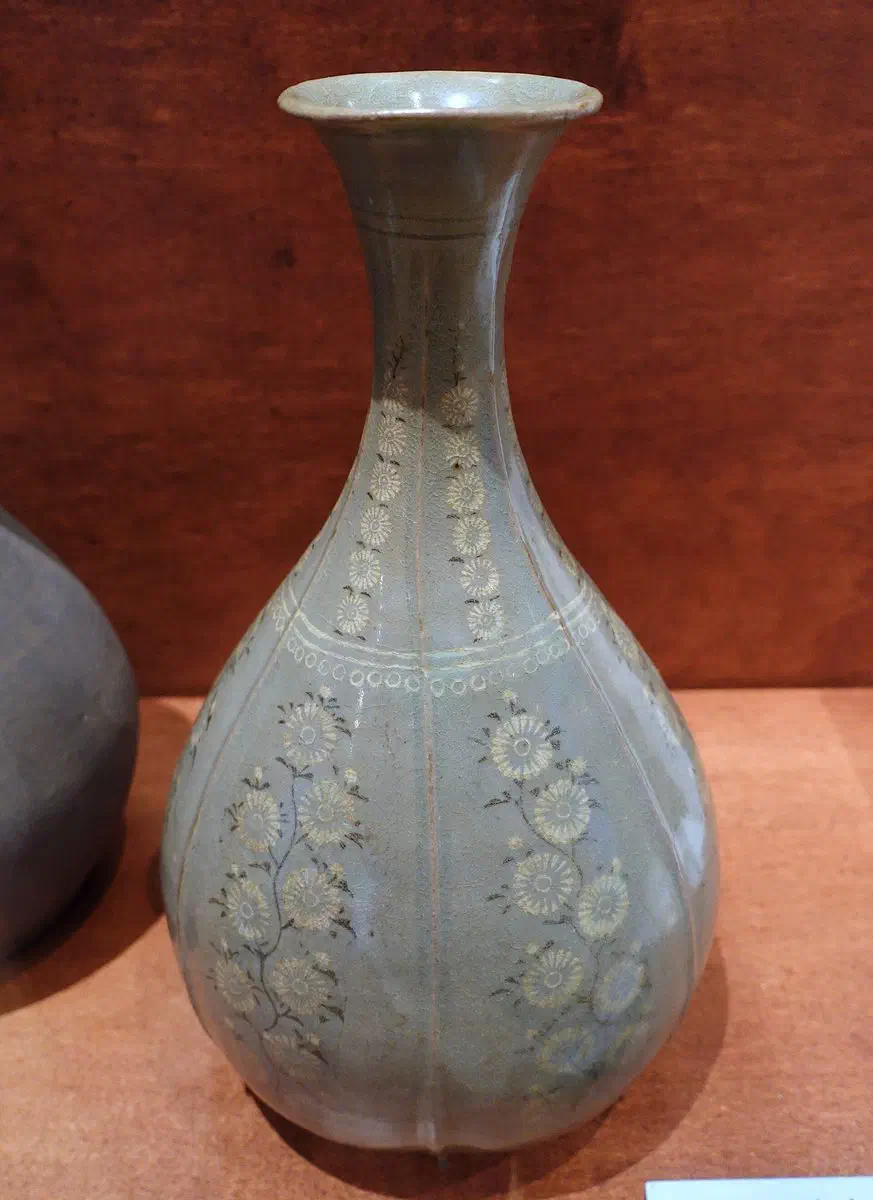
Three Korean ceramic traditions, three different problems solved
- **청자 Celadon**
- Goryeo dynasty (918–1392). Jade-green glaze, prized for a color called bisaek. Korea is the only civilization that combined inlay (sanggam) with celadon
- **분청 Buncheong**
- Early Joseon (1400s–1500s), a deliberate transition style. Celadon-body clay finished in white slip — looser, more casual than either neighbor
- **백자 Baekja**
- Joseon dynasty. Pure white body under clear glaze, no decoration on the finest pieces at all — restraint as the whole point
Sanggam inlay is worth pausing on, because it is a genuinely unusual technique: carve the design into the leather-hard clay, pack the carved lines with a contrasting clay — white, sometimes red — scrape the surface level, then glaze and fire over the top. Other cultures used celadon glazes. Other cultures used inlay. Goryeo Korea is the one place that put both techniques on the same object, and the white-on-jade-green result has no real equivalent elsewhere. The National Museum of Korea’s celadon gallery holds roughly 250 pieces, including twelve designated National Treasures, built specifically around explaining this technique rather than just displaying the results.
Why a moon jar can’t be small, symmetrical, or safe to ship
Baekja moon jars — 달항아리 — are the clearest case of the pattern this page is about. Korean baekja clay is strong and workable, but it does not hold up well to heat. Throw a piece this large in one go and it collapses or slumps in the kiln before the glaze can set.
The workaround — and the reason moon jars look the way they do — is to throw two shallow bowls separately, let them firm up, then join them rim to rim with wet clay before firing the whole thing as one piece. The seam usually stays faintly visible around the widest point. And because the upper half is heavier than the structure below it can perfectly support, most moon jars settle slightly out of true during firing rather than holding a perfect sphere.
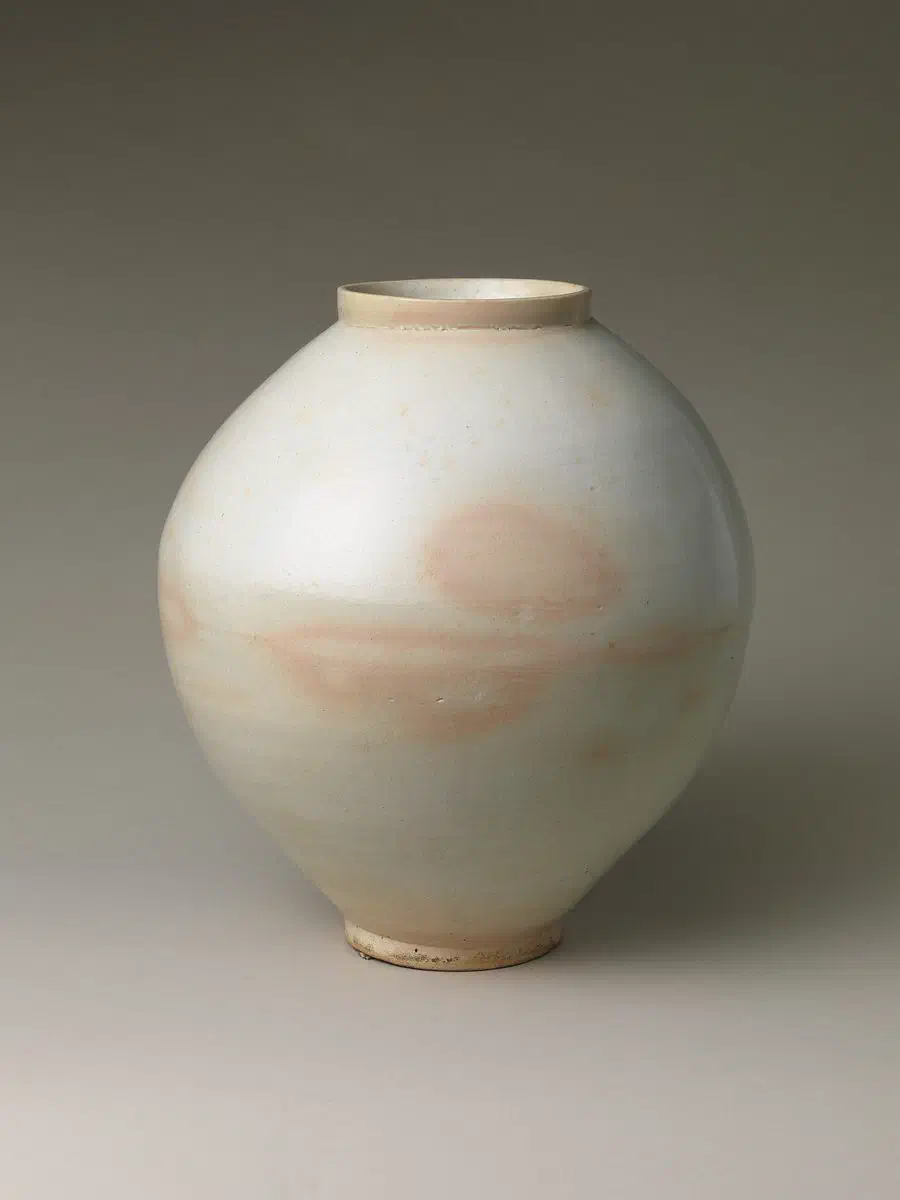
Collectors do not treat that asymmetry as a defect. It is what a real one looks like, and a mechanically perfect sphere in white porcelain is more likely to be a modern reproduction than a piece made the traditional way. Which is the actual point of this page: the construction that makes a moon jar authentic is the same construction that makes it large, thin at the widest point, and structurally a two-piece object held together by a fired seam. None of that survives careless packing. The National Museum of Korea keeps a dedicated moon jar display, if you want to see the seam in person before deciding whether you want one in your luggage.
Where to see Korean ceramics made
Sagimakgol Ceramics Village, on the edge of Icheon, is Korea’s only dedicated ceramics market street — around fifty galleries, studios and working kilns along one road, and the closest of Korea’s ceramic centers to Seoul.
Most studios sell finished work directly. Several also run wheel-throwing sessions: you make something, they fire it over roughly three weeks, and it arrives by domestic courier rather than in your luggage. That quietly solves the fragility problem this whole page is about, just through a different channel than buying a finished piece and packing it yourself. The Icheon Ceramics Festival runs for about two weeks each spring around late April, with open kilns and extra hands-on programs — worth timing a trip around if the dates line up.
What this means if you are buying
Small travels. Large does not. A celadon teacup or a small inlaid dish packs like any other souvenir. A large vase or a moon jar — thin-walled, occasionally two pieces held by one fired seam — is exactly the kind of object that makes the case for buying small rather than buying impressive.
Korean celadon on Etsy skews toward the safer end already — cups, small bowls, jewelry-scale pieces — which is one honest advantage of buying online rather than being tempted by the largest piece in an Insadong shop window. If you do want something large and are buying in person, ask the shop about export packing before you decide; a good shop that sells to tourists regularly will already have an answer.
Nearby
Sagimakgol is close enough to Seoul for a half-day trip rather than a dedicated one, unlike Oegosan Onggi Village or the tea regions further south. If ceramics interest you as objects rather than as a craft to watch, our craft titles guide covers how to tell a designated-master piece from a workshop one — the same question this page raises about moon jars applies just as much to celadon and buncheong. A Korean eSIM is worth having before the trip out to Icheon; the village itself is easier to navigate with a map than by asking around.
Quick answers
Is Korean ceramic asymmetry a flaw?
Why are large Korean ceramic pieces hard to ship home?
Where can I see Korean ceramics being made near Seoul?
What's the difference between celadon, buncheong and baekja?
Checked 14 August 2026. Definitions and periods for celadon, buncheong and baekja, and Goryeo’s unique combination of sanggam inlay with celadon glaze, from Korean historical and ceramics reference sources. The moon jar’s two-piece throwing method, the reason for it — Joseon baekja clay’s strength versus its low heat tolerance — and the resulting seam and asymmetry, from Korean ceramics scholarship on baekja construction. Sagimakgol Ceramics Village’s gallery count and status as Korea’s only dedicated ceramics market street, and its hands-on program pricing (₩20,000, roughly three weeks to fire and ship), from the village’s own listings. Icheon Ceramics Festival timing from recent festival records — exact dates move year to year, so confirm before planning around it. Etsy listing patterns for Korean celadon checked the same day.