Korean Green Tea: Why Boseong and Hadong Taste Different
Last verified: 2026-08-14. Rules and prices change — always confirm on the official site before you travel.
This page contains affiliate links. If you book through them we may earn a commission at no extra cost to you. It never changes what we recommend.
Korean green tea is not one thing with one flavor. Drink Hadong tea for a while and then try Boseong or Jeju, and — as tea buyers in the region put it — the second cup can taste almost thin by comparison. The difference is not marketing. It comes from three different mountains, three different plants, and in one case, thirteen centuries of history the other two do not have.
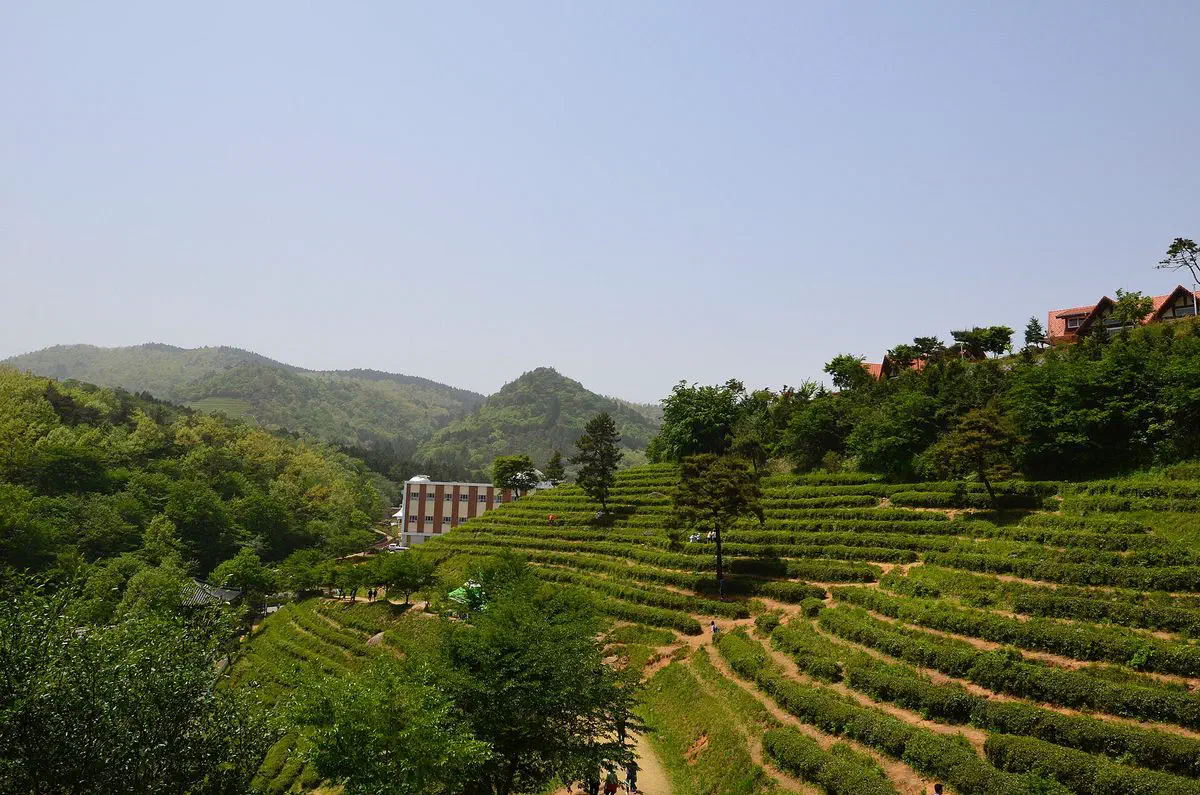
Korean green tea comes from three regions that do not agree on how to grow it
- **Hadong**
- Planted 828 CE, Korea’s oldest tea region. Native cultivars on steep Jirisan slopes — mountain terrain, hand-picked, machines mostly can’t reach it
- **Boseong**
- Industrialized under Japanese rule in the 1940s. Flat land, mixed cultivars, machine-harvested — Korea’s largest producer and its most photographed tea fields
- **Jeju**
- Newest, founded 1979 on volcanic wasteland. Japanese yabukita cultivar grown for consistency — the tea behind most Korean-tea brands sold abroad
The terrain decides more than the postcard. Hadong’s mountain slopes mean wide swings between day and night temperature. Sharp drainage. Fog that acts as natural shade. All three push the plant toward a stronger, more complex leaf. The steep ground also makes machines nearly useless, so pickers still work the slopes by hand. Boseong’s flatter land and milder swings favor volume and consistency over intensity, which is exactly why it industrialized first. Jeju skips the variation question entirely: growers plant a single Japanese cultivar in volcanic soil for a uniform result, rather than native varieties that taste different field to field.
None of the three is the “real” one with the others as copies. Each answers a different question. Hadong is character. Boseong is scale. Jeju is consistency.
Grades are decided by the calendar, not the leaf
When in spring pickers cut the leaf decides the grade of Korean green tea, and the anchor point is a solar term: 곡우 (Grain Rain), around 20 April.
Ujeon, picked before Grain Rain, is the most delicate — soft, mild, and priced for it. Each grade after that — sejak, jungjak, daejak — is picked later into May and gets stronger and more bitter as the leaf matures. The exact day-boundaries between grades vary by region and producer association, so treat the calendar as an order rather than a fixed table: earlier is gentler and pricier, later is stronger and cheaper, and 곡우 is the one date everyone agrees on.
Fermentation is a separate axis from grade
Grade says when pickers cut the leaf. Fermentation says what happened to it afterward, and it runs on a completely different scale:
- 녹차 Green tea
- 0% — steamed or pan-fired immediately to stop oxidation
- 황차 Yellow tea
- 10–25% — a shorter oxidation window than black tea
- 청차 Oolong-type
- 15–70% — a wide band, from lightly to heavily oxidized
- 홍차 Black tea
- 75%+ — fully oxidized, deepest flavor
A fifth category skips the oxidation scale entirely: post-fermented tea, aged by microbes after processing rather than by oxidation — the same basic mechanism as onggi fermentation, just applied to tea leaves instead of soybeans. Osulloc makes its own samdaryeon this way, using the same bacillus strains that traditional Korean soy fermentation uses. It is a small, specific category. Worth knowing it exists before you assume “Korean tea” means green tea by default.
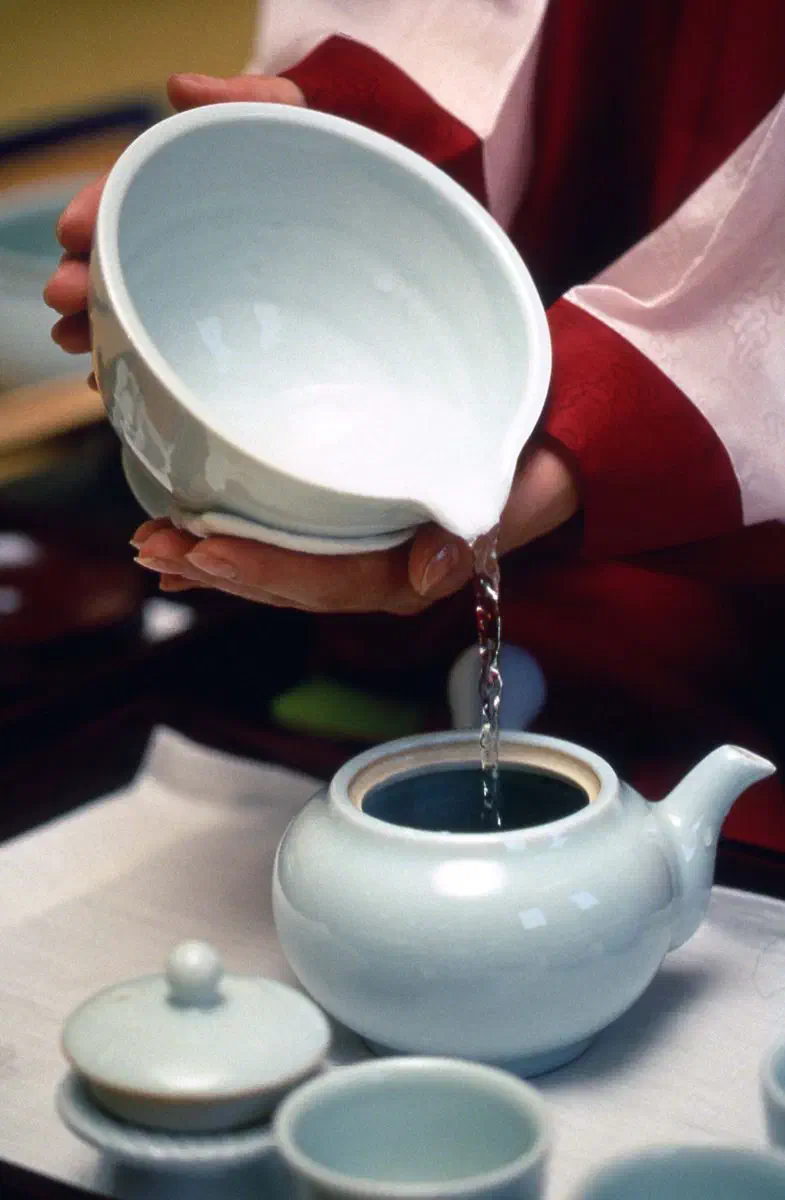
Korean green tea is one of the few souvenirs that actually survives a suitcase
This is the part worth knowing before you shop: tea comes dried, vacuum-sealed or tinned, and light. It sits close to the opposite of the celadon and ceramics our shipping guide warns you about — nothing to crack, nothing fragile, and airlines do not care about tea the way customs sometimes cares about fresh food.
Osulloc, Jeju’s largest producer, dominates Korean green tea on Etsy results, which actually helps buying with confidence. It is a real, checkable brand rather than an anonymous “traditional” claim. Matching the packaging confirms what you paid for, rather than guessing at a seller’s honesty the way craft buying sometimes requires.
Want Hadong or Boseong specifically, not just whatever a search turns up? Say the region in your search. Serious packaging names it, because producers know it matters to buyers who already know the difference.
Getting there
Early May is the busiest week Boseong has. The Boseong Tea Festival has run since 1975 and is Korea’s largest tea festival — tea-picking, tasting and the fields at their most photogenic, but also the fields at their most crowded. If quiet matters more to you than the festival atmosphere, aim for a different week; if the festival is the point, book well ahead.
Boseong and Hadong both sit far from Seoul and not near each other, so pick one rather than both on a short trip. Hadong sits near Busan — close enough to combine if you are already in the south — while Boseong is more isolated; intercity buses reach it, not KTX. Bring a Korean eSIM either way; rural bus schedules are the kind of thing you want to check on the ground, not guess at in advance.
Quick answers
What's the difference between Hadong and Boseong green tea?
What does ujeon mean on a Korean green tea label?
Does Korean green tea travel well in a suitcase?
What's the best-known Korean green tea brand?
Checked 14 August 2026. Regional history, cultivar and terrain differences between Hadong, Boseong and Jeju from Herald Business’s comparison reporting. Fermentation percentages for green, yellow, oolong-type and black tea, and the post-fermented category, cross-checked against Osulloc’s own glossary and general tea-industry sourcing. Grading terminology and the 곡우 anchor point from Korean tea-industry sources; exact day-boundaries between grades were not consistent across sources, so this page states the order and the anchor date rather than a specific day count. Etsy listing patterns for Korean green tea checked the same day.