Korean Liquor Shops in Seoul: Not Where You Are Staying
Last verified: 2026-08-24. Rules and prices change — always confirm on the official site before you travel.
This page contains affiliate links. If you book through them we may earn a commission at no extra cost to you. It never changes what we recommend.
Korean liquor shops in Seoul are easy to walk past and hard to find on purpose. You can buy alcohol in any convenience store, at any hour, so the obvious move is to grab a bottle of makgeolli off the shelf on the way back to the hotel. That is where the confusion starts.
Makgeolli is a drink. Jeontongju is a license
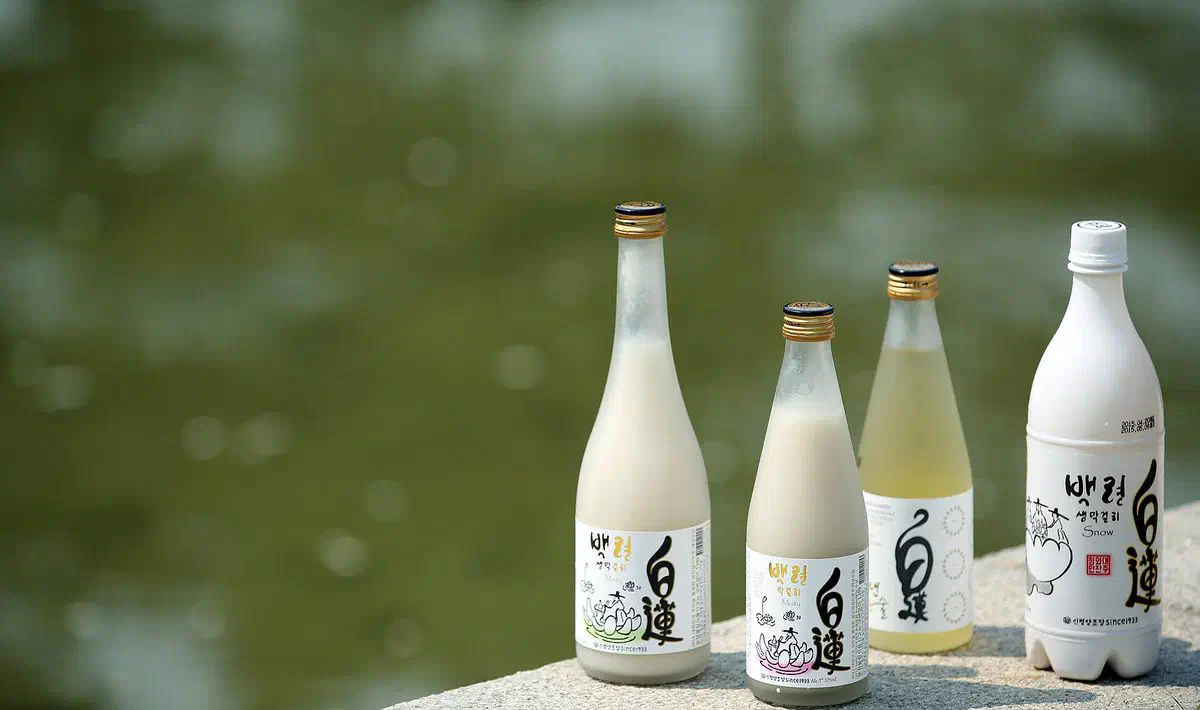
These are not the same kind of word, and English coverage collapses them constantly.
Makgeolli is a drink — cloudy, unfiltered rice brew. Jeontongju is a legal status that depends on who made it, not on what is in the bottle. Under the traditional liquor act it covers two groups: minsokju, made by a designated intangible-heritage holder or food master, and jiyeok-teuksanju, made by farmers from agricultural produce grown in their own region. Qualifying brings tax relief and, unusually in Korea, permission to sell online — the rule our traditional liquor guide works through in full.
So makgeolli can be jeontongju, and most of it is not. Jangsu, Jipyeong and Kooksoondang — the bottles stacked in every convenience store fridge — come from large producers and fall outside the category. A makgeolli from a three-person brewery using its own county’s rice is inside it. Same drink, different license.
The small-producer category is not marginal, either: shipments of jiyeok-teuksanju makgeolli reached 12,852 kilolitres last year, up 5% on 2024.
The convenience store sells jeontongju — just not off the shelf
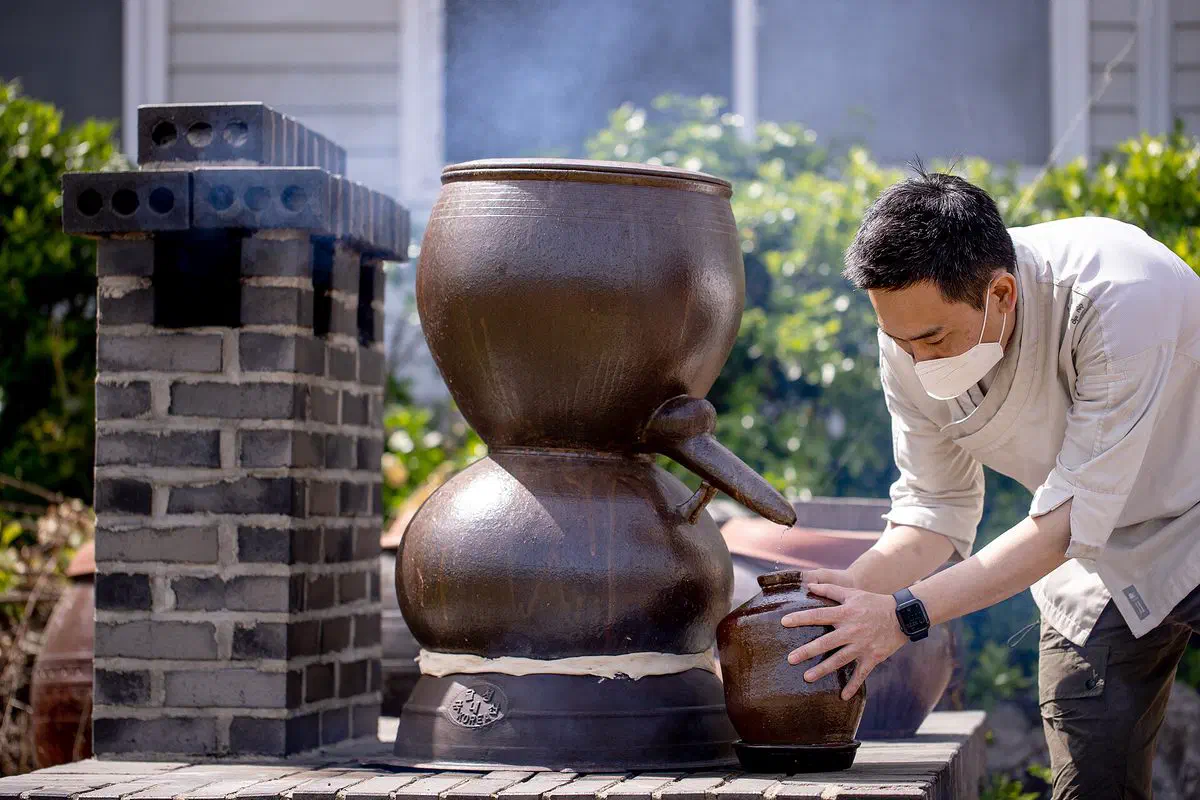
Here is the part that surprised us. GS25 runs a smart-order service called Wine25+, and it carries traditional liquor that never appears on the shop floor. You order in the app, choose a branch and a date, and collect in person. Seven Eleven and Emart24 run equivalents.
The catch is the app. It requires Korean adult verification before it will sell you anything, and collection is in person with ID, because that is what the smart-order rules demand. On a short visit without a Korean phone number that is usually a wall rather than a hurdle — but if you are staying long enough to have one, it is the least effort in this entire article.
For everyone else, the bottles worth carrying home are in specialist shops. Korean liquor shops in Seoul have multiplied over the past few years and several are very good. The catch is where they are.
Korean liquor shops in Seoul are where people live
Search Naver’s own business listings for 전통주 보틀샵 and the addresses that come back are Gaepo-dong, Junggok-dong, Oksu-dong, Seongsu. Those are residential districts. Myeongdong, Insadong and Hongdae — where most visitors sleep — barely register.
This is not an accident. These shops sell to people who buy a bottle on the way home from the subway, which means rent near a station in a neighborhood, not frontage on a tourist street. It also means the staff are used to explaining what they stock, because their customers ask.
So budget a subway trip. None of the below is more than half an hour from the center, and the trip is the price of not buying industrial soju.
Four shops, and what each is for
- Orange Bottle Euljiro
- 88 Euljiro, Jung-gu — Euljiro 1-ga station
- Aejoo Geumho
- 50 Maebong-gil, Seongdong-gu — Geumho station
- Urisool Dangdang
- 9-20 Wangsimni-ro 5-gil, Seongdong-gu — Seongsu
- Sool Market Gunja
- 515 Cheonho-daero, Gwangjin-gu
Orange Bottle, Euljiro branch is the one you can reach without planning your day around it — Euljiro 1-ga station, walking distance from Myeongdong. It is a general bottle shop rather than a traditional-liquor specialist, so the jeontongju sits alongside wine, whisky and sake, and the selection is narrower than the shops further out. Korean-language coverage from June 2026 says it closes at weekends, which would make it useless on exactly the days most visitors are free. We have not confirmed that with the shop, and a weekday visit avoids the question.
Aejoo Geumho sits in the basement retail level of an apartment complex at Geumho station, which is as unglamorous as it sounds and is not the point. It is run by a traditional-liquor sommelier, and Korean write-ups describe tasting tables where you try before committing to a bottle. That is the difference between buying a name you read somewhere and buying something you have actually tasted. Reported tasting hours are afternoon into the evening; treat that as indicative and check before traveling for it.
Urisool Dangdang is in Seongsu, which is the one neighborhood on this list that visitors already go to for coffee and concept stores. The name means roughly “our liquor, proudly,” and the shop is basement-level off Wangsimni-ro 5-gil. If you are spending an afternoon in Seongsu anyway, this is the one that costs you nothing extra.
Sool Market Gunja is furthest out and the most committed of the four — ground floor plus a basement on Cheonho-daero. Worth it if you have decided you want range rather than a bottle.
Taste first, and taste free
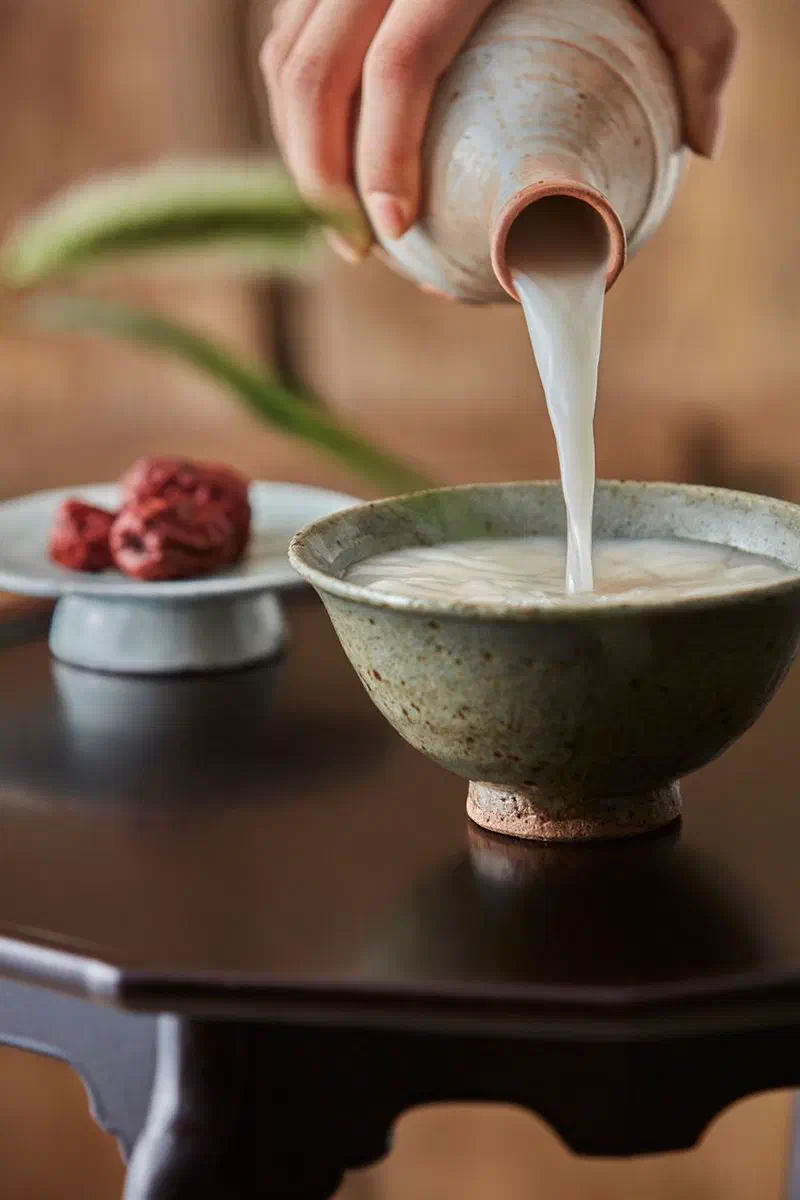
Before any of this, there is a free option that most guides miss entirely: the agriculture ministry’s Sool Gallery in Bukchon runs free tastings of a rotating selection, with sessions for foreign visitors in English. The same body runs thesool.com, the national register of Korean traditional liquor, which is where the producers behind these labels are listed. It is a hundred meters from Anguk station, which puts it in the middle of a normal sightseeing day rather than at the end of a subway line.
The traditional liquor guide covers how it works, what the legal categories on the label mean, and which bottles can be ordered online for hotel delivery, and the four ways to sort the shelf covers cloudy against clear and fermented against distilled. Read either first if you want to walk into a shop knowing what you are looking at.
The airport is a fallback, not a plan
Incheon duty-free stocks Korean liquor, and it is the right answer if you run out of time. It is the wrong answer if you wanted something specific: duty-free ranges are built around volume sellers, which is how you end up with the premium version of the industrial bottle rather than a small-producer yakju.
The constraint on the way home is your own country’s allowance rather than Korea’s. Spirits allowances are small almost everywhere, and the fine for guessing wrong costs more than the bottle.
Two practical things
These shops sign in Korean, sit in neighborhoods with no English wayfinding, and several are in basements or apartment-complex retail floors that Google Maps handles badly — Korean addresses defeat Google Maps for reasons worth understanding before you set out. Naver Map finds all four. A Korean eSIM is what makes Naver Map work on the walk from the station.
And if the appeal is the drink rather than the bottle, a brewing class at a working brewery puts you on the other side of the counter for an afternoon. You will not carry that one through customs, but you will understand what the nuruk starter does, which is the part that makes every label in these shops legible.
Quick answers
Can I buy jeontongju at a convenience store in Seoul?
Why are Korean liquor bottle shops hard to find in touristy Seoul neighborhoods?
What's the difference between makgeolli and jeontongju?
Is there a free way to taste Korean traditional liquor in Seoul?
Checked 24 August 2026. The jeontongju definition — minsokju and jiyeok-teuksanju, the two producer categories under the traditional liquor act — and the 12,852-kilolitre shipment figure from Korean trade coverage of the sector, August 2026. Convenience-store smart order confirmed against Korean retail coverage and the Wine25+ ordering flow, which requires adult verification in the app and collection in person. Shop names and street addresses verified against Naver’s business listings, which is the register these shops maintain themselves. Neighborhood pattern drawn from those same listings — the concentration in residential districts is visible in the addresses. Opening hours and the weekend-closure report for Orange Bottle Euljiro come from Korean blog coverage dated June 2026 and are marked above as unconfirmed; shops of this size change hours without announcing it in English. Sool Gallery details from the traditional liquor guide, sourced there.