Oiljang: Korea's Five-Day Markets, and How to Find One
Last verified: 2026-09-18. Rules and prices change — always confirm on the official site before you travel.
This page contains affiliate links. If you book through them we may earn a commission at no extra cost to you. It never changes what we recommend.
Gwangjang Market runs every day. Most of Korea’s markets historically didn’t. Gwangjang is a permanent, daily market — Korea’s first, in fact — but the older, more regional tradition is the oiljang (오일장), a market that only opens every five days, on a fixed rotating schedule. It’s a different shopping experience aimed at local residents rather than tourists, and one Korea’s own tourism board already promotes internationally at its best example.
How the five-day cycle actually works
Every oiljang is assigned one of five schedule “families,” each defined by a pair of calendar-date digits: 1 & 6, 2 & 7, 3 & 8, 4 & 9, or 5 & 10 (0). A market on the “2 & 7” cycle opens on the 2nd, 7th, 12th, 17th, 22nd and 27th of every month — no exceptions for weekends, since the cycle runs on the date, not the day of the week. Neighboring towns in the same region are deliberately assigned different digit pairs, which historically let traveling merchants — bobusang, itinerant peddlers — hit a different town’s market on almost every calendar day. Check a specific market’s digit pair before visiting; there’s no single national live calendar, but county tourism pages state their own market’s fixed schedule directly.
Jeongseon: the one already built for visitors
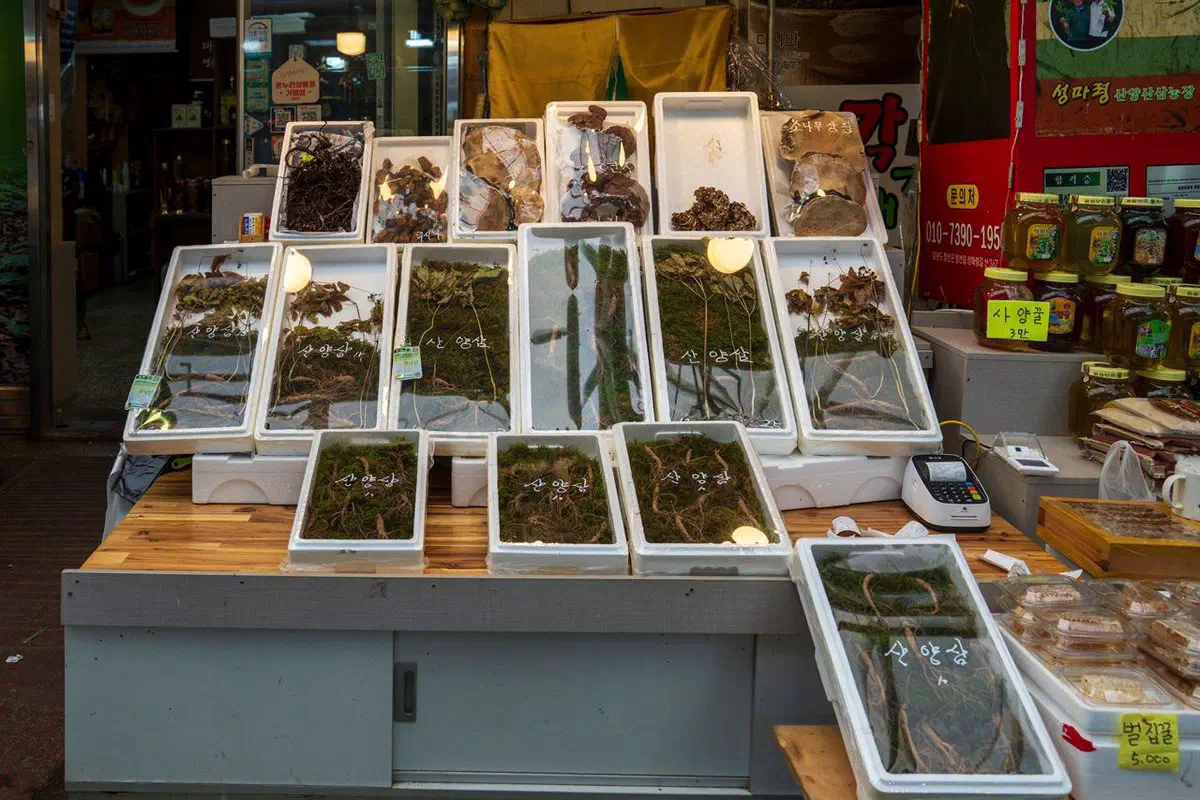
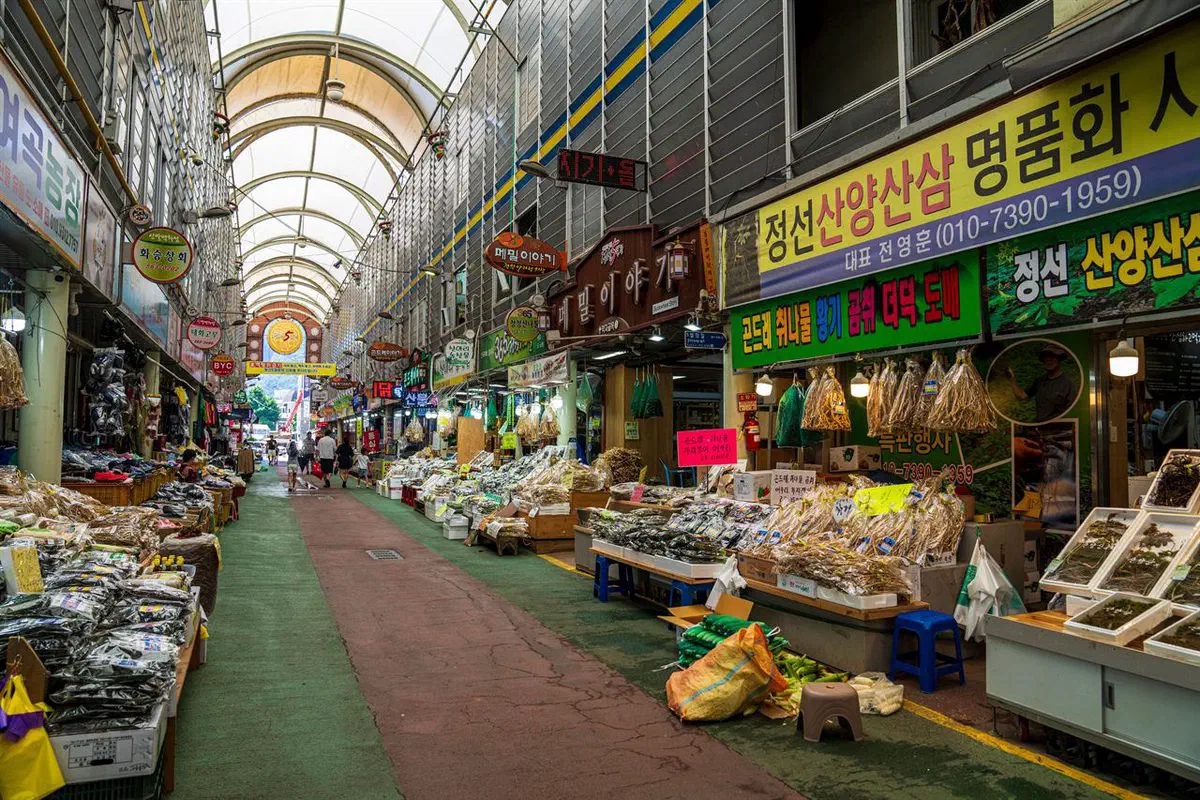
Jeongseon Market, in Gangwon-do, runs on the 2 & 7 cycle and is the clearest case of an oiljang that’s become a real, promoted attraction rather than a purely local errand. Korea Tourism Organization named it a “Korea Tourism Star” in 2012, and Seoul connects to it directly by the Arirang tourist train (A-train), running since 1999, packaged with a city tour and a folk-opera performance. The market’s specialty is genuinely worth traveling for: mountain vegetables and medicinal roots — astragalus, angelica, Japanese spikenard — sold alongside herb-infused liquors, by vendors who grew or foraged what’s on the table. It’s roughly 2.5–3 hours from Seoul, not a casual half-day trip, but it’s the one oiljang on this page built for a visitor who’s never seen one before.
If you don’t want to leave a city at all: Busan’s three
Busan runs three separate five-day markets inside its own metro area, each on the Line 1 or Line 3 subway:
- Gupo Market
- 3rd & 8th | Deokcheon Station (Line 3) · covered, weatherproof layout
- Hadan Market
- 2nd & 7th | Dangni Station (Line 1) · riverside produce and seafood
- Nopo Market
- 2nd & 7th | Nopo Station (Line 1) · secondhand clothing, bags, flowers — not food
None of the three has Jeongseon’s tourism-board polish, but all three are subway-accessible, which makes them the easiest way to see a genuine oiljang without planning a special trip — if you’re already in Busan for Taejongdae or the coast, any of the three is a short detour.
What’s actually different from a daily market
Oiljang vendors skew toward older local residents selling what they grew, caught, or made themselves — produce, grain, herbs, everyday clothing, tools — aimed at weekly household shopping rather than souvenirs. That’s a real contrast with Gwangjang, which has built its business model around food tourism and travelers. Two practical notes: bring cash. Small rural-market stalls lean cash-first even in a country where cards work almost everywhere else, and handing over payment with both hands is the polite norm at any Korean market stall. Printed price tags aren’t really up for negotiation, but where there’s no tag, some bargaining is culturally normal — just don’t walk away from a price you’ve already agreed to.
A Korean eSIM is worth having before a trip like Jeongseon’s — checking whether today is actually market day, and finding the A-train schedule, both go smoother with live data than with a plan made the night before.
What does "oiljang" mean?
How do I know if a specific oiljang is open today?
Which Korean five-day market is best for a first-time visitor?
Are there five-day markets inside a major city, not just rural areas?
Checked 18 September 2026. The five-day scheduling mechanism from Korea Heritage Service’s Korean Heritage webzine. Jeongseon Market’s 2012 Korea Tourism Star designation, founding year and specialty products from Jeongseon County’s official tourism page and VisitKorea. Busan’s three markets, their schedules and subway access from Visit Busan’s official English page. Market-etiquette guidance reflects general Korean traditional-market norms rather than oiljang-specific sourcing. Schedules and vendor turnout at any single market can vary — confirm locally before building a trip around one.