Bukchon, Seochon or Ikseondong: Where to Stay
Last verified: 2026-08-15. Rules and prices change — always confirm on the official site before you travel.
This page contains affiliate links. If you book through them we may earn a commission at no extra cost to you. It never changes what we recommend.
Bukchon, Seochon and Ikseondong sit within a twenty-minute walk of each other, and English guides treat Seoul’s three hanok districts as three versions of the same photograph.
They are not. They were built for different people, they aged differently, and one of them now issues fines to tourists standing in the street after five in the evening.
Start with the fine, because it is the one that catches people
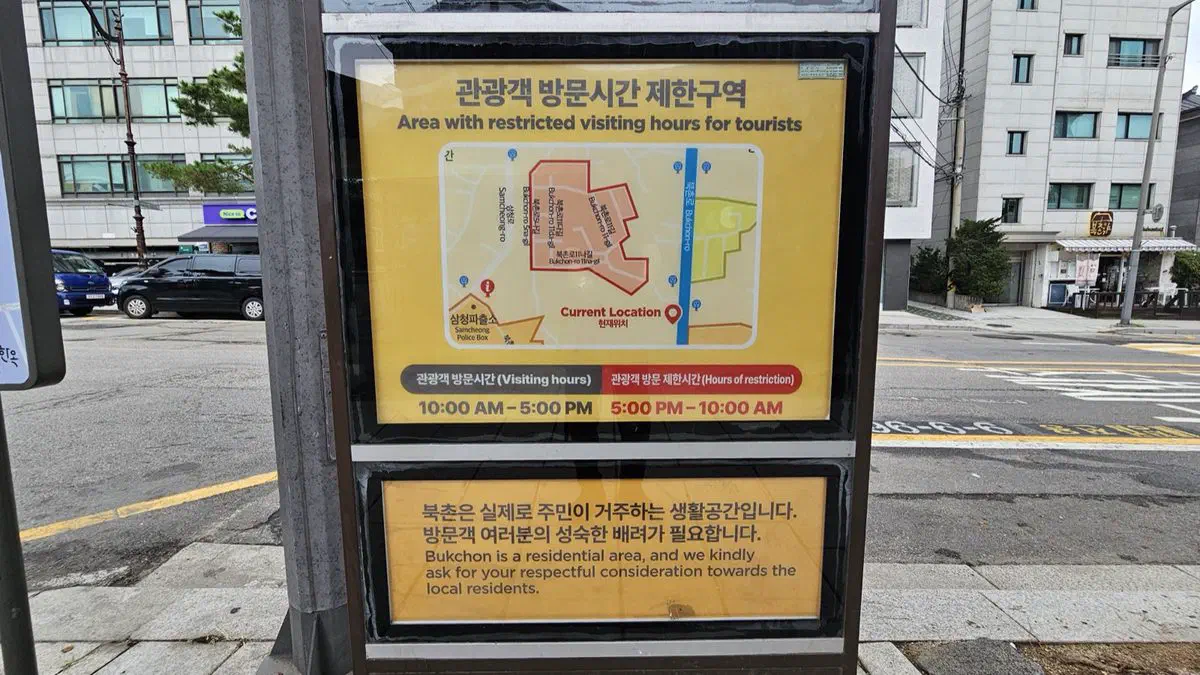
Jongno district designated Bukchon Korea’s first Special Management Area for overtourism. Residents were losing their evenings to camera noise, and the council responded with enforceable hours.
The restricted street is Bukchon-ro 11-gil, the famous view down the tiled roofs. Bukchon-ro 12-gil is a yellow zone, where the same hours are advisory and carry no penalty. Enforcement started in March 2025 after a grace period, and from January 2026 charter buses face separate fines of ₩300,000–500,000 for entering the area.
If you are staying in Bukchon, you are exempt — the list explicitly covers accommodation guests with a booking confirmation. Keep it on your phone. The exemption applies to reaching your accommodation, not to sightseeing during restricted hours, so arriving with luggage at seven in the evening is fine and photographing the roofline at eight is not.
The rule holds at the other end of the window too. Walking up just before 10:00, we watched a guide stop a family of American tourists at the mouth of the lane — the answer was simply that it was not open yet, no argument entertained. They turned around. We were a few steps behind them and did the same rather than wait it out on the sidewalk.
Why Bukchon, Seochon and Ikseondong differ
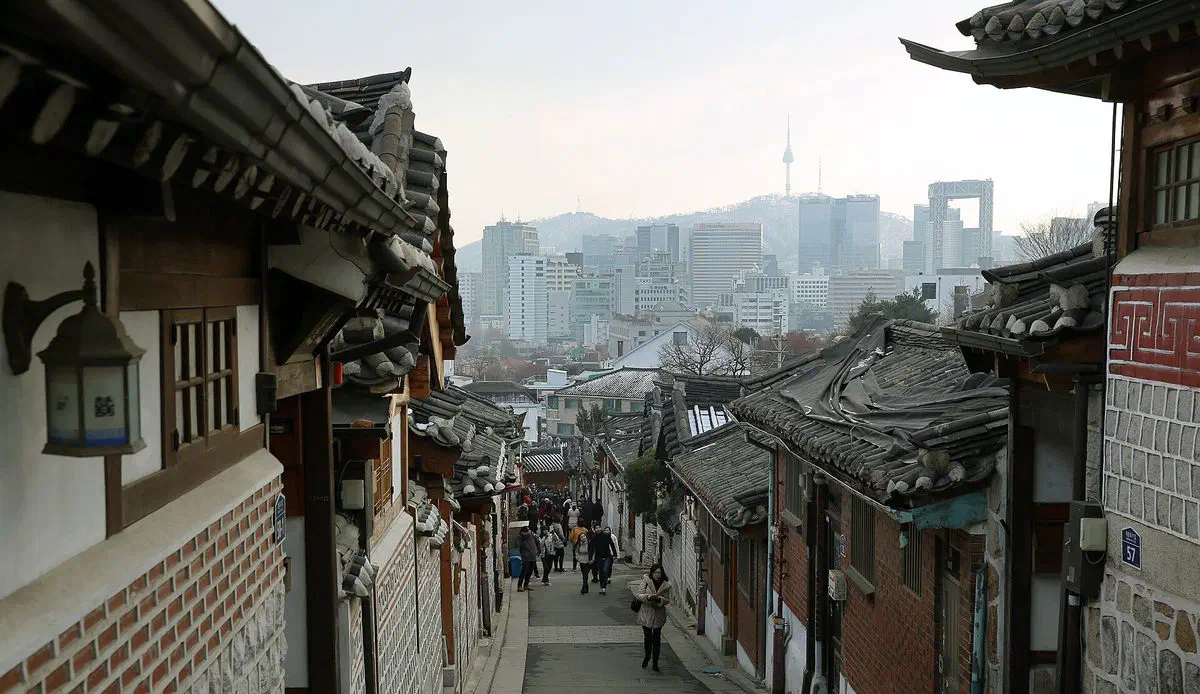
They were not built as one thing.
Bukchon housed the aristocracy and royal relatives. Large houses, generous courtyards, high ground between two palaces. It looks the way it does because the people who commissioned it had money and wanted the view.
Seochon — west of Gyeongbokgung — housed the jungin, the professional middle class, and later artists and writers. Smaller houses, tighter grid, less grandeur. It has stayed a working neighborhood rather than becoming a set.
Ikseondong is the youngest and smallest, a dense block of 1930s hanok built as early mass housing. It was nearly redeveloped, then filled up instead with cafés, restaurants and bars squeezed into converted houses.
What that means if you are sleeping there
| Bukchon | Seochon | Ikseondong | |
|---|---|---|---|
| Character | Grand, photographed | Everyday, lived-in | Dense, commercial |
| Terrain | Hilly | Mostly flat | Flat |
| Daytime crowds | Heaviest in Seoul | Light | Heavy, but shoppers |
| After dark | Quiet — enforced | Quiet | Loud until late |
| Access with luggage | Hardest | Easier | Easy but narrow |
| Best for | The view, one night | A base for several nights | Eating and going out |
Bukchon is the one people picture, and the hills are real. The lane that looks charming in the photograph is a ten-minute drag with a wheeled case, and the restriction means evenings are genuinely quiet — which is either the point or a disappointment, depending on why you came.
Seochon is the one to book if you want more than one night. Flatter, fewer crowds at your door, actual shops and restaurants that serve residents rather than visitors. It is a five-minute walk to Gyeongbokgung from most of it.
Ikseondong is where you go for dinner, not necessarily where you should sleep. The alleys are two meters wide and the bars run late, and hanok walls do not stop sound — as Korean reviews of hanok stays note repeatedly.
Picking by trip length
One night, and you want the postcard. Bukchon. Accept the hill, keep the booking confirmation handy, and take your photographs before five.
Two to four nights. Seochon. You will be walking in and out several times a day and the flat ground and lighter crowds compound.
You are here to eat. Stay in Seochon or Bukchon and walk to Ikseondong. It is fifteen minutes and you get the food without sleeping above a bar.
You want a hanok but not the compromises. Consider Jeonju, where 735 hanok sit in one village, prices are lower, and nobody is enforcing a curfew.
Booking
Seoul has around 182 hanok listed across the booking platforms, spread across these three districts and a few outliers. They appear on Klook , Booking.com and Agoda, though hotel bookings attribute over a shorter window than tours do, so book when you have decided rather than while browsing.
Two things to check in the listing before you commit, both covered in more detail in our hanok stay guide: look for 독채 if you care about sound, and 리모델링 or 신축 if you care about the bathroom.
You will want Naver Map to find any of these doors — alley numbering defeats Google Maps in all three districts. A Korean eSIM starts under a dollar, and our comparison covers which one.
All three districts are within walking distance of Insadong’s craft workshops and Gyeongbokgung, which is the practical argument for staying in any of them rather than in Myeongdong. Buam-dong, a short taxi ride north of Bukchon, is a stop of its own for anyone tracking down Seoul’s Crash Landing on You filming location.
Quick answers
What happens if I visit Bukchon-ro 11-gil after 5pm?
Which Seoul hanok neighborhood should I stay in for one night?
Which Seoul hanok neighborhood is best for several nights?
Is Ikseondong a good place to sleep?
Sources checked 8 August 2026. Special Management Area rules, zone boundaries, hours, penalties and exemptions from Jongno district and Seoul city official guidance. District histories from Korean-language sources. Property counts from Booking.com’s hanok category. Rules of this kind change — confirm before you travel.