Jeonju Hanok Village: 735 Houses and No Curfew
Last verified: 2026-08-31. Rules and prices change — always confirm on the official site before you travel.
This page contains affiliate links. If you book through them we may earn a commission at no extra cost to you. It never changes what we recommend.
If you want to sleep in a hanok, Seoul is the obvious place to look and the worst place to do it — which is how most people end up reading about Jeonju hanok village instead. Bukchon is a hill, it holds the most photographed street in the country, and since 2025 standing in it after five in the evening can cost you ₩100,000.
Jeonju hanok village is ninety minutes away and holds more hanok than the whole of Seoul.
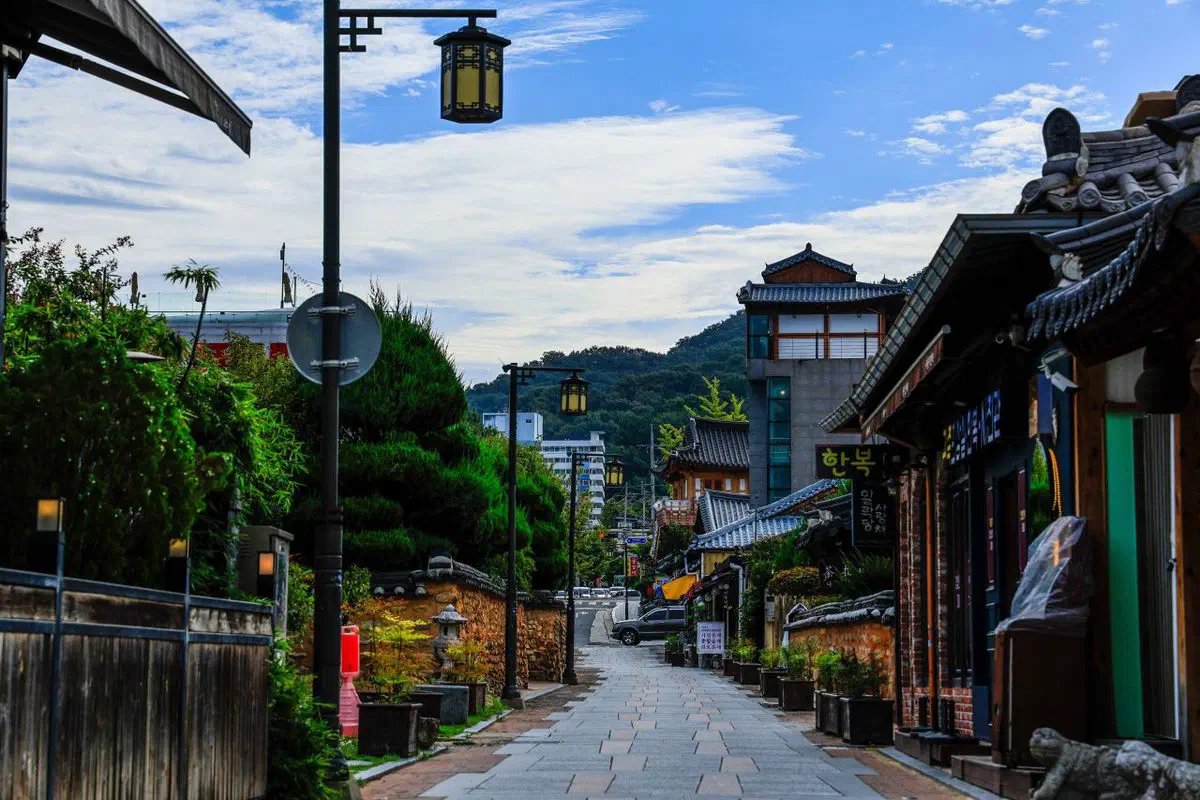
What Jeonju hanok village actually contains
The city publishes the numbers, and they are more specific than the ones in circulation.
- Buildings
- 947 in total
- Hanok
- 735
- Not hanok
- 212 — about a fifth of the village
- Area
- 298,260 m²
- Businesses
- 575 — of which 203 are accommodation
Two things are worth pulling out of that table.
735 hanok in one village is not a number Seoul can approach. Bukchon, Seochon and Ikseondong together hold a fraction of it, spread across three neighborhoods with modern buildings in between.
212 of the buildings are not hanok. Roughly a fifth of the “hanok village” is ordinary construction — shops, infill, later development. Photographers work the lanes where that is not true. It remains the largest concentration of hanok in Korea by a distance, but it is not a village frozen in the nineteenth century, and arriving expecting one leads to a disappointment the photographs created.
The curfew difference
This is the practical reason to consider Jeonju rather than Bukchon, and it is concrete.
Jongno district designated Bukchon a Special Management Area for overtourism. On Bukchon-ro 11-gil, the rules allow tourism 10:00–17:00 and restrict it outside those hours, with a ₩100,000 fine. A booking confirmation exempts you for the purpose of reaching your accommodation, not for standing in the lane photographing rooflines in the evening — the details are in our Seoul hanok districts guide.
Jeonju has no equivalent rule. The village gets busy, sometimes very busy, but no one fines you for being there after dark — and dark is when hanok look best.
What it costs, and why
Jeonju is cheaper than Seoul for the same kind of room, and the reason is supply: 203 accommodation businesses competing inside 30 hectares. Seoul’s hanok stays are scarce, sit on the most expensive land in the country, and cost what that implies.
The saving is not the whole argument, though. What Jeonju buys you is choice — enough properties in one place that you can be selective about the things that actually determine whether a hanok stay is pleasant.
Our hanok stay guide covers what Korean reviewers complain about, and the two words worth searching for in a listing are the same here as in Seoul: 독채 if you care about noise, and 리모델링 or 신축 if you care about the bathroom. With 203 options rather than a handful, you can insist on both.
Hanok stays in Jeonju appear on Booking.com , Agoda and the other platforms, though Korean sites list more of the smaller family-run places than the international platforms do.
One week is the exception to all of this. The Jeonju Bibimbap Festival runs 2–4 October in 2026 — it moved venue and moved three weeks earlier this year, so a lot of English listings still point at late October. Even 203 properties feel tight that weekend: book earlier than you would for an ordinary visit, or expect to pay for whatever is left.
Getting there
The detail that catches people: the Jeolla line KTX runs from Yongsan, not Seoul Station. Book the wrong one and you have added a subway ride and half an hour to a ninety-minute journey.
Jeonju station is not in the hanok village — it is a bus or taxi ride away, which is worth knowing if you arrive with a suitcase and an alley address. Naver Map finds those doors and Google Maps does not, so a Korean eSIM earns its dollar here as much as in Seoul; our comparison covers which to buy.
Whether a rail pass helps depends on the rest of your trip. Seoul–Jeonju return on its own sits below the break-even; the pass starts to pay if Jeonju is one of three or more cities.
What Jeonju is for
Hanbok rental works differently here than at the palaces. Seoul gives you a structural incentive — hanbok gets you into Gyeongbokgung free, subject to a written definition of what counts. Jeonju has no gate to get through. People wear it because the whole village serves as the backdrop, and you will walk past a dozen rental shops doing it.
The city also stands on its own as a food destination — Jeonju bibimbap sets the standard other bibimbap answers to — and that, more than the architecture, brings Korean visitors back.
Jeonju or Seoul
- One night, want the postcard
- Bukchon — accept the hill and the 17:00 rule
- Two or more nights in Seoul
- Seochon — flatter, quieter, less regulated
- You want the hanok itself
- Jeonju — 735 of them, cheaper, no curfew
Put plainly: Seoul’s hanok districts are neighborhoods that happen to contain hanok, and Jeonju is a place built around them. If the hanok is the reason for the trip, go where they are.
And if photographs are what is deciding it, remember that a fifth of Jeonju’s buildings are not hanok at all. The pictures come from the other four fifths.
Quick answers
How many hanok are in Jeonju Hanok Village?
Is there a curfew in Jeonju Hanok Village like Seoul's Bukchon?
How do I get from Seoul to Jeonju?
How many hanok stays are available in Jeonju?
Sources checked 8 August 2026. Building counts, hanok and non-hanok breakdown, area and business figures from Jeonju city’s official hanok village pages. Bukchon Special Management Area hours and penalty from Jongno district guidance. Journey times from published Korail timetables — confirm departures, and which Seoul station they leave from, before booking.