Replacing One Jeongseon Resident Takes 26 Tourists
Last verified: 2026-09-21. Rules and prices change — always confirm on the official site before you travel.
This page contains affiliate links. If you book through them we may earn a commission at no extra cost to you. It never changes what we recommend.
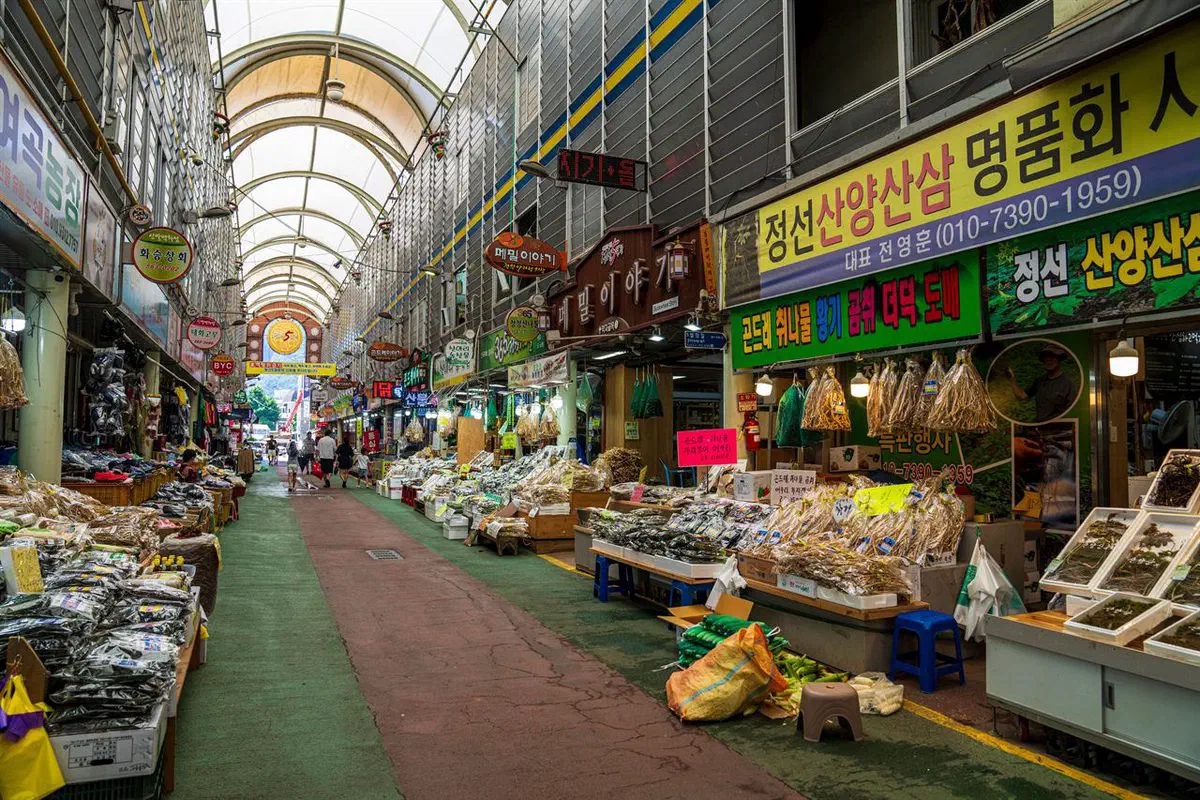
Losing one resident in Jeongseon takes 26 overnight tourists to replace — economically, at least. That’s not a metaphor; it’s a real figure from Korea Tourism Organization’s own regional card-spending data, and it’s higher than either of two coastal counties we checked alongside it. The number says something concrete about which of Korea’s small tourism towns actually run on visitors rather than residents.
The number: what it takes to replace one resident’s local spending
Korea Tourism Organization’s Data Lab fuses individual credit-card spending (Shinhan Card) with Statistics Korea’s public data to estimate, for any county, how many visitors it takes to replace the in-county spending lost when one resident leaves. The measure comes in two versions — how many overnight tourists it takes, or how many day trippers — since a county’s visitor mix usually leans toward one or the other.
We ran this for three counties already covered on this site, each for a different reason: Jeongseon, a market town two-plus hours from Seoul; and two coastal counties closer to the capital region, Taean and Buan.
- Jeongseon (Gangwon)
- 26 overnight tourists, or 39 day trippers, per lost resident (2024)
- Taean (Chungnam)
- 17 overnight tourists, or 53 day trippers, per lost resident (2024)
- Buan (Jeonbuk)
- 12 overnight tourists, or 37 day trippers, per lost resident (2024)
Jeongseon needs the most overnight tourists of the three — meaningfully more than Taean, and more than double Buan’s. On day trips, the pattern flips: Jeongseon needs fewer than Taean. Read together, the two counties' visitor economies lean opposite ways — Taean, a two-hour drive from Seoul with beach access, absorbs a heavier day-trip flow; Jeongseon, three hours out by the A-train and built around an overnight destination market, leans toward visitors who stay the night.
The other half: residents barely spend their own tourism money at home
The same dataset splits local residents’ own spending into in-county and out-of-county, separately for tourism and non-tourism categories. Across all three counties, residents spend almost none of their own tourism budget locally:
- Jeongseon
- 5% of resident tourism spending stays in-county (2025) — up from 3% in 2021
- Taean
- 3% stays in-county (2025) — down from 4% in 2021
- Buan
- 1% stays in-county (2025) — down from 2% in 2021
That’s the same shape as the first table, from the other direction: a county whose whole local economy is built to serve outside visitors is also, quietly, a place its own residents don’t spend their tourism money — they leave to do that too. Jeongseon is the one exception worth flagging: its in-county share rose, from 3% to a 2021–2023 peak of 6% before settling at 5%, while Taean and Buan’s both drifted down over the same years. One county’s residents becoming very slightly more likely to spend leisure money at home, against two others moving the opposite way, isn’t a large shift — but among these three, only Jeongseon moved up at all.
Why Jeongseon specifically
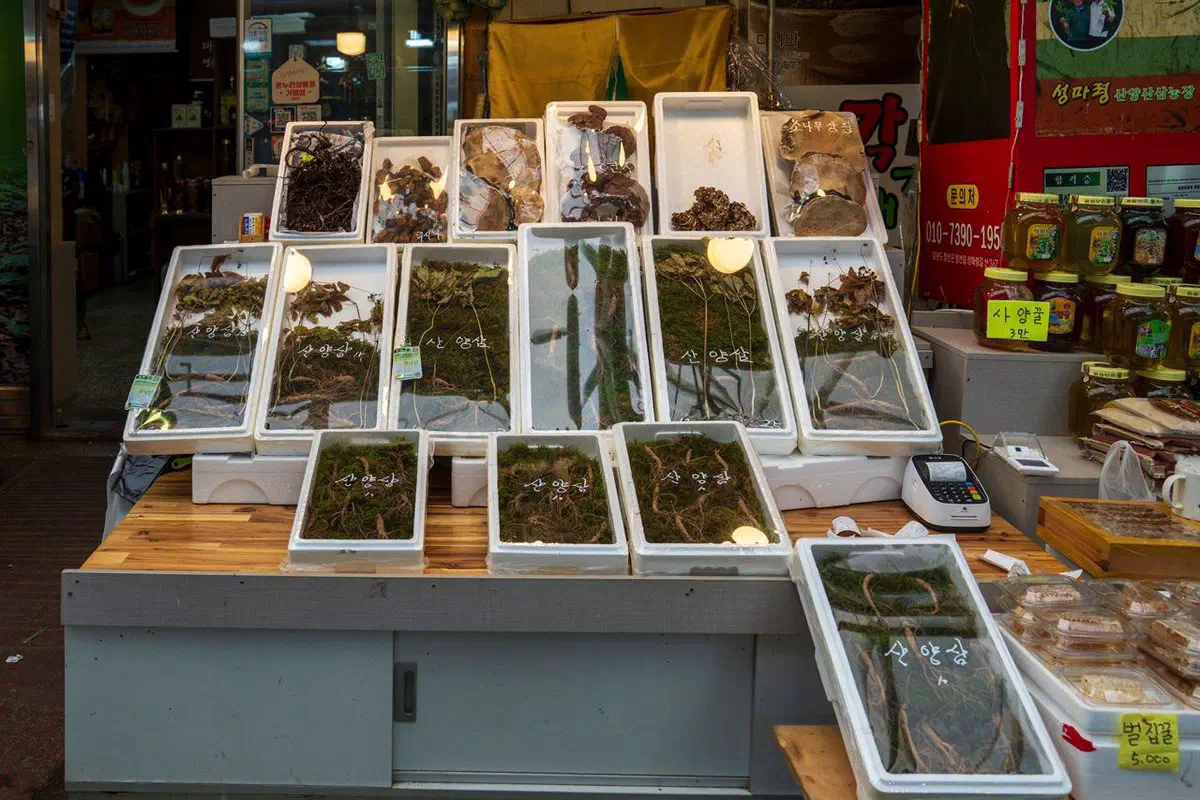
None of this happens in a vacuum. Jeongseon’s five-day market is a Korea Tourism Organization “Tourism Star,” connected to Seoul by a dedicated tourist train (the A-train) running since 1999 and packaged with a city tour and performance — infrastructure built specifically to turn a rural market into an overnight destination rather than a pass- through stop. Visitor spending on that same trip skews almost entirely tourism-category: 98% of what visitors spend inside Jeongseon county goes to tourism businesses, versus 2% on everything else, a ratio that’s barely moved across five years of data (2021–2025).
A Korean eSIM is worth having on the trip out — Jeongseon’s A-train schedule and the market’s own five-day cycle are both easier to confirm live than to plan around in advance.
What does "26 tourists to replace one resident" actually mean?
Why does Jeongseon need more overnight tourists than Taean or Buan?
Do Jeongseon residents spend their own tourism money locally?
Checked 21 September 2026. All figures from Korea Tourism Organization’s Data Lab (datalab.visitkorea.or.kr), “지역별 관광/비관광 소비 현황” (Regional tourism/non-tourism spending) tool under 지역별 분석 → 인구감소지역 현황, which fuses Shinhan Card individual transaction data with Statistics Korea population data — accessed directly via a logged-in Data Lab account, since this specific region-by-region breakdown isn’t shown on the public dashboard. Figures for the “tourists needed to replace one resident” measure are 2020–2024 annual series; tourism-spending-share figures are 2021–2025 annual series. This is estimated, model-based data intended for directional and year-over-year comparison rather than as an exact visitor count — Data Lab’s own documentation states as much for its related visitor-estimate tools, and the same caveat applies here.